Where to Start with Homer: A Reading Guide
Where to start with Homer — whether to begin with The Iliad or The Odyssey, and which translation to read. A complete reading guide to ancient Greece's great poet.
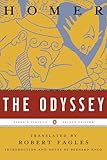
Homer is the name given to the ancient Greek poet (or tradition of poets) credited with composing The Iliad and The Odyssey — the two foundational texts of Western literature, composed orally in the eighth century BC and written down in the centuries following. The question of whether Homer was a single poet, two poets, or a tradition of oral bards has been debated for centuries; what is certain is that the poems attributed to him are the oldest surviving works in the Western literary canon, and that their influence — on all subsequent epic poetry, on the novel, on Western ideas about heroism, war, fate, and homecoming — cannot be overstated. Reading Homer is the beginning of reading Western literature.
Where to Start: The Odyssey
The recommended starting point for most modern readers — Homer’s epic of the journey home. Odysseus has been ten years fighting at Troy. The war is over; everyone else has gone home. But Odysseus has angered Poseidon, and the god of the sea is determined to prevent his return.
What follows is one of the great episodic narratives in world literature. Odysseus encounters the Cyclops (blinded, and the source of Poseidon’s wrath). He visits the island of the witch Circe. He descends to the underworld and converses with the dead. He passes between Scylla and Charybdis. He lands on the island of the sun-god’s cattle and loses his last ships. He is marooned for seven years with the nymph Calypso. He arrives at Phaeacia. And finally, after twenty years of absence, he returns to Ithaca — disguised, alone, to find his house full of suitors competing to marry his wife Penelope and take his kingdom.
The Odyssey is not one kind of poem. It is a horror story (the Cyclops), a love story (Penelope’s faithfulness), a domestic comedy (the suitors in Odysseus’s house), and a profound meditation on what home means and what it costs to return to it. Emily Wilson’s 2017 translation — the first by a woman, direct and unadorned — is the most accessible modern version.
The Iliad
Homer’s greater poem — the Trojan War as tragedy. Not the whole war but its most devastating episode: Achilles’s wrath, Hector’s death, the cost of glory. More demanding than The Odyssey and more profound; best read after the Odyssey gives you the appetite for Homer.
Why The Odyssey Is an Ideal First Book
For a reader new to Homer, The Odyssey is an ideal first book because it is one of the two foundational epics of Western literature and, for many readers, the more immediately accessible and entertaining entry point, the great poem of journey, adventure, and homecoming. The Odyssey follows the hero Odysseus on his long and perilous journey home from the Trojan War, through encounters with monsters, enchantresses, and the sea, toward his reunion with his family, and it offers adventure, wonder, and the deeply human theme of the longing for home. As an entry point, it offers a full expression of Homer’s foundational art in its more accessible and adventurous mode, the gripping journey, the unforgettable episodes, and the universal theme of homecoming. It welcomes the newcomer with its adventure, its wonder, and its compelling hero, drawing the reader into one of the foundational works of Western literature. It is one of the two great Homeric epics and, for many, the more accessible starting point, so that the new reader encounters Homer through his tale of journey and homecoming. For the newcomer, then, The Odyssey is an excellent starting point.
What to Expect as a New Reader
As a new reader, you can expect The Odyssey to be a foundational epic of Western literature and a gripping tale of journey, adventure, and homecoming. You can expect a compelling journey, for the poem follows the hero Odysseus on his long and perilous voyage home from the Trojan War, through a series of unforgettable adventures and encounters. You can expect wonder and adventure, for the poem is full of monsters, enchantresses, gods, and marvels, the famous episodes that have become part of the cultural imagination. You can expect the deeply human theme of homecoming, for at the heart of the poem is Odysseus’s longing for home and his reunion with his family, a theme of universal resonance. You can expect to read in translation, and a good modern translation will make the poem accessible and alive. You can expect a foundational work that is also genuinely entertaining and moving. Expect, in short, a foundational epic that is also a gripping tale of journey, adventure, and homecoming, a wonderful introduction to Homer.
Going Deeper After Your First Book
Once The Odyssey has introduced you to Homer’s art, the natural next step is The Iliad, the other great Homeric epic, the foundational poem of war. Where The Odyssey is the poem of journey and homecoming, The Iliad is the poem of war, focusing on an episode of the Trojan War and the rage of its central hero, and exploring the glory and horror of war, the workings of heroism and fate, and the tragedy of mortality with extraordinary power. Reading The Iliad after The Odyssey completes your encounter with the two foundational epics of Western literature, the poem of war and the poem of homecoming, which together encompass two of the most fundamental subjects of human experience. The two epics complement each other, and the reader who has been gripped by The Odyssey will find in The Iliad the other half of Homer’s foundational achievement. Building your reading journey through Homer is a matter of reading both the great epics, the tale of homecoming and the tale of war. The reader who begins with The Odyssey and continues with The Iliad will have encountered the foundations of Western literature.
Reading Homer
Begin with The Odyssey — it is more varied, more immediately narrative, and a better introduction to Homer’s range. Read The Iliad when you are ready for its more unrelenting and more elevated register. The two poems illuminate each other, and together they are one of the great reading experiences available.
For the full Homer bibliography, reviews, and biography, visit the Homer author page on Editors Reads.
Affiliate disclosure: Links to Amazon on this page are affiliate links. We earn a small commission at no extra cost to you.
Frequently Asked Questions
Where should I start with Homer?
The Odyssey is the recommended starting point for most modern readers — Homer's epic about Odysseus's ten-year journey home after the fall of Troy, a series of encounters with monsters, gods, witches, and the dead that reads as both action narrative and meditation on home, identity, and what it means to belong. The Iliad is the greater poem but harder of access; The Odyssey has more narrative variety and a more familiar protagonist, and it has sent countless readers back to the more demanding Iliad.
What is the difference between The Iliad and The Odyssey?
The Iliad is a war epic — fifty-one days in the tenth year of the Trojan War, focused on Achilles's wrath and its consequences. Its dominant register is tragic: men die in extraordinary numbers and extraordinary detail, and the poem's central meditation is on mortality, glory, and the cost of war to both sides. The Odyssey is an adventure epic — Odysseus's ten-year journey home, episodic, comic in places, with a diverse cast of gods, monsters, and mortals. Both are essential; they are different poems that illuminate each other.
Which translation of Homer should I read?
The two most widely praised recent translations are Emily Wilson's Odyssey (2017) — the first English translation by a woman, direct, modern, and metrically regular — and Robert Fagles's translations of both poems (Iliad 1990, Odyssey 1996), which are more grandiloquent and cinematic. For The Iliad, Caroline Alexander's translation (2015) is also excellent. Richmond Lattimore's older translations are more literally accurate but less immediately readable. Wilson's Odyssey is the recommended starting point for most modern readers.
Do I need to know Greek mythology before reading Homer?
No prior knowledge is required. The epics assume familiarity with the mythological background but provide enough context within the poems themselves; a reader coming to Homer cold will quickly understand the key relationships and conflicts. A brief introduction to the Trojan War backstory (Paris, Helen, Agamemnon) can help before reading The Iliad; most modern translations include an introduction that provides this. The Odyssey requires even less background.