Where to Start with Hanya Yanagihara: A Reading Guide
Where to start with Hanya Yanagihara — whether to begin with A Little Life, The People in the Trees, or To Paradise. A complete reading guide to her novels.
Hanya Yanagihara (born 1974) is the American novelist whose second book, A Little Life (2015), became one of the most discussed and most divisive literary novels of its decade — shortlisted for the Man Booker Prize, extraordinarily widely read, and the subject of passionate disagreement about whether its relentless accumulation of suffering is a serious artistic achievement or a form of exploitation. Her fiction is formally sophisticated, psychologically unflinching, and consistently interested in the most extreme aspects of human experience: trauma, devotion, illness, grief. She is not a comfortable writer, and she does not intend to be.
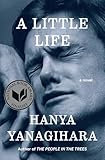
Where to Start: A Little Life (2015)
The essential Yanagihara — and one of the most discussed and most emotionally extreme novels of the twenty-first century. Four college friends — Willem, JB, Malcolm, and Jude — arrive in New York in their twenties with their ambitions and their friendship intact. The novel spans the following decades, but it becomes, increasingly and then completely, the story of Jude St. Francis: his extraordinary success as a lawyer and then a litigator, his capacity to love and be loved by his friends, and the childhood trauma that the novel discloses in stages — abuse so sustained and so severe that it has shaped everything about who Jude is.
The novel is very long (720 pages), very slow in its accumulation of detail, and very painful. It is also — for readers who can sustain it — one of the most serious explorations of suffering and friendship in contemporary fiction. The question it asks (what does it mean to love someone who cannot be saved?) has no comfortable answer.
The People in the Trees (2013)
Yanagihara’s debut — and her most formally controlled and least emotionally overwhelming novel. Narrated by Norton Perina, a Nobel Prize-winning virologist writing his memoir from prison (he has been convicted of child abuse), it tells the story of his 1950 expedition to a remote Micronesian island, where he discovers a tribe whose members who eat a certain turtle live to extreme old age — but at the cost of their mental faculties. The discovery makes Perina famous; the decades that follow reveal how fame, power, and unchecked desire converge in a particular kind of brilliant man.
The frame narrative (Perina’s prison memoir) establishes from the start that we are reading a convicted abuser’s self-presentation — and Yanagihara forces the reader to hold that knowledge against a narrative designed to make Perina sympathetic. Cool, precise, and deeply disturbing.
To Paradise (2022)
Yanagihara’s most structurally ambitious and most politically engaged novel — three novellas, each set in a different version of America (1893, 1993, 2093), each featuring characters named David, Edward, and Charles. In the 1893 section, an alternative America where same-sex marriage has long been legal, a wealthy young man must choose between a safe, arranged life and a passionate, dangerous love. In the 1993 section, the AIDS epidemic shadows every relationship. In the 2093 section, climate catastrophe and authoritarian governance define a world in which freedom has been traded for survival.
The three sections are connected by names, themes, and echoing situations rather than by explicit narrative links; the novel requires active work from the reader to discover its architecture. Best approached after A Little Life and The People in the Trees.
Why A Little Life Is the Ideal First Book
For a reader new to Hanya Yanagihara, A Little Life is the ideal first book because it is her most famous and acclaimed novel and the fullest expression of her distinctive gifts, the immersive storytelling, the emotional intensity, and the unflinching exploration of trauma, friendship, and survival. A Little Life follows four friends in New York across the decades, centering on one man’s struggle with the legacy of a traumatic past, in a sweeping, deeply immersive, and devastating novel. As an entry point it is ideal, for it is her most celebrated work and a perfect example of her immersive, emotionally intense fiction. It welcomes the newcomer, insofar as so harrowing a work can, with its compelling characters, its emotional power, and its immersive scope, drawing the reader into her distinctive vision. It is her most famous work and the one that best represents her gifts, so the new reader encounters Yanagihara at her most characteristic. For the newcomer, then, A Little Life is the natural and ideal starting point, though readers should know it deals with extremely difficult subject matter.
What to Expect as a New Reader
As a new reader, you can expect A Little Life to be an immersive, emotionally intense, and devastating novel. You can expect a sweeping story, for the novel follows four friends in New York across the decades. You can expect emotional intensity, for the novel is profoundly affecting and often overwhelming. You can expect immersive storytelling, for Yanagihara draws the reader deeply into her characters’ lives. You can expect an unflinching exploration of trauma, for the novel centers on one man’s struggle with the legacy of a horrific past. You can expect difficult material, including abuse, self-harm, and suffering, handled with intensity. You can expect themes of friendship, love, trauma, and survival. You should be prepared for extremely dark and disturbing content. You should expect a long, immersive, and harrowing novel. Expect, in short, an immersive, emotionally intense, and devastating novel, a powerful introduction to Yanagihara’s gifts, on very difficult subject matter.
Going Deeper After Your First Book
Once A Little Life has introduced you to Yanagihara’s gifts, the reader who wishes to go deeper can explore her other novels, which continue her immersive storytelling, her emotional intensity, and her ambitious scope, though in very different forms. Her debut novel explores a scientist, a remote island, and dark moral questions, while her later, ambitious novel spans centuries and alternate histories in an exploration of love, sickness, and society. Reading these after A Little Life deepens your appreciation of Yanagihara’s distinctive gifts, the immersive storytelling, the emotional intensity, and the unflinching engagement with difficult themes. Her characteristic ambition and intensity run through her work. Building your reading journey through Yanagihara is a matter of following her fiction from A Little Life into her other novels. The reader who begins here and continues will find one of the most immersive and emotionally intense novelists in contemporary literature.
Reading Hanya Yanagihara
Yanagihara’s fiction is not for every reader: it is formally demanding, emotionally extreme, and deliberately uncomfortable. But for readers willing to give her the attention she demands, she is one of the most serious and most original novelists currently writing — a writer who takes seriously the question of what literature is for when it depicts suffering, and who provides her own answer in the formal architecture of her books. Begin with A Little Life if you are prepared for its emotional intensity; begin with The People in the Trees if you want a cooler and more intellectually structured introduction. Both are essential; both repay careful reading.
Frequently Asked Questions
Where should I start with Hanya Yanagihara?
A Little Life (2015) is both the most widely read and the essential starting point — the extraordinary and devastating novel about four college friends who come to New York, and particularly about Jude St. Francis, whose traumatic childhood gradually emerges as the novel's true subject. It is Yanagihara's most ambitious, most emotionally overwhelming, and most formally sophisticated novel. The People in the Trees is the best alternative for readers who want a less emotionally extreme introduction — a cooler, more intellectually constructed novel that is no less disturbing in its way. Approach To Paradise after you have read both.
What is A Little Life about?
A Little Life (2015) follows four college friends — Willem, an actor; JB, a painter; Malcolm, an architect; and Jude, a lawyer — from their early twenties in New York through the following decades of their lives. The novel is ostensibly about the friendships between these four men, but it gradually becomes, overwhelmingly, the story of Jude St. Francis — his extraordinary professional success, his inability to accept love, and the childhood trauma that the novel reveals in stages and that is among the most harrowing ever rendered in literary fiction. The novel is very long (700+ pages), very painful, and among the most intense reading experiences in contemporary fiction.
Is A Little Life too sad to read?
A Little Life is genuinely extremely sad — among the most emotionally sustained and intense novels in recent literary fiction. Yanagihara has described it as an attempt to write a book of unyielding sorrow, and it largely succeeds in its intent. Many readers find it cathartic rather than merely oppressive; many others find it too extreme in its accumulation of suffering to be fully pleasurable as a reading experience. It is a powerful and serious novel, but it is not an easy one, and readers who are sensitive to depictions of childhood trauma or self-harm should be aware that both are central to the book.
What is To Paradise about?
To Paradise (2022) is Yanagihara's most formally ambitious novel — structured in three parts set in 1893, 1993, and 2093, each featuring characters named David, Edward, and Charles, each exploring the nature of freedom, desire, and the cost of pursuing both. The 1893 section is set in a utopian America where same-sex marriage is legal and follows a wealthy young man choosing between safety and love. The 1993 section is set in New York during the AIDS epidemic. The 2093 section is set in a totalitarian near-future America. The connections between the three parts are suggestive rather than explicit. Yanagihara's most structurally complex and most politically serious work.