Where to Start with Elena Ferrante: A Reading Guide
Where to start with Elena Ferrante — whether to begin with My Brilliant Friend, The Days of Abandonment, or the Neapolitan Quartet. A complete reading guide.
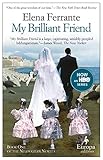
Elena Ferrante is the pseudonymous Italian novelist whose Neapolitan Quartet (My Brilliant Friend, The Story of a New Name, Those Who Leave and Those Who Stay, The Story of the Lost Child) has been the most remarkable literary phenomenon of the past decade — four novels that spread initially by word of mouth, that have been translated into more than forty languages, and that have generated the most sustained discussion of women’s friendship, female ambition, and Italian social history in contemporary fiction.
Where to Start
The Quartet Begins: My Brilliant Friend (2011)
Begin here and plan to read all four. Elena Greco’s account of her childhood friendship with Lila Cerullo in a poor Naples neighbourhood in the 1950s is the starting point for a narrative that covers sixty years and constitutes one of the most ambitious sustained accounts of female experience in contemporary fiction. Lila — more brilliant, more beautiful, more ungovernable than Elena — is the central mystery: a woman whose extraordinary nature cannot be contained by the world available to her, and whose life is the prism through which Elena (and the reader) examines the question of what women’s lives in the mid-twentieth century actually contained. The novel is immediately gripping; Ferrante’s pacing and her account of the neighbourhood and its violence are among the best in contemporary fiction.
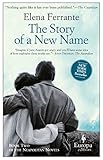
Volume 2: The Story of a New Name (2012)
The second volume — in which Lila’s marriage and its catastrophic consequences drive the narrative, while Elena pursues her education and her ambition. The novel covers the late 1950s and 1960s; Ferrante’s account of what marriage meant for a Neapolitan girl of Lila’s generation (the legal erasure, the economic dependency, the violence) is her most politically explicit section of the quartet. Elena’s growing success as a student and eventual writer is counterpointed against Lila’s confinement. The relationship between the two women — its love, its rivalry, its mutual obsession — becomes fully defined here.
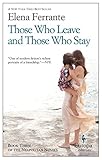
Volume 3: Those Who Leave and Those Who Stay (2013)
The third volume — the most politically engaged, covering the revolutionary moment of the late 1960s and the 1970s in Italy. Elena has married, published a novel, and moved to Florence and then Turin; Lila is working in a sausage factory, becoming involved with the labour movement. The novel is the most directly political section of the quartet — Ferrante’s account of the Italian left, of the industrial violence, of the way political idealism interacts with personal life — and the most structurally complex.
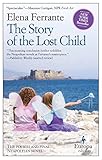
Volume 4: The Story of the Lost Child (2014)
The quartet’s final volume and its most devastating. Elena returns to Naples; she and Lila, now in their fifties, are drawn back together after decades of partial separation. The ‘lost child’ of the title refers to more than one loss; the final pages are Ferrante’s most powerful writing and require all three preceding volumes to achieve their full effect. The quartet ends with one of the great final scenes in contemporary fiction.
Why My Brilliant Friend Is the Ideal First Book
For a reader new to Elena Ferrante, My Brilliant Friend is the ideal first book because it is the opening of her acclaimed Neapolitan Novels and the fullest expression of her distinctive gifts, the fierce honesty, the psychological depth, and the powerful portrait of female friendship and a changing world. My Brilliant Friend begins the story of the lifelong, intense, and complicated friendship between Elena and Lila, two girls growing up in a poor neighborhood of Naples in the 1950s, in a narrative that will span four novels and sixty years. As an entry point it is the natural place to begin, for it launches her great quartet and a perfect introduction to her raw, immersive, and emotionally powerful fiction. It welcomes the newcomer with its compelling friendship, its vivid setting, and its psychological intensity, drawing the reader into one of the most acclaimed literary achievements of recent decades. It begins her finest work, so the new reader meets Ferrante where her great story begins. For the newcomer, then, My Brilliant Friend is the natural and ideal starting point.
What to Expect as a New Reader
As a new reader, you can expect My Brilliant Friend to be a raw, immersive, and psychologically intense novel of female friendship. You can expect a compelling central relationship, for the novel follows the lifelong, intense, and complicated friendship between Elena and Lila. You can expect a vivid setting, for Ferrante renders a poor neighborhood of Naples in the 1950s with extraordinary specificity and force. You can expect fierce honesty, for Ferrante writes about friendship, rivalry, ambition, and womanhood with unflinching candor. You can expect psychological depth, for the novel probes the inner lives of its characters and the shifting dynamics between them. You can expect the beginning of a sweeping, four-novel saga spanning sixty years. You can expect immersive, propulsive, emotionally powerful storytelling. Expect, in short, a raw, immersive, and psychologically intense novel of female friendship, a superb introduction to Ferrante’s gifts.
Going Deeper After Your First Book
Once My Brilliant Friend has drawn you into the story of Elena and Lila, the natural next step is to continue the Neapolitan Novels through their subsequent volumes, for the quartet is a single great story that deepens and broadens across the books, following the two women and their world over sixty years. The novels are best read in order, their friendship, their lives, and the changing Italy around them developing across the whole toward a powerful conclusion. Beyond the quartet, the reader who has been gripped by Ferrante’s gifts can explore her other novels, intense, shorter works of women in crisis that display the same fierce honesty and psychological depth. Her characteristic strengths, the fierce honesty, the psychological depth, and the powerful portrait of women’s lives, run through her work. Building your reading journey through Ferrante is a matter of completing the Neapolitan Novels and exploring her other fiction. The reader who begins here and continues will encounter one of the most acclaimed and powerful novelists of our time.
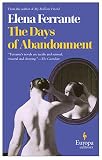
The Standalone: The Days of Abandonment (2002)
The best standalone Ferrante for readers who want to try her work before committing to the quartet. Olga, an educated woman in Turin, is abandoned by her husband after fifteen years of marriage; the novel traces her psychological disintegration in the weeks that follow. It is shorter, more claustrophobic, and more formally contained than the quartet; its account of female rage and dissolution is Ferrante’s most visceral and most disturbing single work. Excellent as an introduction; also excellent for readers who have finished the quartet and want to explore her earlier work.
Frequently Asked Questions
Where should I start with Elena Ferrante?
My Brilliant Friend (2011) is the essential starting point — the first volume of the Neapolitan Quartet, in which Elena Greco narrates her friendship with Lila Cerullo from childhood in a poor Naples neighbourhood in the 1950s through their diverging adult trajectories. The novel immediately establishes the central relationship — two brilliant girls, one of whom escapes through education, one of whom does not — and the rhythm of the Ferrante reading experience: the intensity, the intimacy, the obsessive quality of the narrator's attention to Lila. Begin here and read the quartet in order. The Days of Abandonment is the best standalone entry point for readers who want to try one book first.
What is My Brilliant Friend about?
My Brilliant Friend (2011) follows Elena Greco ('Lenù') and Lila Cerullo from their childhood in a poor neighbourhood on the outskirts of Naples in the 1950s through their adolescence and early adult lives. Lila — fierce, brilliant, ungovernable — is Elena's closest friend and most tormenting presence: the more naturally gifted of the two, whose brilliance cannot be contained by the limited world available to a poor Neapolitan girl of her generation, and whose genius is therefore forced into different channels. Elena's account of Lila is simultaneously an account of herself: of her own ambitions, her own jealousies, and the price she has paid for the education and success that Lila has not had.
Is the Neapolitan Quartet worth reading all four volumes?
Yes — the Neapolitan Quartet should be read in its entirety, and the experience of reading all four volumes is significantly greater than the experience of reading any one. The quartet covers approximately sixty years of Elena and Lila's lives (and of Italian history, from the post-war reconstruction through the political turbulence of the 1970s to the 1980s and beyond), and each volume adds depth and complexity to the central relationship. The Story of the Lost Child (the fourth volume) is the most powerful and requires the context of the preceding three volumes to achieve its full effect. Commit to reading all four before beginning the first.
Who is Elena Ferrante?
Elena Ferrante is the pen name of an Italian novelist whose true identity has never been publicly confirmed, despite several attempts by journalists and scholars to identify her. She has given interviews and published essays but has never appeared publicly. She is not Anita Raja, the Italian translator whose identity was speculatively published in 2016 — she has explicitly denied this. Her stated reason for the pseudonym is that she wants her books to stand independently of her person, and that the anonymity allows her to write with a freedom she would not otherwise have. The mystery has become part of her cultural presence, though the novels require no biographical identification to be read and appreciated.