Where to Start with Claire Keegan: A Reading Guide
Where to start with Claire Keegan — whether to begin with Small Things Like These, Foster, or So Late in the Day. A complete reading guide to her fiction.
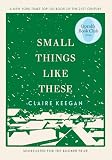
Claire Keegan (born 1968) is the Irish fiction writer whose novellas Foster (2010) and Small Things Like These (2021) have established her as one of the most formally precise and most morally serious writers in contemporary literature. She writes short — Foster is 90 pages, Small Things Like These 120 — but her economy is not compression so much as exactitude: each sentence carries exactly the weight it needs to carry, and the gaps between what is said and what is understood are as important as the prose itself. She is often cited by writers as a master of the short form; her prose style is one of the most admired in contemporary Irish fiction.
Where to Start: Small Things Like These (2021)
The essential Keegan — and one of the most important short novels of the past decade. Bill Furlong, a coal merchant in New Ross, Co. Wexford, in December 1985, is a decent man: he works hard, provides for his family, and carries a quiet gratitude to the Protestant woman who raised him after his mother, an unmarried servant girl, became pregnant. Making his deliveries to the Good Shepherd convent before Christmas, he encounters something that he cannot un-see — and the novel traces what he does with this knowledge, in a community that has learned not to see what it sees.
Keegan approaches the Magdalene Laundries not through drama or revelation but through the texture of what it was to live beside them and know, without ever saying, what was happening inside. Her prose is completely controlled; the novel’s ending is among the most quietly devastating in recent fiction.
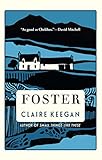
Foster (2010)
Keegan’s most purely beautiful work — a novella narrated by a child who goes to stay with the Kinsellas for the summer and discovers, for the first time, what it means to be genuinely cared for. The Kinsellas feed her well, teach her things, listen to her, and treat her as a person. The girl does not fully understand what is different about this summer or what it reveals about her ordinary life; the reader understands more than she does, which is the source of the novella’s particular pain.
The prose is luminous and exact. The silence at the novella’s centre — what both the girl and the Kinsellas know and do not speak — is one of the most precisely rendered pieces of narrative silence in Irish fiction.
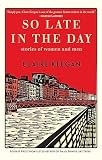
So Late in the Day (2023)
Keegan’s most recent and most formally unusual work — a three-story collection centred on a single male character (Cathal) and his failed relationship with a woman named Sabine, told from his perspective, from Sabine’s, and then returned to Cathal. The stories are a study in male emotional withholding and self-justification: Cathal cannot give Sabine what she needs, cannot fully acknowledge what this costs her, and is left at the end with a version of his experience that protects him from the truth. Short, precise, and quietly furious.
Why Small Things Like These Is the Ideal First Book
For a reader new to Claire Keegan, Small Things Like These is the ideal first book because it is among her most acclaimed works and a perfect expression of her distinctive gifts, the extraordinary economy, the quiet emotional power, and the exquisite craft of her spare, luminous prose. Small Things Like These follows a coal merchant in a small Irish town in the 1980s who confronts a moral choice when he glimpses the cruelty hidden in a local convent, in a short, restrained, and deeply moving novel. As an entry point it is ideal, for it is one of her most celebrated books and a perfect example of her concise, powerful, and beautifully crafted fiction. It welcomes the newcomer with its quiet power, its moral depth, and its luminous prose, drawing the reader into her distinctive vision. It is among her major works and a fine representation of her gifts, so the new reader encounters Keegan at her finest. For the newcomer, then, Small Things Like These is the natural and ideal starting point.
What to Expect as a New Reader
As a new reader, you can expect Small Things Like These to be a spare, luminous, and deeply moving short novel. You can expect extraordinary economy, for Keegan achieves great power in very few pages, with not a word wasted. You can expect quiet emotional power, for the novel builds, through restraint and understatement, to profound feeling. You can expect exquisite craft, for Keegan’s prose is precise, luminous, and beautiful. You can expect a moral reckoning, for the story follows a coal merchant who confronts a quiet act of moral courage in the face of hidden cruelty. You can expect a vivid sense of place, a small Irish town in the 1980s. You can expect themes of conscience, decency, and the quiet choices that define a life. You can expect a brief but unforgettable read. Expect, in short, a spare, luminous, and deeply moving short novel, a perfect introduction to Keegan’s gifts.
Going Deeper After Your First Book
Once Small Things Like These has introduced you to Keegan’s gifts, the reader who wishes to go deeper can explore her other work, which continues her extraordinary economy, her quiet emotional power, and her exquisite craft. Her acclaimed long story or short novel about a quiet girl sent to stay with relatives is another perfect example of her restrained, luminous, and deeply affecting fiction, while her earlier story collections gather further masterful examples of her spare, powerful storytelling. Reading these after Small Things Like These deepens your appreciation of Keegan’s distinctive gifts, the economy, the quiet power, and the exquisite craft. Her characteristic qualities run through her small but acclaimed body of work, and the reader moved by Small Things Like These will find them across it. Building your reading journey through Keegan is a matter of following her fiction from Small Things Like These into her other stories and short novels. The reader who begins here and continues will find one of the finest and most precise prose stylists writing today.
Reading Claire Keegan
Keegan’s fiction is built on what is withheld rather than what is said — the Irish rural community’s silence, the child’s incomplete understanding, the man’s refusal to see himself clearly. Her prose is among the most carefully made in contemporary literature: she does not write a single unnecessary word, and her restraint is the source of her power rather than a limitation on it. Begin with Small Things Like These for the most morally urgent and the most widely discussed; read Foster for the most purely beautiful. Both are short enough to read in a single sitting and deserve the full attention they reward.
Frequently Asked Questions
Where should I start with Claire Keegan?
Small Things Like These (2021) is the best starting point — a short, perfectly constructed novella set in a small Irish town in 1985, in the weeks before Christmas, in which Bill Furlong, a coal merchant making his deliveries, discovers something about the local convent's laundry that he cannot unknow. It is Keegan's most precise and most devastating engagement with the Magdalene Laundries and the community silence that sustained them, written in prose of extraordinary economy and moral clarity. Foster is the best alternative for readers who want Keegan's most purely beautiful work; it is a novella of comparable length and comparable precision about a different kind of Irish silence.
What is Small Things Like These about?
Small Things Like These (2021) is set in New Ross, Co. Wexford, in December 1985. Bill Furlong, a coal merchant who was himself born outside marriage and raised by a kind Protestant woman, is delivering coal to the Good Shepherd convent when he discovers a young girl locked in the coal shed in the cold. What he has discovered — and what his community knows and has chosen not to know about the convent's 'laundry,' where unmarried mothers were incarcerated and put to work — is the subject the novel approaches with extraordinary oblique precision. The novel asks what it costs a person to act when acting means disrupting a community that benefits from silence.
What is Foster about?
Foster (2010) is narrated by an unnamed Irish girl of around eight who is sent by her parents to stay with the Kinsellas — a childless farming couple in Wexford — for the summer while her mother has another baby. At the Kinsellas', the girl experiences for the first time what it is to be genuinely cared for — to be seen and valued rather than simply managed. The novella is about this experience of care and what it reveals about what the child has been living without; it is also about what both she and the Kinsellas know about each other's lives that remains unspoken between them. Completely devastating in its final pages.
How long are Claire Keegan's novellas?
Keegan's novellas are genuinely short — Foster is around 90 pages, Small Things Like These around 120, and So Late in the Day (a story collection) is similarly compressed. This brevity is not a limitation but a formal choice: Keegan writes at the exact length her material requires, and her economy — every sentence carrying its weight, nothing wasted — is the most technically distinctive feature of her fiction. Her short story collections Antarctica (1999) and Walk the Blue Fields (2007) are also significant works, though less widely available than the novellas.