Where to Start with Carlos Ruiz Zafón: A Reading Guide
Where to start with Carlos Ruiz Zafón — whether to begin with The Shadow of the Wind, The Prisoner of Heaven, or The Labyrinth of the Spirits. A complete reading guide.
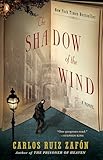
Carlos Ruiz Zafón (1964–2020) was the Spanish novelist whose The Shadow of the Wind (2001) became one of the bestselling Spanish-language novels in history, translated into more than fifty languages and read by tens of millions of readers worldwide. His ‘Cemetery of Forgotten Books’ series — set in Barcelona across the twentieth century — created one of the most fully realised fictional cities in popular literature: a Gothic, labyrinthine Barcelona of shadows, secrets, and the weight of the Spanish Civil War and Francoism. He spent much of his working life in Los Angeles but remained devoted to his Barcelona, which he described as a city ‘made of stories.‘
Where to Start: The Shadow of the Wind (2001)
The essential Zafón — and the novel that is both the beginning of his series and its fullest, most self-contained achievement. In 1945, ten-year-old Daniel Sempere is taken by his bookseller father to a hidden place called the Cemetery of Forgotten Books, where he is allowed to choose one book to keep and protect. He chooses a novel called The Shadow of the Wind by Julián Carax. As he grows up, he becomes obsessed with finding other books by the same author — and discovers that someone is systematically hunting down and destroying every copy of Carax’s work.
The novel moves between Daniel’s present (1950s Barcelona) and the story of Carax himself (1930s Barcelona), building a mystery that encompasses the Civil War, love and betrayal, and the question of what we owe to the books and stories that have shaped us. The atmosphere — fog, rain, cobblestones, haunted mansions, the city as labyrinth — is extraordinary.
The Prisoner of Heaven (2011)
The third novel in the series — shorter and more tightly plotted than its predecessors. Set in Barcelona in 1957, it follows Daniel Sempere and his friend Fermín Romero de Torres as they investigate a mystery connected to a prisoner in the Montjuïc castle who sends Daniel’s bookshop a curious Christmas gift. The novel deepens Fermín’s backstory — his imprisonment during the Franco regime — and connects to the secrets established in The Shadow of the Wind.
More of a continuation than a standalone novel; best read after The Shadow of the Wind.
The Labyrinth of the Spirits (2016)
The fourth and final volume — the most ambitious and most sprawling of the series, covering the full span of the Cemetery of Forgotten Books story from the Civil War to the death of Franco. The novel introduces Alicia Gris, a government agent investigating the disappearance of a minister, whose investigation leads back to the Sempere family and the Cemetery of Forgotten Books. It is Zafón’s attempt to bring everything together — all the threads of the series, all the characters — in a final reckoning.
The most plot-dense and the most historically detailed of the series; essential for readers who want to complete the story.
Why The Shadow of the Wind Is the Ideal First Book
For a reader new to Carlos Ruiz Zafón, The Shadow of the Wind is the ideal first book because it is his international breakout and the fullest expression of his distinctive gifts, the atmospheric storytelling, the love of books and mystery, and the richly gothic evocation of Barcelona. The Shadow of the Wind follows a boy who discovers a mysterious novel and becomes obsessed with uncovering the fate of its author, drawing him into a dark, intricate mystery in post-war Barcelona, beginning with the unforgettable Cemetery of Forgotten Books. As an entry point it is ideal, for it is his most famous work and a perfect example of his atmospheric, bookish, gothic fiction. It welcomes the newcomer with its compelling mystery, its love of books, and its richly atmospheric setting, drawing the reader into his distinctive world. It is his defining work and the one that best represents his gifts, so the new reader encounters Zafón at his finest. For the newcomer, then, The Shadow of the Wind is the natural and ideal starting point.
What to Expect as a New Reader
As a new reader, you can expect The Shadow of the Wind to be an atmospheric, gothic, and book-loving mystery. You can expect a compelling mystery, for a boy’s discovery of a mysterious novel draws him into uncovering the dark fate of its author. You can expect a love of books, for the novel is steeped in a passion for reading and literature, beginning with the haunting Cemetery of Forgotten Books. You can expect a richly atmospheric setting, for Zafón evokes a gothic, shadowy, post-war Barcelona of great atmosphere. You can expect intricate, gothic storytelling, full of secrets, danger, romance, and intertwined fates. You can expect lush, evocative prose. You can expect themes of memory, obsession, love, and the power of stories. Expect, in short, an atmospheric, gothic, and book-loving mystery, a captivating introduction to Zafón’s gifts.
Going Deeper After Your First Book
Once The Shadow of the Wind has introduced you to Zafón’s gifts, the natural next step is to explore the rest of his Cemetery of Forgotten Books cycle, the loosely connected sequence of atmospheric, gothic novels set in his shadowy Barcelona to which The Shadow of the Wind belongs. The other novels in the cycle return to the same world, the same city, and the same love of books and mystery, deepening and connecting their stories, and can be read in various orders, though beginning with The Shadow of the Wind is the natural path. Zafón’s characteristic strengths, the atmospheric storytelling, the love of books, and the gothic evocation of Barcelona, run throughout. The reader captivated by The Shadow of the Wind will find more of its magic in the cycle. Building your reading journey through Zafón is a matter of exploring the rest of the Cemetery of Forgotten Books. The reader who begins here will find one of the most atmospheric and beloved storytellers of recent decades to follow.
Reading Carlos Ruiz Zafón
Zafón’s fiction offers pleasures that are rare in literary fiction: genuine suspense, romantic atmosphere, the excitement of labyrinthine plots that connect across decades, and a passionate investment in books themselves as objects of mystery and meaning. His Barcelona is a city where the past is always present, where the ghosts of the Civil War shape every street corner, and where a secret library of forgotten books stands as the repository of everything that history has tried to erase. Begin with The Shadow of the Wind — it is among the most addictive novels of the twenty-first century, whatever its literary ambitions — and continue from there as the appetite takes you.
Frequently Asked Questions
Where should I start with Carlos Ruiz Zafón?
The Shadow of the Wind (2001) is the essential starting point — the novel that made Zafón internationally famous and introduced the Cemetery of Forgotten Books, his fictional archive of rare and forgotten literature in post-Civil War Barcelona. Daniel Sempere, the ten-year-old son of a bookseller, is taken to the Cemetery and chooses a book by the mysterious Julián Carax; when he tries to find other books by the same author, he discovers that someone is systematically destroying every copy of Carax's novels. The Shadow of the Wind is the most complete, most immediately satisfying, and best entry to Zafón's richly atmospheric Barcelona.
What is The Shadow of the Wind about?
The Shadow of the Wind (2001) follows Daniel Sempere, who as a boy discovers a novel called The Shadow of the Wind by the obscure author Julián Carax in the mysterious Cemetery of Forgotten Books. As Daniel grows up and falls in love, he becomes increasingly obsessed with discovering what happened to Carax and why a masked figure is destroying every copy of his work. The investigation takes Daniel through the streets and secrets of post-Civil War Barcelona — a city of secrets, collaborators, fugitives, and people trying to survive the Francoist present without being destroyed by it. The novel is a love letter to books, to Barcelona, and to the Gothic tradition of storytelling.
Do the Cemetery of Forgotten Books novels need to be read in order?
The Shadow of the Wind should be read first — it establishes the setting, the Cemetery of Forgotten Books, and the main family. The Angel's Game (2008) is a prequel set decades earlier, but it works better after reading The Shadow of the Wind because it retroactively enriches the first novel. The Prisoner of Heaven and The Labyrinth of the Spirits continue directly from The Shadow of the Wind and should be read in order. Reading the series in publication order (Shadow, Angel's Game, Prisoner, Labyrinth) gives the most satisfying experience, though The Shadow of the Wind stands fully alone.
What makes Zafón's fiction distinctive?
Zafón's fiction is distinguished by its extreme atmosphere — his Barcelona is a Gothic city of shadows, secrets, decaying mansions, and sinister figures — by his gift for plot (the mysteries in the Cemetery of Forgotten Books series are genuinely gripping) and by his tendency toward a romantic, self-consciously literary prose style that treats books and reading as profound spiritual acts. He wrote popular fiction with literary ambitions, and the combination made him the bestselling Spanish novelist of the early twenty-first century. His novels are sometimes dismissed as melodramatic; they are more honestly described as Gothic, in the tradition of Poe and Dickens.