Where to Start with Arthur C. Clarke: A Reading Guide
Where to start with Arthur C. Clarke — whether to begin with 2001, Childhood's End, or Rendezvous with Rama. A complete reading guide to the science fiction master.
Arthur C. Clarke (1917–2008) was the British science fiction writer who — alongside Isaac Asimov and Robert Heinlein — is considered one of the ‘Big Three’ of Golden Age science fiction. He is associated most closely with hard science fiction: novels that extrapolate from real scientific principles with rigorous accuracy, imagining future technologies (the geostationary communications satellite, the space elevator) in precise physical detail. His fiction is characterised by a sense of cosmic scale — humanity is always a small player in a universe of staggering size and complexity — and by a philosophical seriousness about what it means to be conscious in a universe largely indifferent to consciousness. 2001: A Space Odyssey, developed with Stanley Kubrick, is his most famous work; Childhood’s End is his most profound.
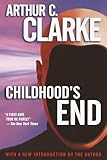
Where to Start: Childhood’s End (1953)
Clarke’s most ambitious novel and the best single demonstration of his philosophical vision. Alien ships appear silently over every major city on Earth; the Overlords make contact and begin a benevolent supervision of human civilisation, ending war, poverty, and suffering. Under alien guidance, humanity flourishes — and simultaneously begins to decline, as the conditions that had driven human creativity (the anxiety of the finite, the struggle against scarcity) disappear. Then the children begin to change.
The novel’s three-part structure moves from the immediate future to the far future, asking what humanity is ultimately for — whether we are a destination or a step. Clarke’s answer is one of science fiction’s most genuinely moving and most philosophically serious conclusions. His most important novel.
2001: A Space Odyssey (1968)
The most famous Clarke — developed simultaneously with Kubrick’s film, and meaningfully different from it. The novel spans millions of years: an alien monolith influences a tribe of man-apes at the dawn of humanity; in the near future, a similar monolith is discovered buried on the Moon; a mission to Jupiter investigates its signal, with the spacecraft’s computer HAL 9000 as the most compelling element of the human story.
Clarke’s prose is clearer than Kubrick’s images about the nature of the monolith and what the ending means — making it a useful companion to the deliberately ambiguous film. HAL 9000 remains the most iconic AI in all of fiction.
Rendezvous with Rama (1973)
Clarke’s most purely science-fictional adventure — a masterpiece of extrapolation and wonder. A massive cylindrical object, clearly artificial, enters the solar system in 2131; a crew under Commander Norton is sent to explore it before it departs. Inside they discover an alien world: seas, islands, cities, machines — all dormant, all without apparent purpose, all without any clearly living occupants. What is Rama? What is it for? Where is it going?
Clarke keeps the mystery beautifully unresolved. The novel is an experience of genuine wonder — the sensation of encountering something truly alien — rather than a puzzle to be solved. Won both the Hugo and Nebula Awards in 1974.
The Fountains of Paradise (1979)
Clarke’s last great novel — and his most technically specific. Vannevar Morgan, an engineer of extraordinary ambition, attempts to build the world’s first space elevator from a mountain peak in Sri Lanka, facing religious opposition (the mountain is the site of an ancient Buddhist shrine), engineering challenges, and the island’s own deep history. Clarke’s vision of the space elevator — detailed, credible, and thermodynamically rigorous — is his most sustained piece of scientific extrapolation. Won both the Hugo and Nebula Awards.
Why Childhood’s End Is an Ideal First Book
For a reader new to Arthur C. Clarke, one of the grand masters of science fiction, Childhood’s End is an ideal first book because it is among his most acclaimed and accessible novels and a fine expression of his distinctive gifts, the visionary imagination, the sense of cosmic wonder, and the engagement with profound ideas about humanity’s future. Childhood’s End imagines the arrival of mysterious alien overlords who bring peace to Earth, and the astonishing transformation of humanity that follows, in a visionary and thought-provoking novel. As an entry point it is ideal, for it is one of his best-known standalone works and a perfect example of his wonder-filled, idea-driven science fiction. It welcomes the newcomer with its compelling premise, its sense of cosmic wonder, and its profound ideas, drawing the reader into his visionary imagination. It is among his major works and a fine representation of his gifts, so the new reader encounters Clarke at his most characteristic. For the newcomer, then, Childhood’s End is an excellent starting point.
What to Expect as a New Reader
As a new reader, you can expect Childhood’s End to be a visionary, wonder-filled, and thought-provoking work of science fiction. You can expect a compelling premise, for mysterious alien overlords arrive and bring peace to Earth, while their ultimate purpose remains hidden. You can expect a sense of cosmic wonder, for Clarke evokes awe at the vastness and mystery of the universe and humanity’s place in it. You can expect profound ideas, for the novel explores the transformation and ultimate destiny of humanity. You can expect a sweeping, visionary scope. You can expect clear, accessible storytelling driven by ideas rather than character or action. You can expect a haunting, thought-provoking conclusion. Expect, in short, a visionary, wonder-filled, and thought-provoking work of science fiction, a fine introduction to Clarke’s gifts.
Going Deeper After Your First Book
Once Childhood’s End has introduced you to Clarke’s gifts, the reader who wishes to go deeper can explore his other novels, which continue his visionary imagination, his sense of cosmic wonder, and his engagement with profound ideas. His most famous work, the novel of a mysterious monolith and a voyage toward Jupiter, is a landmark of science fiction, while his other acclaimed works imagine such wonders as a vast alien spacecraft passing through the solar system and a great engineering project reaching toward space, each marked by his wonder and his ideas. Reading these after Childhood’s End deepens your appreciation of Clarke’s distinctive gifts, the visionary imagination, the cosmic wonder, and the engagement with profound ideas. His characteristic qualities run through his work. Building your reading journey through Clarke is a matter of following his fiction from Childhood’s End into his other novels. The reader who begins here and continues will encounter one of the grand masters of science fiction.
Reading Arthur C. Clarke
Clarke’s fiction is distinguished by two qualities: scientific rigour (he imagined technologies with a precision that made many of them foreseeable) and cosmic perspective (his sense of humanity’s smallness in a vast and indifferent universe). He is not a novelist of psychology or character — his protagonists are often ciphers, vehicles for ideas — but his ideas are genuinely extraordinary, and Childhood’s End in particular achieves something rare in science fiction: a genuinely moving emotional response to the most fundamental question the genre can ask. Begin with Childhood’s End for the most ambitious; try Rendezvous with Rama for the purest expression of Clarkian wonder.
Frequently Asked Questions
Where should I start with Arthur C. Clarke?
Childhood's End (1953) is the best starting point — Clarke's most ambitious novel and one of the genre's most profound meditations on humanity's place in the cosmos. Alien Overlords arrive over Earth and usher in an unprecedented era of peace and prosperity, but the price is humanity's future. Clarke delivers his cosmic vision — humanity as a phase, not a destination — with genuine philosophical seriousness and emotional power. 2001: A Space Odyssey is the best alternative for readers who want Clarke's most iconic work, developed alongside Kubrick's film.
What is Childhood's End about?
Childhood's End (1953) opens with alien ships arriving silently over every major city on Earth. The Overlords — whose faces are deliberately concealed for decades — bring peace, prosperity, and the end of war. But as humanity flourishes under alien supervision, human creativity declines, and the new generation of children begins to develop strange powers that point toward something no human can entirely comprehend. Clarke's novel asks: what if the arrival of benevolent aliens meant the end of human history as we know it? The answer is one of science fiction's most genuinely moving conclusions.
What is 2001: A Space Odyssey about?
2001: A Space Odyssey (1968) was developed simultaneously with Stanley Kubrick's film of the same name. The novel spans millions of years: from an alien monolith's influence on a tribe of prehistoric man-apes, through the discovery of a similar monolith buried on the Moon in the near future, to a mission to Jupiter to investigate its signal. On the way, the spacecraft's computer HAL 9000 — one of the most iconic AIs in all fiction — malfunctions. Clarke's hard science extrapolation is more explicit than the film's ambiguity, making the novel a useful companion to Kubrick's deliberately opaque visual version.
What is Rendezvous with Rama about?
Rendezvous with Rama (1973) is Clarke's most purely science-fictional adventure — the exploration of a massive alien spacecraft that enters the solar system in 2131. Commander Norton leads a crew to explore it before it departs, discovering inside it a perfect, silent, alien world: seas, islands, cities, machines — all without apparent purpose and without any clearly alive occupants. The novel is a masterpiece of extrapolation: Clarke imagines what an alien artefact might actually be like, and keeps the mystery beautifully unresolved. Won both the Hugo and Nebula Awards.