Virginia Woolf Books in Order: Complete Bibliography & Best Starting Points
Virginia Woolf's complete bibliography in order — from Mrs Dalloway and To the Lighthouse to The Waves and A Room of One's Own. Best starting points and why she still matters.
Virginia Woolf invented or perfected more of the techniques of the modernist novel than any other writer in English — stream of consciousness, the dissolution of conventional plot, the rendering of consciousness as the primary material of fiction rather than as commentary on events — and she did it in prose that is among the most beautiful in the language.
She was also, in A Room of One’s Own and Three Guineas, the most important feminist essayist of the early twentieth century. Both roles — novelist and essayist — are essential to understanding her work and her importance.
Where to Start
Mrs Dalloway (1925)
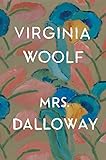
The most accessible of Woolf’s major novels. June 1923, London: Clarissa Dalloway, upper-class wife of a Member of Parliament, is preparing for a party she is giving that evening. Across the city, Septimus Warren Smith — a World War One veteran suffering from what we would now call PTSD — is being treated by a psychiatrist who does not understand or care about his condition. The two characters never meet. The novel follows both their days through Woolf’s characteristic technique: consciousness moving through time and memory without the conventional markers of scene and chapter.
The formal innovation is radical but the emotional content is immediately felt: the cost of maintaining a social self, the specific damage done by war, the loneliness inside a life that appears full. Under 200 pages.
A Room of One’s Own (1929)
For readers who want to begin with Woolf’s non-fiction. This extended essay — based on two lectures delivered at Cambridge — is the most important work of feminist literary criticism in English. Woolf’s central argument: women have been excluded from literary production not by lack of talent but by lack of material conditions (money, privacy, time). The essay is also a meditation on what a tradition of women’s writing would look like if it existed, and what it would require to flourish. The figure of “Shakespeare’s sister” — a woman with Shakespeare’s gifts born in his time, who would have ended badly — is among the most powerful thought experiments in the history of feminist writing.
To the Lighthouse (1927)
Woolf’s most celebrated novel. The Ramsay family and their guests spend a summer afternoon at their holiday house; ten years later, after the war and the death of Mrs. Ramsay, the survivors return. The lighthouse of the title is proposed as a destination in the opening pages and reached in the closing ones — and everything between is Woolf’s examination of consciousness, of loss, of what time does to the people it passes through.
The central section — “Time Passes,” ten pages covering the ten years between the novel’s two parts — is the most technically audacious sequence in twentieth-century English fiction.
Complete Bibliography
Novels
| Title | Year | Note |
|---|---|---|
| The Voyage Out | 1915 | First novel; conventional by her later standards |
| Night and Day | 1919 | Her most Victorian novel; minor |
| Jacob’s Room | 1922 | First fully modernist novel |
| Mrs Dalloway | 1925 | Essential; best starting point |
| To the Lighthouse | 1927 | Essential; central achievement |
| Orlando | 1928 | Playful; gender and time; Virginia’s love letter to Vita Sackville-West |
| The Waves | 1931 | Most radical; six voices; poetic prose |
| The Years | 1937 | Late return to realism; underrated |
| Between the Acts | 1941† | Final novel; published posthumously |
†Posthumous
Major Essays and Non-Fiction
| Title | Year | Note |
|---|---|---|
| A Room of One’s Own | 1929 | Essential feminist essay |
| Three Guineas | 1938 | War, fascism, women’s education |
| The Common Reader I & II | 1925, 1932 | Literary essays; finest criticism |
| Moments of Being | 1976† | Autobiographical essays; posthumous |
The Waves: A Special Case
The Waves (1931) is Woolf’s most formally radical novel — six characters who speak in unattributed, alternating passages from childhood to old age, with prose so lyrical and so detached from conventional narrative that it reads as extended poetic meditation. It is not the right starting point. But for readers who have worked through Mrs Dalloway and To the Lighthouse, The Waves is the fullest realisation of what Woolf’s technique could achieve.
A Pioneer of Modernist Fiction
Virginia Woolf was one of the great pioneers of modernist fiction, a writer whose radical innovations in form and technique, particularly in the rendering of consciousness and time, transformed the novel and established her as a central figure of literary modernism. Woolf pioneered new methods of fiction, particularly new techniques for rendering the flow of consciousness and the experience of time, and her radical innovations in form transformed the novel and influenced the development of modern fiction. Her great novels, with their fluid rendering of consciousness, their experiments with time and structure, and their poetic prose, exemplify the achievements of literary modernism and established her as one of its central figures. This pioneering of modernist fiction is central to Woolf’s significance, for her radical innovations in form and technique, particularly in the rendering of consciousness and time, transformed the novel and established her as a central figure of literary modernism. Her formal innovations expanded the possibilities of the novel and influenced its subsequent development. For readers, Woolf offers a pioneer of modernist fiction, radical innovations in form and technique that transformed the novel. A pioneer of modernist fiction, Woolf transformed the novel through her radical innovations in form and technique, particularly in the rendering of consciousness and time, establishing herself as a central figure of literary modernism.
Consciousness, Time, and the Inner Life
A central achievement of Virginia Woolf’s fiction is its profound rendering of consciousness, time, and the inner life, its capacity to capture the flow of thought, perception, and feeling and the subjective experience of time. Woolf’s fiction is centrally concerned with consciousness and the inner life, with the flow of thought, perception, memory, and feeling within the mind, and with the subjective experience of time, and she developed innovative techniques to render these inner realities with extraordinary subtlety and depth. Her fiction captures the movement of consciousness, the flow of the inner life, and the way that time is experienced subjectively, expanding and contracting in the mind, and she renders these inner realities with a poetic precision and depth. This rendering of consciousness, time, and the inner life is central to Woolf’s achievement, for her capacity to capture the flow of thought, perception, and feeling and the subjective experience of time transformed the novel’s representation of the inner life. Her profound exploration of consciousness and the inner life gives her fiction its distinctive depth and its modernist power. For readers, Woolf offers a profound rendering of consciousness, time, and the inner life, the flow of thought, perception, and feeling and the subjective experience of time. Consciousness, time, and the inner life are a central achievement of Woolf’s fiction, its profound rendering of the flow of thought, perception, and feeling and the subjective experience of time.
A Feminist Voice
Beyond her achievement as a novelist, Virginia Woolf was a powerful and influential feminist voice, whose essays and reflections on women, writing, and society have made her a foundational figure of feminist thought. Woolf was a major feminist thinker and essayist, and her reflections on women’s place in society, on the obstacles facing women writers, and on the conditions necessary for women’s creative and intellectual freedom have made her a foundational figure of feminist thought. Her celebrated essay on women and writing, in particular, with its argument for the material and social conditions necessary for women’s creative freedom, has become a landmark of feminist thought and continues to influence and inspire. This role as a feminist voice is central to Woolf’s significance, for her essays and reflections on women, writing, and society have made her a foundational figure of feminist thought. Her powerful and influential feminism complements her achievement as a novelist and extends her significance beyond fiction. For readers, Woolf offers a powerful feminist voice, influential essays and reflections on women, writing, and society. A feminist voice, Woolf was a powerful and influential feminist thinker whose essays and reflections on women, writing, and society have made her a foundational figure of feminist thought.
Reading Order Recommendations
New to Woolf: Mrs Dalloway → To the Lighthouse → A Room of One’s Own.
Essay reader: A Room of One’s Own → Three Guineas → The Common Reader.
Complete Woolf: Jacob’s Room → Mrs Dalloway → To the Lighthouse → Orlando → The Waves → Between the Acts.
Frequently Asked Questions
What is the best Virginia Woolf book to start with?
Mrs Dalloway is the standard recommendation for new readers — it is Woolf's most accessible major novel, covering a single day in London through the shifting consciousnesses of Clarissa Dalloway (preparing for a party) and Septimus Warren Smith (a shell-shocked veteran). The stream-of-consciousness technique is demanding but the novel is short (under 200 pages) and the emotional payoff is immediate. A Room of One's Own is the best entry point for readers who want the feminist essay rather than the fiction.
What is stream of consciousness in Woolf's novels?
Stream of consciousness is a narrative technique in which the narrative follows the movement of a character's mind — thoughts, sensations, memories, associations — without the conventional mediation of plot or authorial commentary. In Woolf's hands, this means a sentence might move from a character's observation of a dress in a shop window to a memory from childhood to a philosophical reflection and back to the present, all without breaks. The effect is to put the reader inside subjective experience rather than observing it from outside.
Is Virginia Woolf difficult to read?
Her novels require adjustment — the stream-of-consciousness technique means the reader cannot rely on conventional plot mechanics to propel them forward. Once adjusted, most readers find her prose deeply pleasurable: she is one of the finest stylists in English. The novels are also short (Mrs Dalloway is under 200 pages; To the Lighthouse under 220) so the adjustment period is brief relative to the reward. A Room of One's Own and her essays are more immediately accessible than the novels.
What is A Room of One's Own about?
A Room of One's Own (1929) is Woolf's extended essay on women and fiction, based on two lectures she gave at Cambridge. Her central argument: a woman who wants to write fiction needs two things — money of her own (financial independence) and a room of her own (private space, solitude, freedom from domestic obligation). She examines why women have written so little fiction historically, what the conditions of female literary production have been, and what a tradition of women's writing would require to flourish. It remains the most important feminist literary essay in English.
What is To the Lighthouse about?
To the Lighthouse (1927) follows the Ramsay family across two time periods separated by ten years and World War One. In the first section, the family and their guests spend a summer afternoon at their holiday house in the Scottish Hebrides; in the second (ten years later, after the war and several deaths), a reduced party makes the trip to the lighthouse that was proposed in the first section and postponed. The lighthouse itself is never explained as a symbol — Woolf resisted allegorical readings — but it functions as the novel's central image of aspiration and the distance between what we want and what we reach.


