John Irving Books in Order: Complete Bibliography & Best Starting Points
John Irving's complete bibliography in order — from The World According to Garp and A Prayer for Owen Meany to The Cider House Rules. Best starting points.

John Irving is one of the most distinctive voices in American fiction — a writer who combines the exuberance of Dickens (whom he cites as his primary influence) with a specifically American violence and sexuality, and who builds novels of great structural complexity while remaining completely accessible. His obsessions (wrestling, Vienna, bears, New England, the random cruelty of accident) recur across his work with the consistency of a signature.
Born in Exeter, New Hampshire in 1942, he studied under Kurt Vonnegut at Iowa and has been a competitive wrestler throughout his life (a sport that features prominently in several novels). He published his first novel in 1968 and became a major literary figure with The World According to Garp (1978).
Where to Start
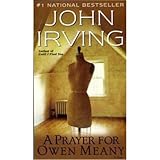
A Prayer for Owen Meany (1989)
Irving’s masterpiece and the best starting point. Owen Meany, the smallest boy in Gravesend, New Hampshire, believes he is an instrument of God — that his life has a purpose and that he knows how it will end. John Wheelwright, his best friend, narrates their childhood together and Owen’s extraordinary fate. The structural foreshadowing — every detail in the early chapters matters, and the novel’s construction is among the most intricate in American fiction — is fully apparent only on re-reading. The first reading is genuinely comic; the ending is devastating.
The World According to Garp (1978)
Irving’s breakthrough novel — the place where his distinctive voice first emerged. T.S. Garp’s life (from his singular birth to his violent death) is the frame for Irving’s exploration of the random violence that interrupts American domestic life and the feminist politics of the period (his mother Jenny Fields becomes a feminist icon against her will). The novel is funny, violent, and strange in combinations that Irving makes seem entirely natural.
The Political Novel
The Cider House Rules (1985)
Irving’s most politically engaged novel — an argument for abortion rights through the story of Homer Wells, an orphan who comes to understand, through his experience in a Maine orphanage-cum-abortion clinic, why the procedure is morally necessary. The novel’s social argument is made through character and narrative rather than polemic, and it is one of the most effective examples of how fiction can change minds on a contested political question.
Complete Bibliography
| Title | Year | Note |
|---|---|---|
| Setting Free the Bears | 1968 | First novel; Vienna; bears |
| The Water-Method Man | 1972 | Second novel |
| The 158-Pound Marriage | 1974 | Third novel; wrestling |
| The World According to Garp | 1978 | Breakthrough; bestseller |
| The Hotel New Hampshire | 1981 | Bear; Vienna; family |
| The Cider House Rules | 1985 | Abortion rights; Maine |
| A Prayer for Owen Meany | 1989 | Masterpiece; best starting point |
| A Son of the Circus | 1994 | India; acrobats |
| A Widow for One Year | 1998 | Amsterdam; guilt |
| The Fourth Hand | 2001 | Hand transplant; comedy |
| Until I Find You | 2005 | Long; tattoos; memory |
| Last Night in Twisted River | 2009 | Logging; accidental death |
| In One Person | 2012 | Bisexuality; memoir-ish |
| Avenue of Mysteries | 2015 | Mexico; religion |
| The Last Chairlift | 2022 | Long; family; ski resort |
A Modern Storyteller in the Dickensian Tradition
John Irving is one of the great contemporary storytellers in the Dickensian tradition, a writer whose expansive, richly plotted, and vividly peopled novels combine compelling storytelling with memorable characters, comic energy, and emotional depth. Irving writes in the tradition of the great nineteenth-century novelists, particularly Dickens, producing expansive, richly plotted novels full of vivid characters, dramatic incident, comic energy, and emotional depth. His novels are marked by their compelling storytelling, their elaborate and engaging plots, their memorable and often eccentric characters, and their combination of comedy and tragedy, humor and emotional depth. This Dickensian storytelling is central to Irving’s appeal, for his expansive, richly plotted, and vividly peopled novels combine compelling storytelling with memorable characters, comic energy, and emotional depth, in the tradition of the great nineteenth-century novelists. His gift for storytelling, his vivid characters, and his combination of comedy and emotional depth give his fiction its rich appeal. For readers who love expansive, richly plotted storytelling in the Dickensian tradition, Irving offers compelling novels full of vivid characters, comic energy, and emotional depth. A modern storyteller in the Dickensian tradition, Irving produces expansive, richly plotted, and vividly peopled novels that combine compelling storytelling with memorable characters, comic energy, and emotional depth.
Recurring Worlds and Obsessions
A distinctive feature of John Irving’s fiction is its recurring worlds, motifs, and obsessions, the characteristic elements and preoccupations that recur across his novels and give his body of work its distinctive identity. Irving’s fiction is marked by recurring elements, motifs, and obsessions, characteristic settings, situations, and preoccupations that appear again and again across his novels and give his body of work its distinctive and recognizable identity. These recurring worlds and obsessions, the characteristic settings, the distinctive motifs, and the preoccupations that animate his fiction, create a distinctive Irving world, a recognizable body of work unified by its characteristic elements and concerns. This recurrence of worlds and obsessions is a distinctive feature of Irving’s fiction, for the characteristic elements, motifs, and preoccupations that recur across his novels give his body of work its distinctive identity and its recognizable character. The recurring elements of his fiction, returning across his novels in varied forms, create a unified and distinctive body of work. For readers, Irving offers recurring worlds and obsessions, the characteristic elements and preoccupations that recur across his novels and give his body of work its distinctive identity. Recurring worlds and obsessions are a distinctive feature of Irving’s fiction, the characteristic settings, motifs, and preoccupations that recur across his novels and give his body of work its distinctive and recognizable identity.
Comedy, Tragedy, and the Fullness of Life
A defining quality of John Irving’s fiction is its combination of comedy and tragedy, its embrace of the fullness of life in all its humor and sorrow, its absurdity and its emotional depth. Irving’s fiction combines comedy and tragedy, humor and sorrow, the absurd and the emotionally profound, embracing the fullness of life in all its variety and refusing to separate the comic from the tragic. His novels move between humor and heartbreak, comic energy and emotional depth, rendering the fullness of human experience in all its absurdity and its sorrow, its comedy and its tragedy. This combination of comedy and tragedy is central to Irving’s achievement, for he embraces the fullness of life, combining humor and sorrow, the absurd and the profound, and refusing to separate the comic from the tragic. His fiction captures the full range of human experience, its comedy and its tragedy, its absurdity and its emotional depth, giving his novels their richness and their humanity. For readers, Irving offers comedy, tragedy, and the fullness of life, the combination of humor and sorrow, the absurd and the profound, that captures the full range of human experience. Comedy, tragedy, and the fullness of life are a defining quality of Irving’s fiction, its combination of comedy and tragedy, its embrace of the fullness of life in all its humor and sorrow, its absurdity and its emotional depth.
Reading Order Recommendations
New to Irving: A Prayer for Owen Meany → The World According to Garp → The Cider House Rules.
Chronological: The World According to Garp → The Cider House Rules → A Prayer for Owen Meany.
Short essential: The World According to Garp → A Prayer for Owen Meany.
Frequently Asked Questions
What is the best John Irving novel to start with?
A Prayer for Owen Meany (1989) is the best starting point for most readers — it is Irving's most formally ambitious and most emotionally powerful novel, and the one that demonstrates most clearly what Irving does: the combination of comic exuberance, structural foreshadowing, and genuine pathos. The World According to Garp is Irving's most celebrated novel and the place where his distinctive voice first fully emerged, but Owen Meany surpasses it in formal achievement.
What is The World According to Garp about?
The World According to Garp (1978) follows T.S. Garp from his unusual birth (his mother, Jenny Fields, is a nurse who inseminated herself with a comatose patient) through his childhood in a New England boys' school, his marriage, his affairs, his writing career, and his death. The novel is funny, violent, and moving in rapid succession — Irving's characteristic mode. It became a major bestseller, established Irving's reputation, and introduced his recurring obsessions: wrestling, Vienna, bears, and the random violence of American life.
What is A Prayer for Owen Meany about?
A Prayer for Owen Meany (1989) is narrated by John Wheelwright, who tells the story of his childhood friendship with Owen Meany — a small boy with a piercing voice who believes he is an instrument of God and knows how he will die. The novel is structured around Owen's vision and the fulfilment of that vision, and the structural foreshadowing (every detail in the early chapters turns out to matter) is among the most carefully constructed in American fiction. It is also genuinely funny in its early sections, and genuinely devastating in its final pages.
What is The Cider House Rules about?
The Cider House Rules (1985) follows Homer Wells, an orphan who grows up in a Maine orphanage under the care of Dr. Larch — an ether-addicted obortionist who performs both legal and illegal abortions. The novel is an argument for abortion rights through the story of Homer's moral education: he begins as someone who refuses to perform abortions and ends understanding why they are necessary. It is the most directly political of Irving's novels and the most tightly plotted.