F. Scott Fitzgerald Books in Order: Complete Bibliography & Reading Guide
F. Scott Fitzgerald's complete bibliography in order — from This Side of Paradise and The Great Gatsby to Tender Is the Night and The Last Tycoon. Best starting points and what makes him essential.
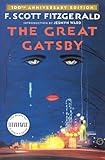
F. Scott Fitzgerald wrote one perfect novel, one deeply flawed and deeply moving novel, two apprentice works of varying quality, and an unfinished masterpiece he died before completing. The perfect novel — The Great Gatsby — is the most analysed American novel of the twentieth century and one of the shortest at around 180 pages. The deeply flawed one — Tender Is the Night — contains passages of comparable greatness stretched over a structure that cost him nearly a decade to build and that he got wrong.
He died in 1940 at forty-four, convinced he was forgotten. He was. His reputation was restored posthumously. The Great Gatsby was not a bestseller in his lifetime — it sold around 20,000 copies in 1925. It has now sold over 25 million.
Where to Start
The Great Gatsby (1925)
The American novel most assigned in schools, most analysed in universities, most imitated by other writers, and most re-read by people who first encountered it as a school text and found, on returning to it as adults, that it contains more than they remembered.
Jay Gatsby throws parties at his Long Island mansion in the hope of reconnecting with Daisy Buchanan, the woman he loved five years before; Nick Carraway, Daisy’s cousin and Gatsby’s next-door neighbour, narrates the summer of 1922 that ends in catastrophe. The novel is 180 pages long. Every sentence is doing something.
Its central subject is the American dream and its corruption: Gatsby’s belief that wealth and will can recover the past, and the green light at the end of Daisy’s dock that represents everything that cannot be reached. Fitzgerald’s genius is to make Gatsby’s delusion beautiful and his failure inevitable simultaneously.
The Pulitzer jury that year gave the prize to another novel. This remains one of the prize’s most famous errors.
Complete Bibliography in Order
Novels
| Title | Year | Note |
|---|---|---|
| This Side of Paradise | 1920 | Debut; autobiographical; made him famous |
| The Beautiful and Damned | 1922 | Anthony Patch’s deterioration; longer; minor |
| The Great Gatsby | 1925 | Essential; start here |
| Tender Is the Night | 1934 | Most ambitious; Fitzgerald’s own favourite |
| The Last Tycoon | 1941† | Unfinished; Hollywood novel; essential fragments |
†Posthumous; unfinished at his death.
Short Stories (Selected Collections)
| Title | Year | Note |
|---|---|---|
| Flappers and Philosophers | 1920 | First collection |
| Tales of the Jazz Age | 1922 | Includes “The Diamond as Big as the Ritz” |
| All the Sad Young Men | 1926 | Most significant collection |
| Taps at Reveille | 1935 | Last collection published in his lifetime |
| The Short Stories of F. Scott Fitzgerald | 1989 | Best modern single-volume selection |
The Essential Short Fiction
Fitzgerald’s short stories are in some ways more consistent than his novels — he wrote them primarily for money (he was paid extraordinary sums by the Saturday Evening Post at his peak) but the best of them are as good as anything in his novels:
- “The Diamond as Big as the Ritz” — a surrealist fantasy about American wealth; one of his finest stories
- “Winter Dreams” — a rehearsal for Gatsby; a man who pursues the golden girl and discovers what she costs
- “Babylon Revisited” — a reformed alcoholic returns to Paris to reclaim his daughter; the most autobiographical of his stories
- “Bernice Bobs Her Hair” — a social comedy; lighter, but impeccably constructed
The Voice of the Jazz Age
F. Scott Fitzgerald was the defining voice of the Jazz Age, the chronicler of the glittering, restless, and disillusioned America of the 1920s, whose fiction captured the era’s beauty, excess, and underlying sadness with a lyrical brilliance unmatched in American literature. Fitzgerald gave voice to the Jazz Age, the era of the 1920s with its glamour, excess, restlessness, and underlying disillusionment, and his fiction captured the glittering surface and the underlying sadness of the age with a lyrical brilliance that made him its defining chronicler. His celebrated The Great Gatsby, in particular, captures the beauty, the excess, the longing, and the disillusionment of the Jazz Age, rendering the era’s glittering surface and its underlying emptiness with an unmatched lyrical power. This role as the voice of the Jazz Age is central to Fitzgerald’s achievement, for he captured the glamour, excess, and underlying sadness of the 1920s with a lyrical brilliance that made him the defining chronicler of the era. His fiction renders the beauty and the disillusionment of the age, its glittering surface and its underlying emptiness, with a lyrical power unmatched in American literature. For readers, Fitzgerald offers the voice of the Jazz Age, the glittering, restless, and disillusioned America of the 1920s captured with lyrical brilliance. The voice of the Jazz Age, Fitzgerald was the defining chronicler of the glittering, restless, and disillusioned America of the 1920s, whose fiction captured the era’s beauty, excess, and underlying sadness with a lyrical brilliance unmatched in American literature.
The American Dream and Its Disillusionment
A central concern of F. Scott Fitzgerald’s fiction is the American dream and its disillusionment, the longing for success, wealth, and self-transformation that drives his characters, and the emptiness, failure, and disillusionment that so often attend its pursuit. Fitzgerald’s fiction is animated by a profound engagement with the American dream, with the longing for success, wealth, status, and self-transformation that drives his characters, and with the disillusionment, emptiness, and tragedy that so often attend the pursuit of that dream. His celebrated The Great Gatsby, in particular, anatomizes the American dream and its disillusionment, following its protagonist’s longing for wealth, status, and the recovery of a lost love, and exposing the emptiness, corruption, and tragedy beneath the glittering pursuit of the dream. This concern with the American dream and its disillusionment is central to Fitzgerald’s fiction, for he explored the longing that drives his characters and the emptiness and disillusionment that so often attend its pursuit, exposing the gap between the dream and its reality. His fiction renders both the seductive power of the American dream and the disillusionment, failure, and tragedy that attend its pursuit. For readers, Fitzgerald offers a profound exploration of the American dream and its disillusionment, the longing for success and self-transformation and the emptiness that attends its pursuit. The American dream and its disillusionment are a central concern of Fitzgerald’s fiction, the longing for success, wealth, and self-transformation that drives his characters, and the emptiness, failure, and disillusionment that so often attend its pursuit.
Lyrical Beauty and Romantic Longing
F. Scott Fitzgerald’s fiction is distinguished by its lyrical beauty and its romantic longing, the exquisite prose and the profound yearning that give his work its distinctive emotional power and its enduring appeal. Fitzgerald wrote with an exquisite lyrical beauty, a prose of remarkable grace, elegance, and emotional resonance that is among the most celebrated in American literature, and this lyrical beauty gives his fiction its distinctive power and appeal. His fiction is also animated by a profound romantic longing, a deep yearning for beauty, love, success, and the recovery of what is lost, that suffuses his work with emotional intensity and poignancy. This combination of lyrical beauty and romantic longing gives Fitzgerald’s fiction its distinctive emotional power, for his exquisite prose renders the profound yearning of his characters with a beauty and poignancy that move readers deeply. His lyrical beauty and his romantic longing combine to give his fiction its emotional intensity, its poignancy, and its enduring appeal. For readers, Fitzgerald offers lyrical beauty and romantic longing, the exquisite prose and the profound yearning that give his work its distinctive emotional power. Lyrical beauty and romantic longing distinguish Fitzgerald’s fiction, the exquisite prose and the profound yearning that give his work its distinctive emotional power and its enduring appeal.
Reading Order Recommendations
New to Fitzgerald: The Great Gatsby → Tender Is the Night. The perfect compression, then the flawed ambition.
For short story readers: This Side of Paradise → “The Diamond as Big as the Ritz” → The Great Gatsby. This traces his development before the masterpiece.
Complete Fitzgerald: This Side of Paradise → The Beautiful and Damned → The Great Gatsby → Tender Is the Night → The Last Tycoon. The full arc from hope to ruin, which mirrors the arc of his subject matter.
Frequently Asked Questions
What is the best F. Scott Fitzgerald novel to start with?
The Great Gatsby is the only correct starting point — at under 200 pages it is both his most concentrated work and the novel most readers mean when they talk about Fitzgerald. Everything else he wrote is a variation on or expansion of its themes. Tender Is the Night is his most ambitious novel and the better choice for readers who want to understand the full arc of his talent, but it requires more patience and a reader already invested in his world.
Did Fitzgerald consider The Great Gatsby his best novel?
No — Fitzgerald considered Tender Is the Night his most significant work and was deeply wounded by its critical reception in 1934. He spent the better part of a decade writing it and believed it captured the disintegration of his generation more fully than Gatsby did. History has tended to prefer Gatsby: its compression and precision have aged better than Tender's ambitions. But Fitzgerald's own preference should inform how we read both books.
Why did Fitzgerald fail to win the Pulitzer Prize?
The Great Gatsby was published in 1925 and was not awarded the Pulitzer that year — the prize went to Edna Ferber's So Big. This is one of the most frequently cited failures of the Pulitzer committee. Fitzgerald received no major award during his lifetime and died believing himself a failure, with Gatsby out of print. The novel's reputation was restored largely by Edmund Wilson and other critics in the years following Fitzgerald's death in 1940.
What is Tender Is the Night about?
Tender Is the Night (1934) follows Dick Diver, a brilliant American psychiatrist, and his wife Nicole, who is both his patient and his financial support, through their life among the American expatriate community on the French Riviera in the 1920s. It is a novel about the corruption of potential — Dick's gifts are gradually consumed by the money and leisure that Nicole's family provides — and about the specific damage that the Jazz Age wrought on the people who lived it most fully. It draws on Fitzgerald's marriage to Zelda, who was hospitalised for schizophrenia.