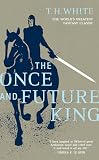
British author whose The Once and Future King, a reworking of the Arthurian legend, is among the most beloved retellings of the Matter of Britain ever written.
T. H. White was a British author and scholar whose retelling of the Arthurian legend, The Once and Future King, stands as one of the masterworks of twentieth-century fantasy and one of the most humane and psychologically rich accounts of the Matter of Britain ever written. Published in its complete form in 1958, the book draws together and expands four earlier volumes to trace the story of Arthur from his childhood education by the wizard Merlyn through his tragic adult reign and the dissolution of Camelot.
What distinguishes White’s Arthur from earlier retellings is its tone: by turns comic, elegiac, satirical, and deeply serious, the book approaches its medieval material through thoroughly modern eyes. The opening section, later published separately as The Sword in the Stone, follows young Wart (the future Arthur) as Merlyn teaches him about justice, power, and the nature of humanity by transforming him into various animals. These sequences blend whimsy and genuine philosophical substance in ways that influenced countless later fantasy writers.
White wrote the book during World War II, and the question of how to prevent war and build a just society pervades the text. Merlyn, who lives backward through time and thus knows what will happen, ranks among the most original figures in Arthurian literature. Alan Jay Lerner and Frederick Loewe’s musical Camelot was directly based on White’s book. For readers who know only the bare outlines of the Arthurian legend, The Once and Future King is the richest and most rewarding place to begin.
Reading Guides