
Bestseller
Mockingjay
by Suzanne Collins
4.1
Katniss Everdeen becomes the Mockingjay, the symbol of the rebellion against the Capitol, as all-out war engulfs Panem and extracts a devastating personal cost.
Check Price on Amazon (paid link)239 expert-reviewed books — page 4 of 10
by Suzanne Collins
Katniss Everdeen becomes the Mockingjay, the symbol of the rebellion against the Capitol, as all-out war engulfs Panem and extracts a devastating personal cost.
Check Price on Amazon (paid link)
by Robert A. Heinlein
A human raised by Martians returns to Earth and, unable to comprehend human society, begins to transform it from within.
Check Price on Amazon (paid link)
by James Dashner
Thomas wakes up in a box with no memory, arriving in a community of boys trapped inside a massive, deadly maze — and his arrival immediately begins changing everything they thought they knew.
Check Price on Amazon (paid link)
by Blake Crouch
A physics professor is kidnapped, wakes up in a version of his life where he made different choices, and must navigate a multiverse of parallel worlds to find his way back to the family he loves.
Check Price on Amazon (paid link)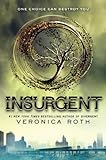
by Veronica Roth
In the aftermath of the Erudite attack, Tris navigates shifting faction alliances, survivor's guilt, and a massive revelation about the true purpose of the faction system.
Check Price on Amazon (paid link)
by Suzanne Collins
A prequel following eighteen-year-old Coriolanus Snow as he mentors a District 12 tribute in the 10th Hunger Games, charting his transformation into Panem's future tyrant.
Check Price on Amazon (paid link)
by James Dashner
The Gladers escape the Maze only to face another WICKED trial — a scorched, sun-devastated wasteland they must cross while battling crazed Cranks and uncovering deeper layers of manipulation.
Check Price on Amazon (paid link)
by Audrey Niffenegger
Henry DeTamble has a genetic condition that causes him to involuntarily time travel, always to times and places connected to his own life — including the childhood of the woman he will one day marry.
Check Price on Amazon (paid link)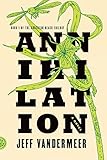
by Jeff VanderMeer
The twelfth expedition into the mysterious Area X sends four unnamed women scientists into an environment that defies biological and physical understanding.
Check Price on Amazon (paid link)
by Stephenie Meyer
An alien soul inhabits a human body and must navigate two sets of memories, loyalties, and loves in a world occupied by a parasitic alien race.
Check Price on Amazon (paid link)
by Veronica Roth
Tris and Four escape the city to discover the truth about their world's genetic experiments, leading to a final sacrifice that divided readers and defined the trilogy's legacy.
Check Price on Amazon (paid link)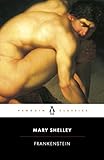
by Mary Shelley
Victor Frankenstein creates life from dead matter and then abandons his creation. Shelley's 1818 novel, written when she was 18, invented science fiction as a genre and remains the most philosophically profound horror novel ever written: a meditation on creation, abandonment, and what it means to be human.
Check Price on Amazon (paid link)
by Jules Verne
The unflappable English gentleman Phileas Fogg bets his fortune at the Reform Club that he can circumnavigate the globe in eighty days — and immediately sets off with his new valet Passepartout, pursued by a detective who believes Fogg is a bank robber. Verne's most beloved novel is propulsive, funny, and ingeniously plotted: an argument that the world is finite, knowable, and worth racing across.
Check Price on Amazon (paid link)
by Diana Gabaldon
Twenty years after the events of Outlander, Claire returns to Scotland with her adult daughter Brianna to tell her the truth. The novel unfolds in a complex dual timeline, beginning at the aftermath of the Battle of Culloden and working backward through the Jacobite Rising to reveal how everything ended — and what it cost.
Check Price on Amazon (paid link)
by H.G. Wells
Cylinders from Mars crash into the English countryside and open to reveal tentacled Martians who begin methodically annihilating human civilization with heat-rays and tripod war machines. Wells's 1898 novel invented the alien invasion genre and used it to turn the logic of British imperial power inside out, placing England in the position of the colonised.
Check Price on Amazon (paid link)
by Diana Gabaldon
Twenty years have passed since Culloden. Jamie Fraser survived. Claire travels back through the stones to find him — and does, in Edinburgh in 1766. Their reunion after two decades apart is the emotional centrepiece of the entire Outlander series, before the narrative expands into a dangerous voyage to the Caribbean and Jamaica.
Check Price on Amazon (paid link)
by Diana Gabaldon
As the American Revolution approaches, Fraser's Ridge faces violence from all sides — Regulators, Loyalists, Patriot militias — and a letter arrives that warns of events to come. The sixth Outlander novel follows Jamie and Claire through the years 1772–1776, building toward the war that will define the new nation and test their family's loyalties.
Check Price on Amazon (paid link)
by Arkady Martine
The Hugo Award-winning sequel to A Memory Called Empire sends Three Seagrass and Mahit beyond the edges of the Teixcalaan Empire to investigate an alien threat — and asks what it means to communicate across the largest possible distance: the gap between species that did not evolve from the same origin.
Check Price on Amazon (paid link)
by Diana Gabaldon
The Revolutionary War has begun, and Jamie and Claire are caught between the British and American sides — with Jamie serving as a British officer while believing in American independence. Their son William navigates his own loyalties. Meanwhile, Roger and Brianna in the twentieth century face their own crisis involving the past they've left behind.
Check Price on Amazon (paid link)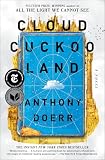
by Anthony Doerr
Five characters across three time periods — fifteenth-century Constantinople, contemporary Idaho, and a generation ship in the distant future — are connected by a single ancient Greek manuscript. A meditation on why stories matter.
Check Price on Amazon (paid link)
by Diana Gabaldon
Jamie and Claire make their new home in the American colonies, building Fraser's Ridge in the North Carolina backcountry as the rumblings of revolution grow around them. Meanwhile, their daughter Brianna in the twentieth century discovers a letter predicting her parents' fate — and must decide whether to use the stones to change it.
Check Price on Amazon (paid link)
by Diana Gabaldon
The ninth Outlander novel brings Brianna and Roger back to the eighteenth century and to Fraser's Ridge, reuniting the family across time as the Revolutionary War reaches the Carolinas. Gabaldon navigates the complexities of a divided family during a divided war, with Jamie and Claire at the centre of a community trying to survive history.
Check Price on Amazon (paid link)
by Jules Verne
Professor Otto Lidenbrock finds a runic message revealing a route to the centre of the earth through an Icelandic volcano. He drags his reluctant nephew Axel and a taciturn Icelandic guide into the depths — through vast underground seas, prehistoric forests, and geological wonders — in Verne's most rapturously imaginative novel.
Check Price on Amazon (paid link)
by Pierce Brown
In the aftermath of the Dark Age, the survivors must rebuild or die. Darrow fights to hold what remains of the Republic. Lysander takes the final steps toward the destiny he was born into. And revelations about the origins of the Society recast everything that has come before.
Check Price on Amazon (paid link)Disclosure: Amazon links on this page are affiliate links. If you purchase through them we earn a small commission at no extra cost to you.