Bernstein's framework for intelligent investing built on four pillars: the theory of investing (risk and return, asset allocation), the history of investing (what markets have actually done over two centuries), the psychology of investing (why investors consistently make the same costly mistakes), and the business of investing (how Wall Street profits from investor behaviour).
Long-Term Capital Management was a hedge fund run by Nobel laureates and bond-trading legends that nearly collapsed the global financial system in 1998. Lowenstein reconstructs the fund's rise — based on sophisticated arbitrage models — and its catastrophic fall when Russia defaulted and the models stopped working.
The history of probability and risk management — from Pascal and Fermat's correspondence on gambling through the development of modern portfolio theory, the Black-Scholes formula, and derivatives. Bernstein argues that the mastery of risk is the defining achievement of the modern world.
JL Collins makes the case for a simple, low-cost index fund investing strategy in a letter originally written for his daughter, expanded into the most accessible investing book available.
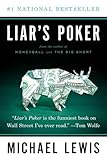
Michael Lewis's memoir of his years as a bond salesman at Salomon Brothers in the 1980s, capturing the greed and absurdity of Wall Street's most explosive decade.
The #1 personal finance book of all time. Kiyosaki contrasts the money lessons he learned from his own 'poor dad' — his biological father — with those of his best friend's 'rich dad', arguing that what you're taught in school about money is dangerously incomplete.
A collection of 23 short essays on the timeless behaviors and patterns that drive human decision-making — the things that never change even as the world changes around them.
Two economists argue that the difference between rich and poor countries is not geography, culture, or ignorance, but the presence of inclusive versus extractive political and economic institutions.
A former president of Google China and venture capitalist argues that China, not the United States, is likely to dominate AI in the coming decades — and examines what this means for geopolitics, the global economy, and the human future.
An economist and a journalist explore the hidden side of everything — using data and economic analysis to expose unexpected truths about sumo wrestling, real estate agents, crime, and parenting.
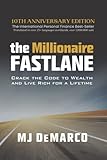
MJ DeMarco challenges the conventional wisdom of slow, patient wealth-building and argues for building scalable businesses that generate wealth rapidly.
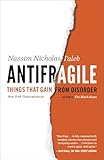
Nassim Taleb introduces the concept of antifragility — the property of systems that gain from disorder, stress, and volatility rather than merely surviving it.
Taleb's argument that bearing personal consequences for one's decisions is both an ethical imperative and the only reliable mechanism for producing good outcomes in complex systems.
The condensed companion to MONEY: Master the Game — Robbins distils the core investing principles from interviews with fifty financial luminaries into a shorter, more actionable format. Covers market corrections, the psychology of fear, low-cost index funds, and the four core principles of investing in all seasons.
Robbins's encyclopedic finance book — based on interviews with fifty of the world's greatest investors (Ray Dalio, Jack Bogle, Warren Buffett, Carl Icahn, Paul Tudor Jones). Covers the investor game, the myths of Wall Street, strategies for accumulation, protection of capital, and Ray Dalio's all-weather portfolio.
David Bach argues that building wealth requires not discipline but automation — setting up your savings, investments, and debt payments to happen without any decision-making, so that the system works even when motivation does not.
Australia's best-selling personal finance book — a simple bucket system for managing money, paying off debt, and building wealth that has helped millions of Australians.
The BiggerPockets guide to every aspect of managing rental properties — tenant screening, leases, maintenance, evictions, and the systems that turn a rental portfolio from chaotic to profitable.
BiggerPockets' comprehensive guide to building wealth through rental properties — covering deal analysis, financing, property management, and scaling a rental portfolio.