An aging Norwegian painter named Asle contemplates his paintings and his life. He has a neighbor also called Asle—a fellow painter, a drinker, his double—who may or may not represent who he could have been. Over seven parts (the complete trilogy in one volume), Fosse's prose moves in long, recursive, comma-linked sentences that spiral around identity, faith, creativity, and death.
Bradley Pearson, failed writer of 58, falls violently in love with Julian Baffin — the 20-year-old daughter of his rival Arnold. The love is absurd, overwhelming, and destroys everything. Murdoch's most formally adventurous novel includes multiple unreliable forewords and postscripts that reframe the entire narrative.
Homer Wells grows up in an orphanage in Maine run by Dr Larch, a physician who performs both deliveries and abortions. When Homer leaves for the apple orchards of the coast, he carries the doctor's skills and convictions — and must eventually decide what he believes. Irving's most political and most moving novel.
Hans Schnier, a professional clown, calls everyone he knows to borrow money after his partner and only love, Marie, has left him for a good Catholic marriage. In one evening of phone calls, Böll dissects West German Catholic bourgeois society with devastating precision. His most bitter and his funniest novel.
The novel begins: 'Neither of the Grimes sisters would have a happy life, and looking back it always seemed that the trouble began with their parents' divorce.' Emily and Sarah Grimes grow up in Depression-era New York and move through postwar America — marriages, jobs, affairs, children — in separate but parallel patterns of disappointment. Yates's most compressed novel and possibly his finest.
Naipaul lives in a cottage in the Wiltshire countryside, tenant of a decaying English manor, and watches the landscape and its people change around him over years. Part autofiction, part elegy for a rural England already passing, part meditation on what it means to arrive—from Trinidad, from England's colonial periphery—and never quite belong anywhere.
Jean-Baptiste Clamence, a former Paris lawyer who helped the poor, drinks in an Amsterdam bar and delivers a lengthy monologue to a stranger. His confession: years earlier he did nothing when a woman jumped from a bridge, and the guilt has transformed him into a 'judge-penitent' who confesses in order to accuse others. Camus's darkest and most ironically complex novel.
Set in a future utopian province dedicated to the life of the mind, the novel follows Joseph Knecht, who rises to become Magister Ludi—master of the Glass Bead Game, a synthesis of all human knowledge and art. The novel for which Hesse received the 1946 Nobel Prize.
Yasha Mazur is a traveling magician, acrobat, and womanizer in late nineteenth-century Poland. Ambitious, irreligious, unfaithful to his devoted wife, he is planning a burglary that will free him to elope with an educated Polish woman. The burglary goes wrong. What follows is one of the strangest penitential conversions in modern fiction.
1938: the aging Master of Go (the board game equivalent of chess grandmaster) plays his final match against a young challenger. The match takes six months to complete. Kawabata covered it as a journalist and transformed it into this elegy for a tradition—and for a Japan—that the match's outcome symbolically destroys.
Michael Henchard sells his wife and daughter at a country fair in a drunken rage, swears off alcohol, and through sheer willpower rises to become mayor of Casterbridge. When his wife and daughter return, and when Donald Farfrae arrives to threaten his position, the mechanism of his destruction begins.
The Ganguli family navigates the immigrant experience across generations — from Calcutta to Boston — as son Gogol rebels against the name and culture he was born into.
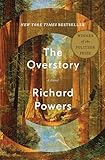
Nine Americans whose lives intertwine around trees and forests, forming a novel about activism, loss, and humanity's relationship with the natural world. Winner of the Pulitzer Prize for Fiction.
Birmingham in the 1970s — four boys at a grammar school navigating adolescence against the backdrop of IRA bombings, the first Thatcher election, race relations, punk rock, and the decline of British manufacturing. A warm, funny, and genuinely melancholy novel of a decade and a generation.
Charles Arrowby, retired theatre director, retreats to a house on the English coast to write his memoirs and renounce the world. He then discovers that his childhood sweetheart, Hartley, lives nearby — and becomes obsessed with rescuing her from her marriage. Murdoch's Booker Prize winner is a novel about the self-deceptions of obsessive love.
Art historian Max Morden, recently widowed, returns to the Irish seaside town where he spent a childhood summer with the Grace family — a summer that ended in tragedy he has spent decades not quite understanding. The novel interweaves present grief with recovered memory in prose of extraordinary density.
Quoyle, a hapless journalist from New York, moves to Newfoundland with his daughters after his wife's death. He takes a job at the local paper covering shipping news. The novel is about recovery — from grief, from humiliation, from a life that has been defined by the needs of others — in a landscape of fog, ice, and sudden violent weather.
Two brothers return to their ancestral village in a forest valley in Shikoku to restore the family storehouse and confront their family's history. One brother descends into political activism and mythologized violence; the other watches, drinks, and tries to understand. Against the backdrop of Japan's 1960s student protests, Ōe creates his most ambitious novel.
Shingo, an aging Tokyo businessman, hears the mountain sound at night—a premonition of death. He is more tender toward his daughter-in-law than toward his wife or children. The novel traces a year through seasons, dreams, and daily life in postwar Japan, rendering old age and desire without judgment or resolution.
Will Beckwith, 25, aristocratic and promiscuous, spends the last summer before AIDS transforms gay London life. He is asked by an elderly peer, Lord Nantwich, to write his biography — and discovers a connection between Nantwich's past and his own grandfather's role in the persecution of gay men.
Stan Parker clears land in the Australian bush, marries Amy, raises children, tends cattle, and dies. The novel follows their ordinary life across half a century, from the clearing of the first acre to the death of the last survivor, finding in the ordinary life the full weight of existence. White's response to the question of whether ordinary Australian life can sustain great fiction.
The final volume of Beckett's trilogy: a disembodied voice, without body or location, continues to speak. It cannot stop speaking and cannot speak truly. It does not know who or what it is. The Unnamable ends with 'I can't go on, I'll go on'—the most famous sentence in modernist fiction—and continues after that.
Frank Cauldhame, 16, lives on a small Scottish island with his father. He has killed three children in the past — all family members — and maintains the island through an elaborate system of rituals centred on the Wasp Factory, a contraption of fate. His brother Eric has escaped from a psychiatric hospital and is coming home.
In a remote English village in 1491, a priest investigates the drowning of the richest man in the parish — the novel moves backwards through four days of Lent, arriving at the confessions that reveal what actually happened.