Kundera's first novel written directly in French meditates on slowness as a value — the pleasure that is inseparable from unhurry — and speed as the form modern forgetting takes. Two stories interweave: an eighteenth-century erotic tale of a planned seduction and a contemporary entomologist's conference at the same chateau.
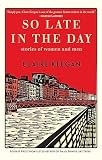
Three stories — the title story originally published in The New Yorker — examining the space between men and women: what they want from each other, what they withhold, and what the distance costs.
Brian Jackson, the first in his family to go to university, arrives at Bristol in 1985 determined to join the University Challenge quiz team and fall in love with the right girl. A funny and tender novel about class anxiety, intellectual aspiration, and the specific humiliations of being young.
John Steinbeck's warm, comic sequel to Cannery Row. The bums, dreamers, and good-hearted misfits of Monterey return after the war, and the whole community schemes to find love for Doc, the lonely marine biologist at the heart of their ramshackle world.
The six Alexandrians have been initiated into the Alexandrian Society — the secret organisation that controls the world's most powerful knowledge. Now they must each prove their worth to the Caretakers, competing and conspiring among themselves while an external threat to the Society itself emerges. The second book in Olivie Blake's Atlas series.
A young woman from rural Iceland comes to Reykjavik to work as a maid and learn to play the harmonium. She discovers that Iceland is selling its sovereignty to NATO—her employer is among the politicians profiting from the deal. Laxness's most politically direct novel, written in 1948 as a protest against Iceland's military agreements.
Olive Chancellor, a Boston reformer and feminist, discovers the young Verena Tarrant, whose natural gift for public speaking makes her ideal for the women's suffrage cause. Olive's relationship with Verena is complicated by the arrival of her Southern cousin Basil Ransom, who wants to marry Verena and remove her from public life.
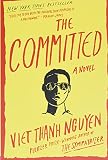
The nameless narrator of The Sympathizer arrives in 1980s Paris with his blood brother Bon, navigating the Vietnamese exile community, Algerian drug networks, and French intellectual life while still haunted by his double-consciousness and the interrogations he survived.
In early 20th-century Illinois, a man named John Ashley is convicted of murder and escapes, leaving his family behind. A multigenerational saga about two American families and the question of what it means to be a good person.
A magical flounder advises men throughout German history—from the Neolithic to the 1970s. Now the flounder has been caught and is being tried by a feminist tribunal. Meanwhile, a narrator who has been alive throughout all of human history recounts his relationship with nine cooks across three millennia. Grass's most formally extravagant novel.
Muriel Spark's sharp, elegant short novel of postwar London. At the May of Teck Club, a hostel for young women of slender means, the residents flirt, scheme, and share a single Schiaparelli gown in the summer of 1945 — until a sudden catastrophe exposes the moral fault lines beneath their genteel poverty.
Josef Bloch, a former goalkeeper, wanders Vienna after being fired. He picks up a woman and, for no reason he can articulate, kills her. Then he flees to a border town and watches a football match. Handke's first novel—and Wim Wenders made it into a film—is an existential thriller about the breakdown of linguistic meaning.
A fictional account of the Salem witch trials narrated by Sarah Carrier, daughter of Martha Carrier, one of the accused women hanged in 1692. Based on the author's own family history, the novel renders the hysteria and its human costs with precise, unflinching attention.
An alien assumes the identity of a Cambridge mathematician who has just solved the Riemann hypothesis. As it learns what it means to be human — through peanut butter, Emily Dickinson, and a dog named Newton — the novel becomes an unexpected meditation on why life is worth living.
Gregory Reeves grows up among Latinos in East Los Angeles, serves in Vietnam, becomes a lawyer in San Francisco, and tries to outrun the poverty and violence of his childhood. Allende's first novel set in North America — a bildungsroman structured around the myth of self-invention and a portrait of the Latino community in California.
One morning, Anders wakes up to find his skin has turned dark. As others begin to change, the community fractures along lines of fear and violence, and Anders must navigate a world that is becoming unrecognisable.
Two brothers in Calcutta: one becomes a revolutionary, killed in the Naxalite uprising; the other escapes to America, inheriting his brother's widow and her grief. Lahiri's most ambitious novel spans continents and decades, tracing the long aftermath of a single act of political violence.
Hans Castorp, a young Hamburg engineer, visits his cousin at a tuberculosis sanatorium in the Swiss Alps and stays for seven years — drawn into a world where illness, intellectual debate, and the distortion of time separate the inhabitants from ordinary life on the plains below.
Roy's second novel, twenty years after The God of Small Things, follows Anjum — a hijra who lives in a graveyard — and Tilo, an architect entangled in the Kashmir conflict, through a fragmented, polyphonic account of India's multiple political crises.
Ann Beattie's collected New Yorker stories, spanning 1974 to 2006. Forty-eight spare, wry, precisely observed tales chronicle the drift, disappointments, and quiet epiphanies of the American middle class — the work of a master of the short story whose name became an adjective: 'Beattiesque.'
Eight stories exploring the lives of Vietnamese refugees and immigrants caught between cultures — the ghost-haunted, the displaced, the American-born, and those who never made it out — drawn from two decades of Nguyen's work.
Sonia, a British woman, travels to Granada to learn flamenco after her relationship ends. Staying with family friends, she discovers letters and photographs that reveal the story of the Ramirez family during the Spanish Civil War — a story of love, betrayal, and the violence that divided Spain. Alternating between the present day and the 1930s, The Return is Hislop's portrait of Granada and the civil war's lasting trauma.
Werther, a young man of sensitivity and artistic feeling, falls in love with Charlotte, who is engaged and then married to another. His inability to either act on his love or let it go leads to his suicide. Written in epistolary form by the twenty-four-year-old Goethe, the novel triggered a wave of imitative suicides across Europe.
In Fez during the last days of French Morocco in 1954, an American writer and a Moroccan boy encounter each other against the backdrop of the independence movement. Bowles's most politically engaged novel.