Etsuko, a Japanese woman now living in England, reflects on a summer in postwar Nagasaki when she befriended a strange woman named Sachiko and her troubled daughter Mariko. As Etsuko remembers, the reader begins to suspect that Sachiko may be a projection of Etsuko herself—and that the memory is protecting its keeper from something unbearable.
British India, 1920s: an idealistic English woman and her companion arrive hoping to see the 'real India'. When Dr Aziz, a Muslim physician, is accused of assaulting the Englishwoman in the Marabar Caves, the fragile relationships between colonisers and colonised shatter. Forster's masterpiece.
The Trojan War is retold entirely through the voices of the women caught in it — goddesses, queens, slaves, and prophets — with the Muse Calliope insisting that their stories are as worth telling as any hero's.
A group of Egyptian intellectuals and civil servants gather nightly on a houseboat on the Nile for kif-smoking sessions that are at once a retreat from Nasser's Egypt and a symptom of its spiritual exhaustion. When a journalist who refuses to join their escapism enters the circle, the consequences are fatal.
In 1962, a young Italian innkeeper on a remote Ligurian cliff meets a dying American actress, and their brief encounter echoes across fifty years, two continents, and a Hollywood dream factory that chews up everyone who enters it.
Popular girl Samantha Kingston dies in a car crash and relives her last day seven times, slowly reckoning with the cruelties she participated in and what it would cost to do something different.
Mother is the matriarch of the Shangguan family in Northeast China. Through her eyes—and through the nine daughters and one son she bears—Mo Yan tells the story of China's twentieth century: the Japanese occupation, civil war, the Communist revolution, the Cultural Revolution, reform and opening. An epic of endurance told through the body, specifically through the mother who survives everything.
A satirical counterfactual in which Africans enslaved Europeans — a white woman narrates her life in bondage in a world where the Atlantic slave trade ran in reverse, forcing a direct confrontation with the mechanics and logic of slavery.
A fictionalized account of Marilyn Monroe's life — reimagined as Norma Jeane Baker, a woman of extraordinary sensitivity and intelligence consumed and ultimately destroyed by the cultural construction called Marilyn Monroe that she inhabits but does not fully control.
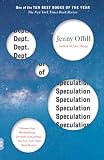
A marriage, told in fragments: notes, observations, aphorisms, overheard conversations, quotations from philosophers and astronauts. The wife is a writer. Her husband has an affair. The novel is about the collapse and possible reconstruction of a life built on a particular idea of love.
Zanzibar, 1899: a British colonial officer collapses in the street and is taken in by an Indian merchant, falling in love with the merchant's sister. Decades later, their descendants try to understand what happened between their grandparents and why it still shapes their lives. Gurnah's novel about the long shadow of a single colonial encounter.
Saeed and Nadia meet in a city being overtaken by militants. Around the world, doors have appeared that transport people instantly to different countries. They flee through doors — from their home city to Mykonos to London to California — and the novel follows their relationship as migration transforms them both.
An aging writer in communist Hungary attempts to write a novel about a young man who survives the concentration camps—the same story told in Fatelessness. The meta-fictional frame explores what it means to write about the Holocaust from the distance of decades, and the cost of being a witness who survives.
Salim grows up in Zanzibar watching his family fall apart—his father withdrawing into silence, his uncle becoming politically prominent—and eventually comes to London to study, where an older Englishman named Mr. Mgeni becomes a surrogate father. A Gurnah coming-of-age story that draws on Shakespeare's Measure for Measure.
Frank Money, a Korean War veteran, is hospitalized in 1950s America, escapes, and makes his way back south to rescue his sister Cee from medical experimentation. Morrison's slimmest novel, about homecoming, brotherhood, and the specific horrors awaiting Black veterans in Jim Crow America.
Two narratives, two times: a Renaissance fresco painter in 15th-century Ferrara; a contemporary Cambridge teenager grieving her mother. The two stories are printed in different orders in different editions — some readers encounter the Renaissance story first, others the contemporary one. The novel's question: how to be both past and present, both alive and dead.
Seven Shakespeare students at a prestigious arts conservatory navigate obsession, rivalry, and moral collapse until one of them turns up dead after a production of Othello — narrated a decade later from a prison cell.
A postcolonial reimagining of Great Expectations: an Australian ex-convict named Jack Maggs returns illegally to London to find the young gentleman he secretly funded, while a novelist named Tobias Oates uses hypnosis to extract Maggs's story for his own purposes. A brilliant novel about exploitation, colonialism, and the ethics of storytelling.
Two interwoven stories: a fifteen-year-old boy runs away from Tokyo to Takamatsu in search of his identity, while an elderly man in Tokyo discovers a strange ability to commune with cats.
Macondo, 1928. A colonel, his daughter, and her son attend the burial of a doctor who has been shunned by the town for years. Told in three simultaneous interior monologues, this is García Márquez's first novel—and the first appearance of Macondo—written when he was nineteen.
Martha Quest, fifteen years old on a farm in Southern Rhodesia in the late 1930s, is furiously intelligent and furiously trapped—by her parents' colonial world, by the small-mindedness of white settler society, by being female. The first volume of Lessing's semi-autobiographical five-novel Children of Violence sequence.
The second volume of the Dark Star trilogy retells the story of Black Leopard Red Wolf from the perspective of Sogolon the Moon Witch — the woman whom the Tracker accused of lying in the first novel. An African-mythology-rooted epic that deliberately inverts the reader's assumed loyalties.
Artur Sammler—Polish-Jewish, seventy years old, half-blind from a Nazi massacre he survived by crawling out of a mass grave—moves through 1960s New York observing the chaos of the counterculture with a survivor's cold clarity. A meditation on civilization, death, and what we owe each other.
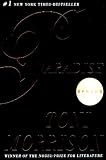
An all-Black Oklahoma town founded by freed slaves attacks a nearby convent housing women who have fled their former lives. The third novel in Morrison's Beloved trilogy, Paradise asks what happens when a community built to protect its own becomes as oppressive as the society it fled.