Buddhist teacher Pema Chödrön offers compassionate teachings on how to work with fear, loss, and groundlessness — arguing that these experiences, properly met, are paths to awakening rather than obstacles to it.
A brief, luminous 1903 essay arguing that the mind is the garden of human life — that thought determines character, achievement, health, and circumstances.
Byron Katie presents The Work — a four-question inquiry method that dismantles stressful thoughts and reveals the peace that remains when we stop arguing with reality.
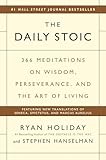
366 days of Stoic philosophy — a meditation for each day of the year, drawn from Marcus Aurelius, Epictetus, and Seneca, with commentary by Ryan Holiday and Stephen Hanselman.
Steven Pressfield names the force that stops creative work — Resistance — and provides a philosophical framework for overcoming it through professional discipline.
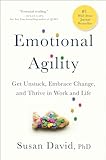
Harvard Medical School psychologist Susan David presents a framework for moving through difficult emotions with flexibility, clarity, and self-compassion rather than suppression or rumination.
Newport argues against the popular advice to follow your passion — instead proposing that you become excellent at rare and valuable skills first, then leverage that excellence for the work you want.
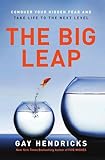
Gay Hendricks identifies the hidden self-sabotage patterns that cap our success and happiness, and offers a practical path to living and working in our Zone of Genius.
David Schwartz argues that the size of your success is determined by the size of your belief — and provides practical techniques for cultivating bigger thinking in every area of life.
Drawing on Stoic philosophy and historical examples, Ryan Holiday argues that the obstacles we face are not impediments to success but the very material from which it is made.
Health psychologist Kelly McGonigal distills the science of self-control from her popular Stanford course, presenting research-based strategies for strengthening willpower and understanding why it fails.
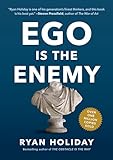
Ryan Holiday examines how ego — the sense of entitlement and inflated self-image — undermines people at every stage of life, from aspiration through success to failure.
Grant Cardone argues that everything in life is a sale and that mastering the art of selling — yourself, your ideas, your products — is the most important skill you can develop.
The third volume in Ryan Holiday's Stoic trilogy argues that stillness — inner calm and focus — is the competitive advantage that all great achievers across history have cultivated.
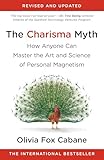
Olivia Fox Cabane dismantles the myth that charisma is an innate quality and provides a science-based framework for developing presence, power, and warmth.
Six philosophers — Socrates, Epicurus, Seneca, Montaigne, Schopenhauer, Nietzsche — applied to six common sources of human unhappiness: unpopularity, not having enough money, frustration, inadequacy, a broken heart, and difficulties.
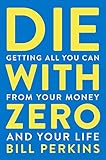
A provocative argument that optimizing for maximum wealth accumulation is the wrong goal — that the aim should be to use your money to create maximum life experiences before you die.
An examination of why we care so much about our position in the social hierarchy — and a survey of the philosophers, artists, and thinkers who have offered alternatives to that anxiety.
A catalogue of 99 cognitive errors, logical fallacies, and psychological biases — from confirmation bias and survivorship bias to the sunk cost fallacy — presented as short, standalone chapters with vivid examples.