A practical guide to harnessing the subconscious mind for healing, prosperity, and happiness through visualization, affirmation, and the alignment of conscious and unconscious thought.
Gary Zukav argues that humanity is transitioning from a power-based consciousness to an alignment with the soul — and that understanding authentic power is the path to a genuinely meaningful life.
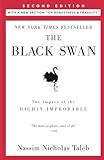
Nassim Taleb introduces the concept of antifragility — the property of systems that gain from disorder, stress, and volatility rather than merely surviving it.
Esther and Jerry Hicks present the teachings of Abraham — a group of spiritual entities — on the law of attraction and how to align with what you desire.
Elizabeth Gilbert argues for a life of creative curiosity over creative suffering, proposing a philosophy of making things for their own sake rather than for validation or survival.
An exploration of the Japanese concept of ikigai — your reason for being, the thing that makes you want to get out of bed in the morning — through the lens of Japan's longest-lived communities.
Taleb's argument that bearing personal consequences for one's decisions is both an ethical imperative and the only reliable mechanism for producing good outcomes in complex systems.
Rhonda Byrne presents the Law of Attraction — the idea that positive thinking and focused desire literally attract corresponding circumstances from the universe — as the secret to achieving health, wealth, and happiness.
The private philosophical notebook of the Roman Emperor Marcus Aurelius — written for himself, never intended for publication — containing his Stoic practice across twelve books of thought.
Carl Sagan's passionate defense of scientific thinking and critical reasoning, arguing that the tools of skepticism are the only reliable protection against superstition, pseudoscience, and those who would exploit human credulity.
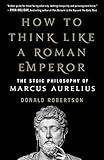
Cognitive behavioral therapist Donald Robertson weaves together Marcus Aurelius's biography with the Stoic philosophy he practiced, showing how ancient techniques map onto modern psychological methods.
Buddhist teacher Pema Chödrön offers compassionate teachings on how to work with fear, loss, and groundlessness — arguing that these experiences, properly met, are paths to awakening rather than obstacles to it.
A brief, luminous 1903 essay arguing that the mind is the garden of human life — that thought determines character, achievement, health, and circumstances.
Byron Katie presents The Work — a four-question inquiry method that dismantles stressful thoughts and reveals the peace that remains when we stop arguing with reality.
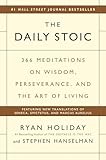
366 days of Stoic philosophy — a meditation for each day of the year, drawn from Marcus Aurelius, Epictetus, and Seneca, with commentary by Ryan Holiday and Stephen Hanselman.
Prince Lev Myshkin returns to Russia after years of Swiss treatment for epilepsy — gentle, sincere, and incapable of the social calculus that governs everyone around him. Dostoevsky's attempt to portray a truly good man, and what happens when such a man meets the world.
Steven Pressfield names the force that stops creative work — Resistance — and provides a philosophical framework for overcoming it through professional discipline.
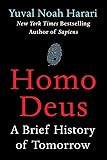
A sweeping vision of humanity's future as Homo sapiens pursues the ancient goals of immortality, bliss, and divinity — and what we risk losing in the process.
The ancient Chinese military treatise attributed to Sun Tzu, comprising thirteen chapters on military strategy that have been applied to business, law, sports, and competitive endeavors for 2,500 years.
Drawing on Stoic philosophy and historical examples, Ryan Holiday argues that the obstacles we face are not impediments to success but the very material from which it is made.
Four characters navigate love, fidelity, and the weight of existence against the backdrop of the 1968 Soviet invasion of Prague, in Kundera's most celebrated philosophical novel.
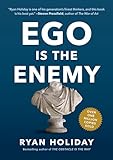
Ryan Holiday examines how ego — the sense of entitlement and inflated self-image — undermines people at every stage of life, from aspiration through success to failure.