A spiteful, self-contradicting underground man addresses us from his Petersburg apartment — a novella that inaugurated modern psychological fiction and anticipated existentialism by seventy years.
The second canticle of The Divine Comedy — Dante and Virgil climb the mountain of Purgatory, where souls atone for the seven deadly sins and prepare for Paradise. The most human and most hopeful of the three canticles, written with greater lyric tenderness than Inferno.
Craiglockhart War Hospital, Edinburgh, 1917. Dr W.H.R. Rivers, army psychiatrist, treats officers traumatised by the Western Front — including poet Siegfried Sassoon, who has written an anti-war declaration, and Billy Prior, working class and volatile. The first novel of the Regeneration Trilogy.
Aeneas, survivor of Troy, journeys to Italy to found the civilization that will become Rome. In twelve books of Latin hexameter, Virgil traces Aeneas's trials at sea, his affair with Dido in Carthage, his descent into the underworld, and his final wars in Latium — creating the founding myth of the Roman world.
An aristocratic Russian family returns to their estate, which must be sold to pay debts. The merchant Lopakhin offers a solution — cut down the cherry orchard and build summer cottages. They cannot bring themselves to act. The orchard is sold at auction. They leave. The sound of the axe begins.
Mark Schluter survives a car crash on a Nebraska highway and wakes up with Capgras syndrome — he believes his sister Karin, who has moved back to care for him, has been replaced by an impostor. A neurologist, his patients, and the cranes that migrate through the Platte River Valley are woven into the story of Mark's recovery.
The third novel of the Regeneration Trilogy. Billy Prior returns to the front in 1918 alongside Wilfred Owen. Rivers, in London, treats surviving casualties while recovering memories of his anthropological fieldwork in Melanesia — and the parallels between the savagery of the islanders' head-hunting rituals and the Western Front's industrial slaughter become unavoidable.
Coleman Silk, a 71-year-old classics professor, is accused of making a racist remark about two Black students he has never met and whose names he did not know. The accusation ends his career. He is, in a secret he has kept for fifty years, Black himself — a light-skinned man who chose to pass as Jewish.
A novelist travels to Jeju Island in the middle of a snowstorm to care for her friend's injured bird — and confronts the buried history of the Jeju April Third Incident, the 1948 massacre in which tens of thousands of Koreans were killed.
Dave Eggers, twenty-one, loses both parents to cancer within weeks of each other and becomes the primary guardian of his eight-year-old brother — a memoir that is also a meditation on memoirs and on the absurdity of claiming to capture grief in prose.
Thomas Sutpen arrives in Jefferson, Mississippi in 1833 with a hundred slaves and a design: to build a dynasty. By the time Quentin Compson and his Harvard roommate Shreve piece the story together in 1910, the design has produced only catastrophe. Faulkner's most ambitious novel, told through multiple narrators across multiple decades.
Young Varguitas, an eighteen-year-old aspiring writer working at a Lima radio station, falls in love with his Aunt Julia (his uncle's ex-wife, fifteen years older). Meanwhile, the brilliant and possibly mad scriptwriter Pedro Camacho is turning out radio soap operas at an impossible rate—and slowly losing his mind. Vargas Llosa's most autobiographical and most comic novel.
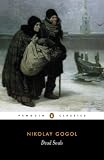
Chichikov travels through provincial Russia purchasing 'dead souls' — serfs who have died since the last census but are still recorded on landowners' rolls, and can therefore be used as collateral for loans. The scheme is comic, opaque, and darkly satirical. Gogol described the novel as the first part of a Russian Divine Comedy.
Miles Roby manages the Empire Grill in Empire Falls, Maine — a dying mill town owned entirely by the widow Francine Whiting. He has waited his whole life for things to resolve themselves. His marriage is failing, his teenage daughter is struggling, and the town is slowly emptying. Russo's Pulitzer Prize winner.
Arkady brings his friend Bazarov home to his father's estate. Bazarov is a nihilist — he believes in nothing except empirical science and rejects all authority, sentiment, and tradition. His conflict with the older generation, his unexpected passion for Madame Odintsova, and his death define the Russian novel's engagement with the question of what to believe.
A self-help book organised around Marcel Proust's In Search of Lost Time — using Proust's life and work to address questions about how to be happy, how to pay attention, and how to suffer productively.
17th-century Iceland under Danish rule. Jón Hreggviðsson, a peasant wrongly accused of murder, fights his case through the Danish courts for decades. His story becomes entangled with that of an Icelandic scholar who believes in Iceland's spirit and a beautiful woman who survives everything. Laxness's historical epic about Icelandic identity under colonial rule.
Eleven linked short stories following a nameless, druggy narrator through the American Midwest — car crashes, hospitals, petty crime, heroin, grace and violence in equal measure. Johnson's collection is one of the most acclaimed works of short fiction in American literature.
Michael K, a gardener with a harelip, pushes his dying mother through a South Africa wracked by civil war, trying to reach her childhood home. He grows pumpkins in a ruined farm and is repeatedly captured by different authorities who cannot understand why he doesn't want anything. Coetzee's Booker Prize winner.
Nedra and Viri Berland live a beautiful life in a house on the Hudson River with their daughters, friends, dinner parties, and winters in Europe. The novel follows their marriage across two decades as it slowly unravels — not through drama but through the accumulation of small divergences.
Jason abandons Medea, his wife and the mother of his children, to marry the Corinthian princess. Medea, a foreigner and sorceress, takes revenge — poisoning the princess, and killing her own children to destroy Jason utterly. Euripides gave Medea her choice where earlier versions made it accidental.
John Self, an English director of beer commercials, is flying between London and New York trying to make a film. He drinks, overeats, watches pornography, fights, spends money he does not have, and is being manipulated by forces he cannot see. Amis's monstrous comedy of the 1980s money culture — narrated in a prose of extraordinary comic energy by one of fiction's great unreliable slobs.
Eight stories in which secrets—known but unspoken, felt but unconfirmed, buried but still alive—shape the lives of women in small Ontario towns and further afield. Among Munro's richest collections, containing 'Carried Away' (often cited as one of the greatest stories in English) and the title story about a girl who vanishes on a hike.
The third canticle of The Divine Comedy — Dante ascends through the nine spheres of Heaven with Beatrice, encounters the souls of the blessed, and culminates in the vision of God as a point of light and the rose of the redeemed. The most theologically demanding and most visually dazzling part of the poem.