In 14th-century Barcelona's Ribera neighbourhood, a serf's son rises from bondage to become a respected stoneworker and bastaix — a carrier of stones for the construction of the great Gothic church of Santa Maria del Mar.
Richard Preston's harrowing true account follows the 1989 appearance of a lethal strain of the Ebola virus in a primate research facility in Reston, Virginia—just outside Washington, D.C.—and traces the virus's earlier outbreaks in Central Africa, where it killed with near-total lethality. It is one of the most terrifying science books ever written.
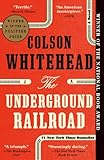
Cora, a slave on a Georgia plantation, escapes on a literal underground railroad — a secret network of actual trains and tunnels — and is hunted across an alternate-history antebellum America. Winner of the Pulitzer Prize and National Book Award.
Vladimir and Estragon wait by a tree for someone named Godot who never arrives. Two acts, almost no action, and one of the most performed and debated plays in the history of theatre.
Seventeen minimalist short stories of working-class American life: waitresses, mechanics, salesmen, the recently divorced and the chronically unemployed. Carver's people drink too much, talk around what they mean, and find that love and damage are often the same thing. The landmark collection that defined American minimalism and influenced a generation of writers.
Thomas Cromwell rises from a blacksmith's son to become Henry VIII's chief minister, navigating court intrigue, the fall of Cardinal Wolsey, and the king's desire for Anne Boleyn. Winner of the Man Booker Prize.
Salim, a Muslim of Indian descent from the East African coast, moves inland to run a shop at a bend in a great river in an unnamed post-independence African country. As the Big Man's regime lurches between modernization and authoritarianism, between ideology and violence, Salim's world becomes a study in the instability of everything—business, friendship, love, and selfhood—in a postcolonial state.
The attempted assassination of Bob Marley in Kingston, Jamaica in December 1976 is the still point around which this vast, polyphonic novel turns — following gang members, CIA operatives, journalists, and ghosts across three decades and multiple continents in dense, overlapping Jamaican voices.
Will Freeman is 36, wealthy from his father's royalties, and has constructed a life entirely free of obligation or development. He invents a fictional son, Ned, in order to meet single mothers at SPAT (Single Parents Alone Together). Through this deception he meets Marcus, a twelve-year-old who is relentlessly uncool and whose mother is suicidally depressed. Their unlikely friendship changes both of them.
An older Polish woman who teaches English, translates Blake, and keeps astrological charts becomes the prime suspect when hunters in her village start dying in mysterious circumstances. A murder mystery narrated by a woman who believes animals are taking revenge. One of the most surprising and original novels of recent decades.
Part memoir, part urban history, Pamuk's portrait of Istanbul through his own childhood and adolescence explores the concept of hüzün—the melancholy that permeates the city's self-understanding after the fall of the Ottoman Empire—through family photographs, street scenes, and the Western writers who tried to capture Istanbul from the outside.
Istanbul, 1591. A master miniaturist has been murdered, and his killer remains hidden among the sultan's circle of illuminators. Told through multiple voices—including a corpse, a dog, a gold coin, and the color red itself—Pamuk's novel is simultaneously a murder mystery, a meditation on art and perspective, and a portrait of the Ottoman world at the threshold of modernity.
Harry 'Rabbit' Angstrom is 46, co-owner of a Toyota dealership, a member of the country club, comfortable and bored in the Pennsylvania suburb he once tried to escape. It is 1979: the gas crisis, Carter's malaise speech, Iran. His son Nelson has come back with a pregnant girlfriend. Updike's Pulitzer Prize winner — middle-class American contentment as its own form of dissatisfaction.
An escaped Australian convict arrives in Bombay with a false passport, becomes a slum doctor, makes friends and enemies among the city's criminals, and discovers a city that unmakes and remakes him completely.
Macon Leary writes travel guides for people who hate to travel — guides on how to find the familiar in the foreign, how to minimise the discomfort of being elsewhere. After his son is murdered and his wife leaves, he moves back in with his eccentric siblings and their dog. The dog trainer, Muriel Pritchett, enters his life uninvited and changes it. Tyler's most beloved novel.
Augie March grows up poor and Jewish in Depression-era Chicago and refuses to be defined by it. Picaresque, exuberant, and crammed with characters from every class and corner of American life, this is Bellow's most ebullient novel—the one that announced an entirely new way of writing American English.
In an Italian villa at the end of World War II, a burned and dying man is cared for by a Canadian nurse, visited by a Sikh sapper and a former thief; the mystery of the patient's identity, and what the North African desert did to him, forms the novel's slow-burning centre.
A young British woman visits Crete and discovers her family's connection to Spinalonga — the island across the bay that served as Greece's last functioning leper colony until 1957 — uncovering four generations of love, stigma, and survival.
Balram Halwai, born into poverty in a Bihar village, writes a series of letters to the Chinese premier explaining how he became a successful entrepreneur — by murdering his employer. Adiga's debut is a savage, blackly comic account of what it actually takes to escape India's 'Rooster Coop.'
Maggie and Ira Moran have been married for twenty-eight years. On a single day in 1988 they drive from Baltimore to a friend's funeral in Pennsylvania and back. What happens in the car, at the funeral, at an old friend's house along the way, illuminates the whole shape of their marriage — its compromises, its small deceptions, its persistent stubbornness of love. Tyler's Pulitzer Prize winner.
Emil Sinclair grows up in two worlds: the 'bright' world of his bourgeois family and the 'dark' world he senses underneath. Max Demian—strange, self-possessed, seemingly ageless—appears as his guide, leading him through Jungian psychology, Gnostic Christianity, and Nietzsche toward his own self-realization. Written in 1917, published in 1919.
David Lurie, a twice-divorced Cape Town professor, has an affair with a student, loses his position, and retreats to his daughter Lucy's smallholding in the Eastern Cape, where an attack changes both their lives irrevocably and forces a reckoning with what white South Africans are owed and owe.
The fictional autobiography of Sayuri, a geisha in the Gion district of Kyoto, from the 1920s through post-war Japan — a world of rigorous training, patron rivalries, and hidden lives.
A melancholy, deeply personal novel set in 1960s Tokyo: Toru Watanabe looks back on his student years, his relationships with two very different women, and the losses that shaped him.