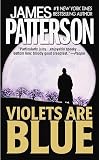
Editors Reads Verdict
Violets Are Blue runs a baroque case about blood-draining killers who believe they are vampires alongside the resolution of the Mastermind arc opened in Roses Are Red. The vampire conceit is the series at its most lurid, but the real engine is the long-building confrontation between Cross and the enemy hiding inside his own circle.
What We Loved
- Resolves the Mastermind arc with a confrontation the previous book carefully set up
- The vampirism case is vivid, strange, and unlike anything else in the early series
- Cross's grief and exhaustion give the novel a darker, more weathered emotional tone
- Two-front structure keeps the momentum relentless
Minor Drawbacks
- The vampire conceit veers toward the gratuitous and strains plausibility
- The two plots compete for attention rather than fully integrating
- Reads best only after Roses Are Red — it is not a clean standalone
Key Takeaways
- → A long-running series can sustain a personal nemesis across multiple books
- → Grief reshapes a detective and the cases he is willing to take
- → The most resonant villain is the one with a private grudge against the hero
- → Closure on a serialized arc can matter more than the case of the week
| Author | James Patterson |
|---|---|
| Publisher | Little, Brown |
| Pages | 432 |
| Published | November 1, 2001 |
| Language | English |
| Genre | Thriller, Crime Fiction, Mystery, Fiction |
| Difficulty | Beginner |
| Best For | Alex Cross readers who have finished Roses Are Red; fans of dark, two-thread thrillers and recurring-nemesis payoffs. |
How Violets Are Blue Compares
Violets Are Blue at a glance against 3 similar books readers weigh alongside it.
| Book | Author | Rating | Best for |
|---|---|---|---|
| Violets Are Blue (this book) | James Patterson | ★ 3.9 | Alex Cross readers who have finished Roses Are Red |
| Four Blind Mice | James Patterson | ★ 3.9 | Alex Cross readers |
| Pop Goes the Weasel | James Patterson | ★ 4.0 | Alex Cross readers |
| Roses Are Red | James Patterson | ★ 4.0 | Alex Cross readers |
Two Cases, One Exhausted Man
Violets Are Blue, the seventh Alex Cross novel, is the second half of a story begun in Roses Are Red, and it carries the weight of everything that book left unresolved. Cross enters it grieving and depleted, still reeling from the betrayal that closed the previous installment, and the novel is shaped by that exhaustion. Patterson runs two cases in parallel: a grotesque new investigation into a pair of killers who drain their victims of blood and style themselves as vampires, and the slow-burning continuation of the Mastermind arc, as the enemy who shattered Cross’s life keeps taunting him from concealment.
The result is the series at its most divided — and, in places, its most lurid. The vampirism case begins with savage murders in San Francisco’s Golden Gate Park and spreads across the country, a baroque, almost gothic conceit that pushes the Cross novels further toward horror than they had gone before. It is vivid and genuinely strange, but it is also the kind of premise that strains plausibility, and readers who prefer the grounded psychology of the earlier books may find the blood cult a step too far into the theatrical.
The Vampire Killers
Patterson commits fully to the grotesquerie. The killers’ fixation on blood, ritual, and a self-mythology of immortality gives the case a feverish, transgressive quality, and the cross-country chase generates real momentum. There is a sociological undercurrent here, too — a glance at subcultures that romanticize predation and at the way fantasy can curdle into atrocity — though the novel is more interested in shock than in sustained analysis. As a piece of pure thriller machinery, the vampire plot delivers a string of escalating set pieces; as a meditation on its own disturbing material, it is thinner.
What keeps the case from tipping fully into camp is Cross himself. He works it as a man going through the motions of competence while privately consumed by something else, and his weary, almost reluctant engagement with the blood killers grounds the lurid material in a recognizable emotional reality. The horror is heightened, but the detective moving through it is tired, grieving, and human, and that contrast is the novel’s saving tension.
The Mastermind Closes In
For longtime readers, the real engine of Violets Are Blue is not the vampires but the Mastermind. The arc that Roses Are Red opened — an enemy hidden inside Cross’s own circle, taunting him with intimate knowledge and personal malice — builds here toward its confrontation, and that thread carries the genuine emotional stakes. The Mastermind is the series’ most effective recurring nemesis precisely because his grievance is personal; he is not a stranger to be caught but a betrayal to be reckoned with, and the novel’s strongest passages are the ones in which that reckoning draws near.
This is Patterson playing the long game, and it mostly works. The payoff to a multi-book arc gives Violets Are Blue a sense of consequence that a single case-of-the-week never could, and the resolution reshapes Cross’s understanding of the people he trusted. The cost is structural: the two plots compete rather than merge, and the vampire case can feel like an elaborate holding pattern while the reader waits for the Mastermind storyline to detonate. The integration is imperfect, but the emotional throughline — Cross hunting the man who hurt him most — keeps the book anchored.
A Darker, More Weathered Cross
By the seventh novel, Alex Cross is no longer the relatively contained analyst of the early books. Violets Are Blue shows a hero worn down by accumulated loss, and Patterson lets that weariness color everything. Cross’s family, his fragile attempts at happiness, the steady erosion of the people he allows himself to love — all of it has begun to weigh visibly on him, and the novel is more interested in that toll than in any single villain. The grief is not decoration; it is the lens through which the whole book is filtered, and it gives the proceedings a heavier, more melancholy tone than the brisker early entries.
That emotional weather is the chief reason the novel survives its more outlandish elements. A blood cult is hard to take entirely seriously, but a grieving man forcing himself back to work because the work is the only thing he knows — that is recognizable, and it is what keeps Violets Are Blue tethered when the plot reaches for the gothic.
Where It Sits in the Series
Violets Are Blue is the seventh Alex Cross novel and the conclusion of the two-book arc that began with Roses Are Red; the two should be read together, in order, since this installment depends almost entirely on the setup of its predecessor. It closes out the strongest sustained stretch of the series and marks a turning point for Cross, whose accumulated grief sets the tone for the books that follow, including his contemplation of leaving police work in Four Blind Mice.
Among the early novels it is the most divisive — bolder than some in its serialized ambition, weaker than others in the plausibility of its central case. But for readers invested in the Mastermind storyline, the payoff justifies the journey, and the portrait of a weathered, grieving Cross gives the book an emotional resonance that outlasts its more sensational trappings.
Our rating: 3.9/5 — A dark, two-front Alex Cross thriller that pairs a lurid blood-cult case with the grim, satisfying payoff to the Mastermind arc — uneven, but emotionally weighty for series readers.
Frequently Asked Questions
What is "Violets Are Blue" about?
A pair of killers obsessed with vampirism drain their victims of blood across the country, while the Mastermind who shattered Alex Cross's life in Roses Are Red continues to taunt him from the shadows. Cross must close two cases at once — one grotesque, one personal — in this two-front thriller.
Who should read "Violets Are Blue"?
Alex Cross readers who have finished Roses Are Red; fans of dark, two-thread thrillers and recurring-nemesis payoffs.
What are the key takeaways from "Violets Are Blue"?
A long-running series can sustain a personal nemesis across multiple books Grief reshapes a detective and the cases he is willing to take The most resonant villain is the one with a private grudge against the hero Closure on a serialized arc can matter more than the case of the week
Is "Violets Are Blue" worth reading?
Violets Are Blue runs a baroque case about blood-draining killers who believe they are vampires alongside the resolution of the Mastermind arc opened in Roses Are Red. The vampire conceit is the series at its most lurid, but the real engine is the long-building confrontation between Cross and the enemy hiding inside his own circle.
Ready to Read Violets Are Blue?
Check the current price on Amazon.
Check Price on Amazon (paid link)Prices and availability are subject to change. See Amazon for current price.
Review last updated: