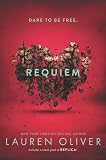
Editors Reads Verdict
A propulsive, emotionally charged finale to a standout YA dystopian trilogy. Oliver's lyrical prose and dual narration deepen the world, even as the famously open ending divides readers. A bold, resonant close to the Delirium saga.
What We Loved
- Oliver's lyrical, emotionally rich prose stands out in YA
- Dual narration deepens the world and its stakes
- A propulsive, thematically resonant conclusion
Minor Drawbacks
- The famously abrupt, open ending frustrates many readers
- Best appreciated having read Delirium and Pandemonium first
Key Takeaways
- → Freedom and love are worth the cost of comfort and safety
- → A divided self can be reconciled only by choosing what to feel
- → Resistance is built from many small, frightened acts of courage
| Author | Lauren Oliver |
|---|---|
| Publisher | HarperCollins |
| Pages | 416 |
| Published | March 5, 2013 |
| Language | English |
| Genre | Young Adult, Dystopian, Science Fiction |
| Difficulty | Beginner |
| Best For | Fans of the Delirium trilogy and readers of lyrical, romance-driven YA dystopian fiction. |
How Requiem Compares
Requiem at a glance against 3 similar books readers weigh alongside it.
| Book | Author | Rating | Best for |
|---|---|---|---|
| Requiem (this book) | Lauren Oliver | ★ 4.0 | Fans of the Delirium trilogy and readers of lyrical, romance-driven YA |
| Delirium | Lauren Oliver | ★ 3.5 | Readers who enjoyed the YA dystopian wave of the 2010s and want a more |
| Pandemonium | Lauren Oliver | ★ 3.9 | Young Adult |
| The Hunger Games | Suzanne Collins | ★ 4.5 | Young adult and adult readers who want dystopian fiction with genuine political |
The End of the Cure
Requiem, published in 2013, is the third and final volume of Lauren Oliver’s Delirium trilogy, one of the standout series of the post–Hunger Games wave of young adult dystopian fiction. The trilogy is built on a striking and resonant premise: a near-future America in which love — amor deliria nervosa — has been classified as a dangerous disease, and every citizen, on reaching adulthood, undergoes a surgical “cure” that severs their capacity to feel it, producing a placid, manageable, loveless population. Across Delirium and Pandemonium, Lena Haloway moved from dutiful believer in the cure to passionate rebel, falling in love, escaping into the Wilds beyond the regime’s control, and joining the resistance. Requiem brings that arc, and the rebellion itself, to a head, and it does so with the lyrical intensity, emotional seriousness, and narrative drive that distinguished the series from its many imitators.
By the start of Requiem, Lena is fully committed to the resistance and living in the Wilds, caught in a charged triangle between Alex, her first love, and Julian, the convert she rescued. But Oliver makes a bold structural choice: she splits the narration between Lena and Hana, Lena’s former best friend, who has stayed behind in Portland, been cured, and is about to marry into the regime’s elite. This alternating perspective — the rebel outside the walls and the cured insider — is the novel’s masterstroke, allowing Oliver to show both sides of her divided world, the cost of rebellion and the cost of compliance, the passion of the Wilds and the eerie, hollow peace of the cured city. As the resistance escalates toward open confrontation and the regime tightens its grip, the two narratives converge toward a violent, transformative climax.
Why the Trilogy Stands Out
What lifts the Delirium books, and Requiem with them, above the crowded field of YA dystopia is Oliver’s prose and emotional intelligence. She is a genuinely gifted stylist — her writing is lyrical, sensory, and charged with feeling, far more crafted than the genre average — and she takes her central metaphor seriously. The conceit of love as a disease is not just a hook; it is a sustained, resonant exploration of the trade-off between safety and feeling, between the comfort of numbness and the painful aliveness of love, freedom, and connection. In Requiem, this theme deepens through the Hana sections, which give us the inner life of the cured: not villainous but diminished, safe but empty, a chilling portrait of what is lost when feeling is engineered away. The emotional stakes feel real, and the romance, the rebellion, and the philosophical core are woven together with skill.
The dual narration also expands and enriches the world. After two books largely inside Lena’s head, hearing from Hana — inside the regime, complicit yet not unfeeling — adds texture, ambiguity, and scope, turning the finale into a genuine portrait of a divided society rather than a single heroine’s journey. It is an ambitious choice, and for the most part it pays off, deepening the book’s exploration of its central questions and broadening its emotional range. The pacing is propulsive, the set pieces are vivid, and the convergence of the two storylines drives the novel to a tense, charged conclusion.
The Divisive Ending
No honest review of Requiem can avoid its most controversial feature: the ending. Oliver closes the trilogy on a deliberately open, abrupt, almost impressionistic note, declining to tie off the plot threads — the love triangle, the fate of the rebellion, the outcome of the climax — with the neat resolution most readers of a trilogy finale expect. For some, this is a bold, thematically apt choice: the trilogy was always about the act of choosing, about breaking free and stepping into an unknown future, and an open ending honors that by leaving Lena (and the reader) on the threshold of a freedom whose shape can’t yet be known. For many others, it is a genuine frustration — a finale that withholds the closure they have invested two and a half books in earning, leaving central questions dangling.
It is worth knowing about going in. If you need your series to end with every thread resolved, Requiem’s conclusion will likely annoy you; if you can embrace an ending that is more about emotional and thematic arrival than plot resolution, it reads as a defensible, even brave, artistic decision. Either way, it is the defining talking point of the book, and the single biggest variable in how readers respond to it.
This is also, unmistakably, the third book of a trilogy: it assumes you have read Delirium and Pandemonium, and it offers little hand-holding for newcomers. Read in sequence, it lands with full force; read cold, it would be largely opaque. Start at the beginning.
A Bold, Resonant Finale
Requiem brings the Delirium trilogy to a close with the qualities that made the series special: lyrical, emotionally rich prose, a resonant central metaphor taken seriously, and a propulsive narrative that here gains scope through its dual narration. Its open ending will divide readers — exhilarating some, frustrating others — but it is of a piece with the trilogy’s themes of freedom, choice, and stepping into the unknown. As the conclusion to one of the best of the YA dystopian wave, it is a bold and worthy finish.
For fans of the trilogy, and for readers who love lyrical, romance-driven, thematically serious YA dystopia, Requiem is a rewarding and emotionally charged read — provided you make peace with an ending that leaves the door, deliberately, open.
Final Verdict
Our rating: 4.0/5 — A propulsive, lyrical, emotionally charged finale to a standout YA dystopian trilogy. Oliver’s prose and bold dual narration deepen the world, even as the famously open, abrupt ending divides readers. A resonant, ambitious close to the Delirium saga — best read after the first two books.
For more lyrical, rebellion-driven YA dystopia, see Delirium, Pandemonium, and The Hunger Games.
Frequently Asked Questions
What is "Requiem" about?
The thrilling conclusion to Lauren Oliver's Delirium trilogy. In a world where love is a disease to be cured, Lena has crossed fully into the resistance. Told in alternating voices by Lena and her former best friend Hana, Requiem brings the rebellion against the regime to its breaking point.
Who should read "Requiem"?
Fans of the Delirium trilogy and readers of lyrical, romance-driven YA dystopian fiction.
What are the key takeaways from "Requiem"?
Freedom and love are worth the cost of comfort and safety A divided self can be reconciled only by choosing what to feel Resistance is built from many small, frightened acts of courage
Is "Requiem" worth reading?
A propulsive, emotionally charged finale to a standout YA dystopian trilogy. Oliver's lyrical prose and dual narration deepen the world, even as the famously open ending divides readers. A bold, resonant close to the Delirium saga.
Ready to Read Requiem?
Check the current price on Amazon.
Check Price on Amazon (paid link)Prices and availability are subject to change. See Amazon for current price.
Review last updated: