Where to Start with Thomas Harris: A Reading Guide
Where to start with Thomas Harris — whether to begin with Red Dragon, The Silence of the Lambs, or Hannibal. A complete reading guide to the Hannibal Lecter series.
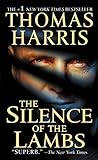
Thomas Harris (born 1940) is the American novelist who — with Red Dragon (1981) and The Silence of the Lambs (1988) — created Hannibal Lecter, the most iconic villain in American crime fiction and one of the most recognised characters in popular culture. Harris’s FBI procedural thrillers, distinguished by meticulous research, psychological acuity, and the slow, deliberate revelation of a genuinely original intelligence in Lecter, redefined the thriller genre and established the template for the serial killer narrative in both fiction and film. The Silence of the Lambs won the Bram Stoker Award and was adapted into the 1991 film that won all five major Academy Awards — the third film in history to do so.
Where to Start: Red Dragon (1981)
The chronological beginning of the Lecter series — and one of the finest psychological thrillers ever written. Will Graham is the FBI profiler who caught Hannibal Lecter at a cost he never fully recovered from; he has retired to a quiet life in Florida with his family. His former supervisor Jack Crawford pulls him back to investigate the Tooth Fairy — a killer who has murdered two families on successive full moons and who leaves bite marks and mirrors at the scenes.
Graham’s method is empathetic and disturbing: to understand a killer, he has to think like one. This means going back to Lecter — who is imprisoned but brilliant, who understands Graham better than Graham understands himself, and who begins feeding information about Graham to the Tooth Fairy. The duel between Graham and Lecter is conducted through glass, from extreme distance, but it has an intimacy that becomes one of Harris’s recurring themes: the profiler and the killer, bound by the profiler’s capacity to understand.
Red Dragon is precise, controlled, and deeply unsettling — particularly in the Francis Dolarhyde chapters, which make the killer comprehensible without making him sympathetic.
The Silence of the Lambs (1988)
Harris’s masterpiece — and the novel that made Lecter a cultural phenomenon. FBI trainee Clarice Starling is assigned to interview Lecter for insights into a current case; what develops is a psychological exchange that is the most complex and most brilliantly rendered relationship in Harris’s work. Lecter trades information for insights into Clarice’s past and psychology — each interview an exchange of vulnerabilities, each one pulling both participants closer to something neither can fully name.
The Silence of the Lambs works as a thriller (the Buffalo Bill investigation is genuinely tense and carefully structured), as a psychological study (Lecter and Starling are both complete characterisations), and as a study of institutional power (Clarice’s experience as a woman in a male institution is observed with extraordinary precision). The Demme film with Hopkins and Foster is one of the great films; the novel surpasses it in the texture of its detail.
Hannibal (1999)
The third novel — operatic, dark, and deliberately destabilising. Lecter is free and living in Florence; the novel’s tone is more gothic than procedural. The relationship between Lecter and Clarice, which the first two novels maintained in careful suspension, is resolved in a direction that divided readers and was changed entirely in the Ridley Scott film adaptation. Hannibal is not trying to be The Silence of the Lambs; it is doing something different with the same characters. Best read with the earlier novels in mind rather than as a standalone.
Hannibal Rising (2006)
A prequel Harris wrote against his preferences at the studio’s request for a film property. Traces Lecter’s formation from Lithuanian aristocracy through wartime trauma. The novel demystifies where the original trilogy carefully preserved mystery; most readers consider it the least essential of the four books.
Why Red Dragon Is the Ideal First Book
For a reader new to Thomas Harris, Red Dragon is the ideal first book because it introduces his most famous creation, the brilliant and terrifying Hannibal Lecter, and is the fullest early expression of his distinctive gifts, the meticulous psychological thriller, the chilling atmosphere, and the gripping plotting. Red Dragon follows a gifted FBI profiler who must catch a serial killer, and who turns for insight to the imprisoned Lecter, in a tense, intelligent, and disturbing thriller. As an entry point it is ideal, for it is the first Lecter novel and a perfect example of Harris’s chilling, meticulous, psychologically acute thrillers. It welcomes the newcomer with its gripping plot, its chilling atmosphere, and its psychological depth, drawing the reader into his distinctive world. It introduces his most famous character and best represents his early gifts, so the new reader meets Lecter where he first appears. For the newcomer, then, Red Dragon is the natural and ideal starting point, on dark and disturbing subject matter.
What to Expect as a New Reader
As a new reader, you can expect Red Dragon to be a tense, intelligent, and disturbing psychological thriller. You can expect a gripping plot, for the novel follows a gifted FBI profiler hunting a serial killer. You can expect a chilling antagonist, for the novel introduces Hannibal Lecter, the brilliant, terrifying imprisoned killer the profiler consults. You can expect meticulous psychological detail, for Harris renders the minds of both the hunter and the hunted with disturbing depth. You can expect a chilling atmosphere of dread and menace. You can expect intelligent, well-researched plotting. You can expect a focus on the psychology of crime and pursuit. You should be prepared for dark, violent, and disturbing material. Expect, in short, a tense, intelligent, and disturbing psychological thriller, a gripping introduction to Harris’s gifts.
Going Deeper After Your First Book
Once Red Dragon has introduced you to Harris’s gifts and to Hannibal Lecter, the natural next step is to continue with his most famous novel, the sequel that brought Lecter to the center of the story and became a phenomenon, following a young FBI trainee who seeks his help to catch another killer. The Lecter novels continue his story across further books, best read in order to follow the character. Harris’s characteristic strengths, the meticulous psychological thriller, the chilling atmosphere, and the gripping plotting, run through his work, which is small but enormously influential. Reading on deepens your appreciation of his gifts. The reader gripped by Red Dragon will find more in the Lecter novels. Building your reading journey through Harris is a matter of continuing the Hannibal Lecter novels in order. The reader who begins here will find one of the most influential and chilling authors of the modern psychological thriller to follow.
Reading Thomas Harris
Begin with Red Dragon to understand the world and meet Lecter in supporting role; read The Silence of the Lambs as the series’ peak. Hannibal is a worthwhile conclusion if you want the full arc; approach Hannibal Rising as supplementary material. The first two novels are each among the finest thrillers ever written; the series as a whole charts a unique creative relationship with a genuinely original character.
Frequently Asked Questions
Where should I start with Thomas Harris?
Red Dragon (1981) is the chronologically first Hannibal Lecter novel and the most logical starting point — introducing Will Graham, the FBI profiler who previously caught Hannibal Lecter, now reluctantly drawn out of retirement to track the Tooth Fairy killer. Lecter appears in a supporting role; the novel establishes his character and his relationship with Graham. The Silence of the Lambs (1988) is the more famous novel and works perfectly as a standalone starting point — Clarice Starling's relationship with Lecter is independent of the Graham storyline.
What is The Silence of the Lambs about?
The Silence of the Lambs (1988) follows Clarice Starling, an FBI trainee assigned to interview Hannibal Lecter — a brilliant psychiatrist and serial killer imprisoned in a maximum-security facility — to gain insight into a current killer called Buffalo Bill who is abducting and murdering women. The novel is simultaneously a procedural thriller, a psychological duel between Starling and Lecter, and a study of female ambition in a male institution. The Demme/Hopkins/Foster film adaptation is among the most celebrated thrillers ever made; the novel is its equal.
What is Hannibal about?
Hannibal (1999) picks up seven years after The Silence of the Lambs — Lecter has escaped and is living in Florence; Clarice Starling is being set up by corrupt FBI colleagues; and a surviving victim from Lecter's past is engineering revenge. The novel is significantly darker and more operatic than its predecessors — Lecter is the protagonist rather than the antagonist, and his relationship with Starling develops in a direction that divides readers. The ending is notorious; the film adaptation changed it. Best read after both Red Dragon and The Silence of the Lambs.
Is Hannibal Rising worth reading?
Hannibal Rising (2006) is a prequel tracing Hannibal Lecter's childhood and the wartime trauma that formed him — Lithuanian aristocracy, Nazi occupation, a terrible event involving his sister Mischa. The novel demystifies Lecter in ways that many readers find reductive; the origin story reduces a figure whose power came partly from his inexplicability to a traumatised child with comprehensible grievances. Most readers of the series consider Hannibal Rising the weakest entry. Read the original trilogy first; approach the prequel as supplementary material.


