Where to Start with Stieg Larsson: A Reading Guide
Where to start with Stieg Larsson — how to begin the Millennium Series with The Girl with the Dragon Tattoo. A complete reading guide to the Swedish crime trilogy.
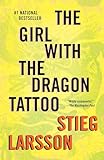
Stieg Larsson (1954–2004) was the Swedish journalist and author who — working in his evenings after his day job at a news agency — wrote three novels that would become one of the most successful crime fiction series in history, published posthumously after his death from a heart attack at fifty. The Millennium Series — The Girl with the Dragon Tattoo (2005), The Girl Who Played with Fire (2006), and The Girl Who Kicked the Hornets’ Nest (2007) — sold more than a hundred million copies worldwide and is credited with establishing Scandinavian crime fiction as a dominant genre in international publishing. Its real achievement is Lisbeth Salander, one of crime fiction’s most compelling and original creations: a hacker, survivor, and force of righteous vengeance who carries the moral centre of all three books.
Where to Start: The Girl with the Dragon Tattoo (2005)
The essential Larsson — and the only starting point. Mikael Blomkvist, a financial journalist disgraced after a libel conviction, is hired by a wealthy industrialist to investigate the forty-year-old disappearance of his niece from the family estate. He is paired with Lisbeth Salander, a brilliant, deeply antisocial hacker who has been engaged to investigate Blomkvist before he is employed. Together they uncover something far darker than a missing-persons case.
The novel is long and the opening section — establishing Blomkvist’s professional and legal situation — is dense with Swedish corporate detail. But Lisbeth Salander, when she arrives, transforms the book entirely. Her moral intelligence, her righteous fury at institutional violence against women, and her absolute refusal to accept victimhood make her one of crime fiction’s most original characters. The true subject of all three novels — violence against women in Swedish society, and the institutional complicity that enables it — is announced here.
The Girl Who Played with Fire (2006)
The second volume — in which Larsson shifts focus almost entirely to Lisbeth Salander. When two journalists investigating sex trafficking are murdered and Salander becomes the prime suspect, Blomkvist works to prove her innocence while Salander goes underground. The novel reveals the backstory that explains everything about Salander’s history and psychology; reading the first book before this one is essential.
Faster and more thriller-propelled than the first novel; less concerned with corporate skulduggery and more with Salander herself. The revelation of her history is one of crime fiction’s most satisfying delayed disclosures.
The Girl Who Kicked the Hornets’ Nest (2007)
The direct conclusion of The Girl Who Played with Fire — Larsson did not intend this to be a trilogy but a continuous narrative, and the third book begins minutes after the second ends. Salander is hospitalised, Blomkvist is working to expose the secret faction within Swedish intelligence that has persecuted her, and the trial that will determine her fate is approaching. The most politically complex of the three novels.
Must be read last; it is not a standalone work in any sense.
Why The Girl with the Dragon Tattoo Is the Ideal First Book
For a reader new to Stieg Larsson, The Girl with the Dragon Tattoo is the ideal first book because it is the opening of his phenomenally successful Millennium trilogy and the fullest expression of his distinctive gifts, the gripping plotting, the unforgettable heroine, and the engagement with corruption, violence, and injustice. The Girl with the Dragon Tattoo brings together a disgraced journalist and the brilliant, fierce, troubled hacker Lisbeth Salander to investigate a decades-old disappearance, uncovering dark secrets and powerful evil. As an entry point it is the natural place to begin, for it launches the trilogy and introduces Salander, one of the most memorable characters in modern crime fiction. It welcomes the newcomer with its gripping mystery, its compelling characters, and its dark intensity, drawing the reader into one of the most popular crime series of recent decades. It begins his celebrated trilogy and best represents his gifts, so the new reader meets Larsson where his story begins. For the newcomer, then, The Girl with the Dragon Tattoo is the natural and ideal starting point.
What to Expect as a New Reader
As a new reader, you can expect The Girl with the Dragon Tattoo to be a gripping, dark, and intricately plotted crime thriller. You can expect a compelling mystery, for the novel centers on the investigation of a decades-old disappearance that uncovers dark secrets and powerful evil. You can expect an unforgettable heroine, for the novel introduces Lisbeth Salander, a brilliant, fierce, troubled, and fiercely independent hacker, one of the most memorable characters in modern crime fiction. You can expect an engagement with serious themes, for Larsson, a journalist and activist, weaves in corruption, violence against women, and injustice. You can expect intricate, propulsive plotting and mounting suspense. You can expect a richly detailed Swedish setting in the Nordic-noir tradition. You should be prepared for dark and disturbing material, including violence. Expect, in short, a gripping, dark, and intricately plotted crime thriller, a compelling introduction to Larsson’s gifts.
Going Deeper After Your First Book
Once The Girl with the Dragon Tattoo has introduced you to Salander and Blomkvist, the natural next step is to continue the Millennium trilogy, following the characters through its subsequent volumes as the story, the danger, and Salander’s own past unfold across the books. The trilogy is best read in order, for it tells a continuing story that deepens with each volume, building toward a powerful conclusion. Larsson completed only the three novels of the original trilogy before his death, so they form the heart of his work, though the series was later continued by another author for readers who wish to follow the characters further. Larsson’s characteristic strengths, the gripping plotting, the unforgettable heroine, and the engagement with corruption and injustice, run through the trilogy. Building your reading journey through Larsson is a matter of completing the Millennium trilogy in order. The reader who begins with The Girl with the Dragon Tattoo will find one of the most gripping and influential crime series of recent decades to follow.
Reading Stieg Larsson
Larsson’s Millennium Series is the founding text of the Scandinavian crime wave that reshaped international crime fiction in the 2000s — not because of its literary style (Larsson wrote functional rather than beautiful prose) but because of Lisbeth Salander, whose combination of vulnerability and ferocity, intelligence and damage, resonated with readers worldwide. The books are compulsively readable, politically engaged, and morally serious about violence against women in a way that most crime fiction is not. Read them in order, beginning with The Girl with the Dragon Tattoo.
Frequently Asked Questions
Where should I start with Stieg Larsson?
The Girl with the Dragon Tattoo (2005) is the only starting point — the first volume of the Millennium Series and the novel that introduced Lisbeth Salander, one of crime fiction's most original and compelling creations. Disgraced journalist Mikael Blomkvist investigates the decades-old disappearance of a wealthy Swedish family's niece, partnering with Salander — a brilliant, deeply damaged, and morally ferocious hacker. The three novels must be read in order: they form a continuous story with a single overarching narrative that builds across all three books.
What is The Girl with the Dragon Tattoo about?
The Girl with the Dragon Tattoo (2005) follows two parallel plots: disgraced financial journalist Mikael Blomkvist, who has been convicted of libel and has retreated from public life, is hired by a wealthy industrialist to investigate the forty-year-old disappearance of his niece from an isolated island during a family reunion at which everyone's alibi was watertight. Separately, Lisbeth Salander — a brilliant, antisocial hacker with a violent past and a deep suspicion of all authority — is engaged by her employer to investigate Blomkvist before he is hired. The two plots converge, and together they uncover something far darker than a missing-persons case.
Do I need to read the Millennium Series in order?
Yes, absolutely — the Millennium Series (The Girl with the Dragon Tattoo, The Girl Who Played with Fire, The Girl Who Kicked the Hornets' Nest) forms a single continuous narrative and must be read in order. The Girl Who Played with Fire introduces a backstory for Lisbeth Salander that transforms the meaning of the first book; The Girl Who Kicked the Hornets' Nest is a direct continuation of the second book and cannot be understood without it. The Girl with the Dragon Tattoo is the most standalone of the three, but reading them in sequence is essential.
Is The Girl with the Dragon Tattoo graphic or violent?
The Girl with the Dragon Tattoo contains explicit and disturbing scenes of sexual violence — Larsson was committed to depicting the reality of violence against women rather than sanitising it, and several scenes are harrowing. This is deliberate: the novel's title in Swedish is Men Who Hate Women, and its central concern is institutional violence against women in Swedish society. Readers who find graphic depictions of sexual violence difficult should be warned, though the novel is careful to condemn and not to exploit what it depicts. The sequels are somewhat less graphic but continue the same thematic concerns.


