Where to Start with Stephen King: A Reading Guide
Where to start with Stephen King — whether to begin with The Shining, It, Misery, Pet Sematary, or The Stand. A complete reading guide to King's best novels.
Stephen King (born 1947) is the most commercially successful genre fiction writer in the history of publishing, with over 350 million books sold. He has defined modern horror fiction and demonstrated that genre fiction can achieve the psychological depth and social commentary usually attributed only to literary fiction. His range extends from supernatural horror to psychological thriller to fantasy to literary novella, and his best work — The Shining, Misery, Pet Sematary, Different Seasons — rewards engagement beyond their genre classification.
Where to Start
For Most Readers: Misery (1987)
The best starting point for readers new to King, especially those uncertain about supernatural horror. Paul Sheldon, a popular novelist recovering from a car accident in rural Colorado, finds himself the captive of Annie Wilkes — his ‘number one fan’ — who is determined to control the direction of his novels. The novel is psychological horror rather than supernatural horror; it requires no tolerance for ghosts, demons, or the undead. King’s understanding of obsession, captivity, and the relationship between a writer and his work gives the novel layers that its thriller surface conceals. Short (approximately 300 pages) and gripping from the first chapter.
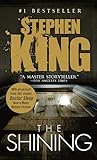
For Readers Who Want Full King: The Shining (1977)
King’s first unambiguously major novel and the most widely recognised statement of his themes. The Overlook Hotel — and what it does to Jack Torrance’s alcoholic, violent potential — is the best demonstration of King’s central method: the supernatural externalises and amplifies something that already exists in the character. Jack’s descent into violence is not merely caused by possession; the hotel finds and amplifies what was already there. The novel is simultaneously a ghost story, a study of alcoholism, and the most autobiographical of King’s books. Stanley Kubrick’s film is excellent but different; read the novel to understand what King was actually writing about.
For Readers Who Want Maximum Terror: Pet Sematary (1983)
King’s most deeply disturbing novel — the one he tried to suppress after writing it, convinced he had gone too far. The Creed family’s proximity to a burial ground that can restore the dead addresses the most primal parental fear: the death of a child, and the temptation to do anything to undo it. The novel’s horror is not the horror of monsters but the horror of grief made terrible by the possibility of relief. Its final image is one of the most devastating in popular horror fiction. For readers who want to test how far King can push them.
The Non-Horror King: Different Seasons (1982)
King’s best book for readers who want to experience his storytelling without supernatural horror. Four novellas, each attached to a season: ‘Rita Hayworth and Shawshank Redemption’ (the basis of the film), ‘Apt Pupil’ (a boy who becomes fascinated by his Nazi neighbour’s history), ‘The Body’ (the basis of the film Stand By Me, about four boys who go to see a dead body), and ‘The Breathing Method’. The first three are among King’s finest sustained writing; the collection demonstrates that King’s gifts — his ear for dialogue, his understanding of character, his ability to generate tension — are independent of the horror genre.
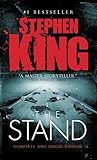
The Epic: The Stand (1978)
King’s most ambitious novel — an apocalyptic epic in which a superflu wipes out 99% of the world’s population, and the survivors are drawn to two communities: one gathering around the elderly prophetess Mother Abagail, one forming around the dark man Randall Flagg. At over 1,000 pages in the extended version, The Stand is the fullest statement of King’s ambitions as a novelist and his most direct engagement with the question of good and evil as social forces. The pacing is deliberate; the cast is enormous. Best approached after readers have already enjoyed at least two or three of King’s shorter novels.
The Dark Tower Series: Beginning with The Dark Tower: The Gunslinger (1982)
King’s interconnected fantasy-western-horror epic, spanning eight volumes, in which the gunslinger Roland Deschain pursues the Man in Black across a desert toward the Dark Tower. The series connects most of King’s other novels (references to It, The Stand, Insomnia appear throughout), making it the richest reading experience for King completists. Begin with The Gunslinger; if the pace and style appeal, the subsequent volumes (particularly The Drawing of the Three and Wizard and Glass) are among King’s best sustained work.
Why Misery Is the Place to Begin
For a reader new to Stephen King, Misery is the place to begin, especially for readers uncertain about supernatural horror, for it is a gripping, terrifying thriller grounded entirely in human menace. Misery follows Paul Sheldon, a popular novelist recovering from a car accident, who finds himself held captive by his self-proclaimed number one fan, in a tense, claustrophobic, and terrifying novel. As a first King, it is ideal: it showcases his gifts, the masterful suspense, the vivid characterization, and the gripping storytelling, without the supernatural elements of much of his work, making it a perfect entry point for many readers. It welcomes the newcomer with its terrifying premise, its mounting tension, and its propulsive storytelling, while introducing the page-turning power that made King one of the best-selling authors in the world. Because it is among his most gripping and accessible novels, it lets the new reader meet King at his most purely suspenseful. For the newcomer, then, Misery is an ideal place to begin.
What to Expect When You Open It
As a new reader, you can expect Misery to be a tense, claustrophobic, and terrifying thriller. You can expect human menace, for the horror comes entirely from a human antagonist rather than the supernatural. You can expect a terrifying premise, for a popular novelist is held captive by his obsessive self-proclaimed number one fan. You can expect masterful suspense, for King builds tension relentlessly. You can expect vivid characterization, for both captive and captor are sharply and disturbingly drawn. You can expect gripping, propulsive storytelling, for King is a master of the page-turner. You can expect reflection on writing, fans, and obsession. You should be prepared for disturbing and violent material. Expect, in short, a tense, claustrophobic, and terrifying thriller, a gripping first taste of King.
Where to Go From Here
Once Misery has introduced you to King’s gifts, the reader who wishes to continue can explore his vast and varied body of work, which ranges across horror, suspense, fantasy, and more. His acclaimed novels include his epic of good and evil, his coming-of-age horror masterpiece, his sweeping Dark Tower series, and many other beloved works, while his shorter fiction and his celebrated novellas, including the stories behind famous films, offer further entry points, and his book on the craft of writing is a beloved guide. Readers drawn to his suspense can continue with his thrillers, while those open to the supernatural can explore his horror. Reading onward reveals the full range of King’s gifts, the masterful suspense, the vivid characterization, and the gripping storytelling. Building a reading journey through King is a matter of following his work from Misery into his many novels and stories. The reader who begins here will find one of the most prolific and popular storytellers in the world to follow.
King’s Approach to Fiction
King’s great gift is his ability to make the reader care about characters quickly — to create, within a few pages, a person whose fate matters to the reader. His horror works because it is always grounded in recognisable human psychology: the fear of losing a child, the fear of the self’s dark potential, the fear of isolation. Readers who approach him as a horror writer miss the degree to which he is a writer about family, community, and the specific American experience of the late twentieth century.
Frequently Asked Questions
Where should I start with Stephen King?
Misery (1987) is the best starting point for most new King readers — a contained, psychologically intense thriller (not supernatural horror) in which a novelist is held captive by his obsessive fan. It demonstrates King's best qualities — his understanding of character, his ability to generate sustained tension — without requiring tolerance for supernatural elements. The Shining (1977) is the best starting point for readers who want full King horror; Different Seasons is the best starting point for readers uncertain about horror who want to sample King's storytelling range.
What is The Shining about?
The Shining (1977) follows Jack Torrance, a recovering alcoholic and struggling writer who takes his wife Wendy and young son Danny to the Overlook Hotel in Colorado as the winter caretaker. Danny has a gift — 'the shining,' the ability to see the past and future — and the Overlook Hotel, which is haunted by its violent history, uses this gift to possess Jack and turn him against his family. The novel is simultaneously a haunted house story, a study of alcoholism and domestic violence, and an account of a father's failure to protect his child. King has said it is the most autobiographical of his novels.
Is Pet Sematary King's scariest novel?
Pet Sematary (1983) is widely considered King's most deeply upsetting novel — the one he himself tried to suppress after writing it. The story of the Creed family, who move to rural Maine near a pet cemetery with supernatural properties that can restore the dead, addresses the most primal parental fear: the death of a child. King's horror in this novel is not the fear of monsters but the fear of grief so unbearable that one would do anything — anything — to undo it. The novel's final image is one of the most disturbing in popular fiction.
Should I read The Dark Tower series?
The Dark Tower series — eight novels following the gunslinger Roland Deschain's pursuit of the Dark Tower across a post-apocalyptic fantasy landscape — is King's most ambitious project and the one that connects most of his other novels. It requires the largest commitment (eight volumes, beginning with The Gunslinger) and rewards it most completely for readers who respond to King's particular combination of western, fantasy, and horror. Begin with the standalone novels first; if you find King's storytelling compelling, The Dark Tower will eventually feel like the natural destination.