Where to Start with Stephen Hawking: A Reading Guide
Where to start with Stephen Hawking — whether to begin with A Brief History of Time, The Grand Design, or Brief Answers to the Big Questions. A complete guide.
By Elena Marsh
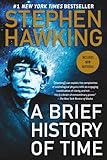
Stephen Hawking (1942–2018) was the British theoretical physicist, cosmologist, and Director of Research at the Centre for Theoretical Cosmology at Cambridge University, whose work on black holes, the Big Bang, and the nature of spacetime established him as one of the most significant physicists of the twentieth century. He was diagnosed with motor neurone disease at twenty-one and given two years to live; he lived for fifty-six more years and continued working until his death. A Brief History of Time (1988) was on the Sunday Times bestseller list for 237 weeks; it transformed what publishers believed a general audience would read about science and created the market for the popular theoretical physics genre that followed. He was Lucasian Professor of Mathematics at Cambridge for thirty years — a chair previously held by Isaac Newton.
Where to Start: A Brief History of Time (1988)
The essential Hawking — and the most famous popular science book ever written. Hawking’s ambition was to explain the universe from its origin to its possible end for a reader with no scientific background: the Big Bang and the question of what happened before it; the nature of time and whether it always flows in the same direction; black holes, their radiation, and their eventual evaporation (Hawking radiation, one of his most important theoretical contributions); the possibility of a unified theory that would describe all of physics; and whether such a theory would leave room for a Creator.
The book is structured as a journey from classical physics to quantum mechanics to the frontiers of theoretical physics — from Newton through Einstein to the questions that remain unanswered. Hawking was told that each equation would halve his sales; he included only E=mc². Even so, the content is demanding: concepts like imaginary time, virtual particles, and the no-boundary proposal for the universe’s origin are not easily made intuitive.
The famous joke — that A Brief History of Time is the most widely bought and least widely read science book — is unkind but not entirely unfounded. The book rewards patient engagement; readers who push through the difficult sections will find that Hawking’s ambition to explain the universe in a single volume is not quite achieved but is genuinely magnificent in the attempt.
The Grand Design (2010)
Co-authored with Leonard Mlodinow, The Grand Design addresses the three questions Hawking considered fundamental: why is there something rather than nothing, why are the laws of physics as they are, and why does life exist? His answer draws on M-theory and model-dependent realism — the argument that reality is model-dependent, that there is no single framework that describes all phenomena, and that the universe’s existence does not require a creator. More directly philosophical than A Brief History of Time; the explicit engagement with the question of God made it controversial. Best read after A Brief History of Time.
Brief Answers to the Big Questions (2018)
Hawking’s last book — assembled from essays and talks after his death and published posthumously. Ten questions, each given a chapter: Is there a God? How did it all begin? Is time travel possible? Will we survive? Should we colonise space? Will AI outsmart us? His most personal and most directly accessible work; the best entry point for readers who want Hawking’s views on the questions he considered most important without the technical density of his physics books.
Why A Brief History of Time Is the Ideal First Book
For a reader new to Stephen Hawking, A Brief History of Time is the ideal first book because it is his landmark bestseller and the fullest expression of his distinctive gift, the bringing of the deepest questions of cosmology to a wide audience with clarity and wonder. A Brief History of Time explores the big questions of the universe, from the Big Bang and black holes to the nature of time and the quest for a unified theory of physics, written for the general reader. As an entry point it is ideal, for it is his most famous book and a clear example of his accessible, wonder-filled approach to cosmology. It welcomes the newcomer with its profound subject, its clear explanations, and its sense of wonder, drawing the reader into the deepest questions of physics and the universe. It is his most important popular work and the one that best represents his gift, so the new reader encounters Hawking directly. For the newcomer interested in cosmology, then, A Brief History of Time is the natural and ideal starting point.
What to Expect as a New Reader
As a new reader, you can expect A Brief History of Time to be a profound, accessible, and wonder-filled exploration of cosmology. You can expect big questions, for Hawking explores the origin and fate of the universe, the Big Bang, black holes, and the nature of time. You can expect accessible explanation, for Hawking aims to make the deepest ideas of physics understandable for the general reader, famously with almost no equations. You can expect a sense of wonder, for the book conveys the awe and excitement of cosmology. You can expect engagement with profound questions about the universe, time, and the quest for a unified theory of physics. You can expect a concise but ambitious treatment. You should expect a book that asks some genuine effort but rewards it. Expect, in short, a profound, accessible, and wonder-filled exploration of cosmology, a fine introduction to Hawking’s gift.
Going Deeper After Your First Book
Once A Brief History of Time has introduced you to Hawking’s gift, the reader who wishes to go deeper can explore his other books, which continue his accessible, wonder-filled exploration of the universe and its deepest questions. His later works revisit and update the great questions of cosmology in even more accessible form, address the ultimate questions of existence and the universe, and gather his reflections on science and on the big questions of our time, each marked by his clarity and his sense of wonder. The reader can also explore the wider literature of popular cosmology and physics that his work helped popularize. Reading more widely deepens your engagement with Hawking’s distinctive gift, the bringing of cosmology to a wide audience with clarity and wonder. His characteristic approach runs through his work, and the reader who has enjoyed A Brief History of Time will find it across his books. Building your reading journey from A Brief History of Time is a matter of following Hawking’s writing into his other books and the wider cosmology literature. The reader who begins here will find one of the most beloved popularizers of cosmology.
Reading Stephen Hawking
Begin with A Brief History of Time — read it slowly, and don’t worry if some sections require re-reading. The ambition of the book is part of its value; Hawking’s attempt to make the deepest questions in physics accessible is itself an extraordinary intellectual achievement. Read The Grand Design for the philosophical argument; read Brief Answers for Hawking’s views on the future and his final reflections on the questions that defined his life’s work.
Frequently Asked Questions
Where should I start with Stephen Hawking?
A Brief History of Time: From the Big Bang to Black Holes (1988) is the only starting point — the most famous popular physics book ever written, Hawking's attempt to explain the universe from its origin to its possible futures for readers with no scientific background. It sold more than ten million copies and spent a record 237 weeks on the Sunday Times bestseller list; it is the book that established the genre of popular theoretical physics. It is also famously described as the most widely bought and least widely read science book — the content is genuinely demanding, but the ambition is extraordinary.
Is A Brief History of Time actually difficult to read?
A Brief History of Time is demanding despite Hawking's care in avoiding mathematics (he was famously told that each equation would halve his sales, so he included only E=mc²). The concepts — the nature of time, black holes, quantum mechanics, the uncertainty principle, the no-boundary proposal for the universe's origin — are genuinely difficult, and readers with no physics background may find some sections challenging. Hawking acknowledged this and wrote A Briefer History of Time (2005) as a revised and more accessible version; most readers are better served by the original, read carefully, than by seeking a further simplification.
What is The Grand Design about?
The Grand Design (2010), co-authored with Leonard Mlodinow, addresses what Hawking called 'the three great questions': why is there something rather than nothing, why do the laws of nature have the specific values they have, and why does life exist? His answer draws on M-theory (a framework that incorporates string theory) and the concept of model-dependent realism — the idea that there is no theory-independent concept of reality, and that models are real insofar as they describe and predict observation. The book is more directly philosophical than A Brief History of Time and more explicitly addresses the question of whether God is necessary to explain the universe.
What is Brief Answers to the Big Questions about?
Brief Answers to the Big Questions (2018), published posthumously, collects Hawking's responses to ten questions: Is there a God? How did it all begin? Can we predict the future? What is inside a black hole? Is time travel possible? Will we survive on Earth? Should we colonise space? Will artificial intelligence outsmart us? How do we shape the future? It is Hawking's most personal and most direct book — his final statement on the questions he considered most important. Accessible without prior Hawking knowledge; best read after A Brief History of Time for full context.