Where to Start with Robert Greene: A Reading Guide
Where to start with Robert Greene — whether to begin with The 48 Laws of Power, Mastery, or The Laws of Human Nature. A complete reading guide.
By Lena Fischer
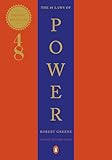
Robert Greene (born 1959) is the American author whose books on power, strategy, mastery, and human nature have sold millions of copies and established him as one of the most distinctive voices in popular non-fiction. His work draws on an unusually wide range of historical sources — biography, military history, philosophy, psychology, anthropology — and presents its conclusions in a distinctive format of laws and principles illustrated by historical case studies. The 48 Laws of Power (1998), co-written with Joost Elffers, became a genuine cultural phenomenon; it has been read widely in business, entertainment, and (controversially) in US prisons. Greene’s work is explicitly amoral in its analysis of how power operates.
Where to Start: The 48 Laws of Power (1998)
The essential Greene — and the book that established his distinctive approach: forty-eight laws, each illustrated with historical examples (often running to several pages), a ‘transgression’ and ‘observance’ of the law, and a set of interpretations and reversals. The laws range from the fundamental (‘Never outshine the master’, ‘Conceal your intentions’) to the counterintuitive (‘Play to people’s fantasies’, ‘Use absence to increase respect and honour’).
The methodology is Machiavellian in the most precise sense — an analysis of how power actually operates, stripped of the moral filters that most advisors apply. Greene draws from court intrigue in Renaissance Italy, Chinese emperors, Victorian financiers, Hollywood producers, and military strategists; the historical range is genuinely vast. The format — short, titled laws each with multiple case studies — makes it readable in non-linear order, though reading cover to cover reveals the coherence of the underlying argument.
The book is deliberately provocative and has attracted both devoted readers and sharp critics. Whether read as historical anthology, strategic manual, or analysis of manipulation, it is unlike anything else in the self-help or business sections.
Mastery (2012)
Greene’s most constructive book — a study of how historical masters achieved their mastery, structured as both biography and extracted principle. Greene profiles nine historical figures (Leonardo da Vinci, Darwin, Mozart, Einstein, Marcel Proust, among others) and traces the common patterns in their development: the identification of a Life’s Task that connects to childhood obsession, a years-long apprenticeship phase, the development of social intelligence sufficient to find and work with the right mentors, and the eventual Creative-Active phase where accumulated knowledge produces genuine originality. Mastery is Greene’s most practically orientated book and the most widely recommended entry point for readers who find The 48 Laws too focused on manipulation.
The Laws of Human Nature (2018)
Greene’s most psychologically ambitious work — eighteen laws examining the unconscious forces that drive human behaviour: envy, grandiosity, conformity, self-destructive patterns, the compulsion to idealise. The book is his largest (600+ pages) and his most explicitly focused on self-understanding rather than strategy. Each law includes a biographical deep-dive into a historical figure who exemplifies the trait, followed by analysis and application. Greene’s most mature and most searching work; rewarding for readers who have already engaged with his earlier books.
Why The 48 Laws of Power Is the Ideal First Book
For a reader new to Robert Greene, The 48 Laws of Power is the ideal first book because it is his breakout work and the fullest expression of his distinctive approach, the cool, amoral analysis of power drawn from history, philosophy, and the lives of the powerful. The 48 Laws of Power distills, into forty-eight laws illustrated with historical stories, the strategies by which people have gained, kept, and lost power across the centuries. As an entry point it is ideal, for it is his most famous book and a clear example of his unsentimental, strategic, and provocative style. It welcomes the newcomer with its memorable laws, its vivid historical anecdotes, and its bracing realism, drawing the reader into his study of power. It is worth reading critically, for the book describes the often ruthless dynamics of power rather than endorsing them as a moral guide, and the thoughtful reader engages it with that distinction in mind. It is his defining work, so the new reader encounters Greene at his most characteristic. For the newcomer, then, The 48 Laws of Power is the natural starting point.
What to Expect as a New Reader
As a new reader, you can expect The 48 Laws of Power to be a provocative, unsentimental, and history-rich analysis of power. You can expect a structure of forty-eight laws, each a principle of power illustrated with stories from history and the lives of the powerful. You can expect amoral realism, for Greene describes how power actually works, including its ruthless and manipulative dynamics, rather than offering moral instruction. You can expect vivid historical anecdotes, drawn from courtiers, con artists, rulers, and strategists across the centuries. You can expect a cool, strategic, and often cynical perspective. You can expect material best read critically, as a description of power dynamics to understand and recognize, not a prescription for how to treat people. You can expect a long, absorbing, and frequently discussed book. Expect, in short, a provocative, unsentimental, and history-rich analysis of power, an introduction to Greene’s approach best read thoughtfully.
Going Deeper After Your First Book
Once The 48 Laws of Power has introduced you to Greene’s approach, the reader who wishes to go deeper can explore his other books, which apply the same history-rich, strategic analysis to further subjects, while continuing to read with a critical eye. His other works examine seduction, war and strategy, mastery and the development of skill, and human nature itself, each drawing on history, philosophy, and biography in his characteristic style. Reading these after The 48 Laws of Power deepens your engagement with Greene’s distinctive approach, the cool, strategic analysis of human behavior. His characteristic method runs through his work, and the reader who has engaged The 48 Laws of Power will find it across his books, including his more constructive later work on mastery and human nature. Building your reading journey through Greene is a matter of following his analysis from The 48 Laws of Power into his other books. The reader who begins here will have encountered one of the most distinctive and provocative contemporary writers on power and strategy.
Reading Robert Greene
Begin with The 48 Laws of Power for Greene’s analytical method at its most concentrated; read Mastery for his most constructive and most biographical work. The Laws of Human Nature is best read third as a synthesis of the psychological themes running through the earlier books. All Greene’s books reward non-linear reading — the law-and-case-study format allows dipping in — but the full argument emerges most clearly in sequence.
Frequently Asked Questions
Where should I start with Robert Greene?
The 48 Laws of Power (1998) is the essential starting point — Greene's account of the universal principles that govern the acquisition and exercise of power, drawn from history, philosophy, and the study of great strategists, courtiers, and conquerors from Machiavelli to Louis XIV to P.T. Barnum. The book became a cultural phenomenon and has sold over three million copies in the United States alone; it has been banned in several US prisons for its perceived influence. Whether approached as a strategic manual, a work of history, or an analysis of human psychology, it is Greene's most concentrated and most influential work.
What is Mastery about?
Mastery (2012) is Greene's most constructive and most personally useful book — an account of how nine historical masters (Leonardo da Vinci, Charles Darwin, John Coltrane, Albert Einstein, among others) achieved their levels of mastery, and what principles any reader can extract from their paths. The argument: mastery is achievable through a combination of finding your Life's Task (the work you are uniquely suited for), committing to a long apprenticeship phase, and developing the social intelligence to navigate institutions and mentors. Mastery is Greene's most recommended book for readers who want practical application rather than strategic analysis.
What is The Laws of Human Nature about?
The Laws of Human Nature (2018) is Greene's most ambitious and most expansive book — 600+ pages examining eighteen laws governing human behaviour, drawing on evolutionary psychology, philosophy, history, and biography. The argument: most human behaviour is driven by forces we are largely unconscious of — envy, grandiosity, tribal identity, the desire for status — and understanding these forces in others (and in ourselves) is the foundation of genuine social intelligence. It is Greene's most psychologically rich work; some readers find it his most rewarding, others his most overwhelming.
Are Greene's books morally problematic?
Greene's books — particularly The 48 Laws of Power — are deliberately amoral in their framing. They describe how power works and how manipulation is deployed, without consistently advising the reader to be ethical. Greene presents himself as describing reality rather than prescribing behaviour; critics argue the books effectively serve as manuals for manipulation and exploitation. The most balanced reading treats them as analytical rather than prescriptive — useful for understanding the power dynamics in any organisation, relationship, or historical situation, regardless of whether one intends to deploy the strategies described.