Where to Start with Robert Caro: A Reading Guide
Where to start with Robert Caro — whether to begin with The Power Broker or The Path to Power. A complete reading guide to the greatest American biographer.
By Oliver Kane
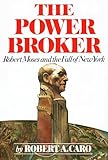
Robert Caro (born 1935) is the American journalist and biographer who — with The Power Broker: Robert Moses and the Fall of New York (1974) and the ongoing multi-volume The Years of Lyndon Johnson — has produced what is widely considered the greatest biographical writing in American letters. The Power Broker won the Pulitzer Prize for Biography; Master of the Senate (volume three of the LBJ series) also won the Pulitzer Prize — making Caro the first person to win two Pulitzer Prizes for biography. His method — years of archival research, hundreds of interviews, physical inhabitation of the places his subjects inhabited — has made his books the definitive accounts of two of the most consequential figures in twentieth-century American history.
Where to Start: The Power Broker (1974)
The essential Caro — and one of the greatest works of American non-fiction published in the twentieth century. Robert Moses was the most powerful man in New York State for fifty years — from the 1920s through the 1960s — without ever having been elected to anything. He built the infrastructure of modern New York: highways, bridges, parks, housing projects, beaches, tunnels. He shaped the physical form of a city of eight million people according to his will, which was often benevolent and often destructive, and which was entirely his own.
Caro’s portrait of Moses is organised around two questions: how did a person without elected office acquire and maintain this power, and what did he do with it? The answer to the first question — Moses discovered early that appointed positions with control over infrastructure could be made more powerful than elected ones, if the apparatus was correctly designed — is Caro’s central insight about power: that it flows to whoever controls the levers, not necessarily to whoever holds the title. The answer to the second question is devastating: Moses deliberately designed his highways to be impassable by buses (to keep poor and non-white people out of his beaches), demolished entire neighbourhoods for highways that served suburban commuters, and destroyed the South Bronx with an expressway that served no residents of the area.
At 1,336 pages, The Power Broker is demanding. It is also impossible to put down once engaged — Caro writes with the drive of a novelist and the documentation of an archivist.
The Path to Power (1982)
Volume one of the LBJ series — following Lyndon Johnson from his birth in the Texas Hill Country through his elections to Congress and his first Senate campaign. Caro establishes both the poverty and isolation of Johnson’s origins and the ruthlessness and brilliance of his political rise. The chapter on the Hill Country — its remoteness, its specific poverty before rural electrification, and what Johnson did to bring electricity to it — is among the finest pieces of historical narrative Caro wrote.
Means of Ascent (1990)
Volume two — Johnson’s defeat in the 1941 Senate race, his period in the political wilderness, and the 1948 Senate election (the ‘Landslide Lyndon’ election, stolen by eighty-seven fraudulent votes). Caro’s most explicitly prosecutorial volume; the account of the 1948 election is a sustained examination of vote fraud as political practice.
Master of the Senate (2002)
The third volume and the Pulitzer Prize-winning centrepiece of the series — Johnson’s twelve years as a senator, culminating in the Civil Rights Act of 1957. Caro opens the volume with a 100-page history of the US Senate from 1789 to 1948, establishing why the institution had become almost entirely ineffective before Johnson’s arrival. The account of how Johnson passed the Civil Rights Act — working against Southern segregationists, Northern liberals who distrusted him, and Eisenhower’s administration — is the most brilliant account of legislative power in American literature.
Why The Power Broker Is the Ideal First Book
For a reader new to Robert Caro, The Power Broker is the ideal first book because it is his monumental, Pulitzer Prize-winning masterpiece and the fullest expression of his distinctive gifts, the exhaustive research, the masterful narrative, and the profound illumination of how political power actually works. The Power Broker is Caro’s vast biography of Robert Moses, the unelected official who reshaped New York through his accumulation and use of power, a towering study of power itself. As an entry point it is ideal, for it is his most celebrated standalone work and a perfect example of his exhaustive, masterful, power-illuminating biography. It welcomes the newcomer with its compelling subject, its masterful narrative, and its profound insight into power, drawing the reader into his distinctive vision. It is among his major works and a fine representation of his gifts, so the new reader encounters Caro at his finest. For the newcomer, then, The Power Broker is the natural and ideal starting point, though it is a very long book.
What to Expect as a New Reader
As a new reader, you can expect The Power Broker to be an exhaustive, masterful, and profoundly illuminating biography. You can expect exhaustive research, for Caro is famous for his deep, years-long, exhaustive investigation. You can expect a masterful narrative, for Caro renders his vast subject with the momentum and richness of a great story. You can expect a profound study of power, for the book illuminates how the unelected Robert Moses accumulated and used power to reshape New York. You can expect a compelling, complex subject, neither hero nor villain. You can expect insight into how political power actually works, beneath the surface of elections and offices. You can expect immense detail and ambition. You should expect a very long book that rewards the commitment. Expect, in short, an exhaustive, masterful, and profoundly illuminating biography, a superb introduction to Caro’s gifts.
Going Deeper After Your First Book
Once The Power Broker has introduced you to Caro’s gifts, the reader who wishes to go deeper can explore his other great work, the multi-volume biography of Lyndon Johnson that has occupied much of his career and is widely regarded as one of the greatest works of biography and of political history ever written. The Johnson volumes continue his exhaustive research, his masterful narrative, and his profound illumination of power, on an even larger canvas, tracing Johnson’s life and the workings of American political power across the twentieth century. Caro has also written a short, illuminating book on his own methods and his life’s work. Reading these after The Power Broker deepens your appreciation of Caro’s distinctive gifts, the exhaustive research, the masterful narrative, and the profound illumination of power. His characteristic ambition runs through his work. Building your reading journey through Caro is a matter of following him from The Power Broker into the Johnson biography. The reader who begins here will encounter one of the greatest biographers and chroniclers of political power.
Reading Robert Caro
Begin with The Power Broker — it is entirely self-contained and the fullest realisation of Caro’s method. For the LBJ series, start with The Path to Power and read in order; each volume is a complete account of a specific period but the full arc requires the sequence. Caro’s books are among the most demanding and most rewarding in American non-fiction; the investment is repaid with a level of insight into how power actually works that no other writer has provided.
Frequently Asked Questions
Where should I start with Robert Caro?
The Power Broker: Robert Moses and the Fall of New York (1974) is the ideal starting point — Caro's Pulitzer Prize-winning biography of Robert Moses, the master builder who shaped modern New York City across five decades without ever holding elected office. At 1,336 pages, it is daunting in scope, but it is both one of the greatest biographies in the English language and entirely self-contained — you need no prior knowledge of Moses or New York City. It is also among the most compelling arguments ever made about how power works in democratic societies. The Path to Power (the first volume of The Years of Lyndon Johnson) is the alternative for readers who prefer to start the LBJ series.
What is The Years of Lyndon Johnson about?
The Years of Lyndon Johnson is Caro's multi-volume biography of Lyndon Baines Johnson, America's 36th president — a figure Caro considers the most consequential politician of the twentieth century, both for the Great Society legislation and for the catastrophe of Vietnam. Caro began the project in 1974; as of 2024, four volumes have been published (The Path to Power, Means of Ascent, Master of the Senate, The Passage of Power) with a fifth planned. Each volume is a complete account of a period of Johnson's life; all four are also studies of how power is acquired and exercised.
How long are Caro's books?
Caro writes very long books: The Power Broker is 1,336 pages; the LBJ volumes range from 800 to 1,100+ pages each. The length is the point — Caro's method requires the accumulation of specific detail (interview testimony, archival research, physical description of places) to make power visible at the granular level where it actually operates. He is famous for spending years on a single chapter; The Power Broker took seven years to research and write. Readers who engage with his method find the length the source of the work's power; readers who find biography less compelling will struggle.
Why is The Power Broker considered so important?
The Power Broker is considered one of the great works of American non-fiction for several reasons: it proved that a biography of a non-elected official could be as significant as any political biography; it made Robert Moses a national figure and exposed the human cost of his highway-building agenda; and it developed what became Caro's central insight — that the true story of how power works can only be told through the accumulation of specific, documented detail, over time. The book was responsible for changing how New York City (and eventually other cities) approached urban planning; it is both journalism and history at the highest level.