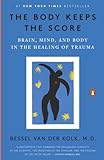
Where to Start with Norman Doidge: A Reading Guide
Where to start with Norman Doidge — how to approach The Brain That Changes Itself, his landmark account of neuroplasticity that transformed public understanding of the brain's capacity for change. A complete reading guide.
By Elena Marsh
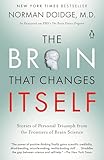
Norman Doidge is a Canadian psychiatrist, psychoanalyst, and science writer based in New York and Toronto. The Brain That Changes Itself: Stories of Personal Triumph from the Frontiers of Brain Science was published by Viking in 2007 and became an international bestseller, translated into over twenty languages. It arrived at a moment when the concept of neuroplasticity — the brain’s lifelong capacity to reorganise its own structure — was still largely unknown outside specialist circles, and it played a significant role in bringing these ideas to a broad audience.
Where to Start: The Brain That Changes Itself (2007)
The essential Norman Doidge — and one of the most hopeful science books of the past two decades. The Brain That Changes Itself opens with the assumption it will overturn: for most of the twentieth century, neuroscience operated on the premise that the adult brain was essentially fixed. Neural circuits were set during childhood and adolescence; after that, the brain’s structure was largely stable. Injury to brain tissue meant permanent loss. The implications of this assumption for medicine were profound — and, as the book demonstrates, profoundly wrong.
The case studies are Doidge’s method and his greatest achievement. Rather than presenting neuroscience as abstraction, he works through specific patients, scientists, and therapists whose stories reveal neuroplasticity in action. Cheryl Schiltz lost her vestibular system — her sense of balance — to an antibiotic reaction and found partial recovery through a device developed by Paul Bach-y-Rita that translated balance information to her tongue’s sensory receptors. The tongue, an organ with no evolutionary relationship to balance, could learn to provide balance feedback because the brain could learn to interpret the signal. The principle the story illustrates — that the brain’s representational maps can be rewired in response to novel input — is one of the book’s central demonstrations.
The science of Hebb’s rule gives the book its conceptual foundation. The neuroscientist Donald Hebb proposed that neurons that fire together wire together: synaptic connections between neurons strengthen when they activate simultaneously, which means that experience literally changes the brain’s physical structure. This principle operates throughout life, not just in childhood. The brain that receives rich, varied, attended-to input will continuously reorganise its representational maps; the brain that is not challenged will lose the circuitry that goes unused. Use it or lose it is not a metaphor.
Michael Merzenich’s cortical mapping research provides the scientific spine of several chapters. Merzenich demonstrated that the sensory and motor areas of the cortex — long thought to be fixed in their organisation — could be substantially reorganised through training, injury, and experience. When the finger amputation studies showed that the cortical area formerly representing the missing finger was taken over by adjacent fingers within weeks, the fixed-brain assumption was no longer tenable. This finding, and its implications for rehabilitation, learning, and therapeutic practice, runs through the book’s most important sections.
The mental health applications are among the book’s most practically significant sections. Doidge covers obsessive-compulsive disorder — showing that cognitive behavioural therapy produces measurable structural changes in the brain that are visible in brain imaging — and the implications for how psychiatric conditions should be understood. If mental activity changes neural structure, then the distinction between psychological and biological explanations for mental illness begins to dissolve. A thought can rewire a brain; a rewired brain changes what thoughts are available.
The book’s core message — that the brain can change — remains one of the most important and most genuinely hopeful findings in modern science, with implications for rehabilitation medicine, education, mental health treatment, and the understanding of human potential.
Why The Brain That Changes Itself Is the Ideal First Book
For a reader new to Norman Doidge, The Brain That Changes Itself is the ideal first book because it is his acclaimed bestseller and the fullest expression of his distinctive gift, the vivid, story-driven popularizing of neuroplasticity, the brain’s capacity to change. The Brain That Changes Itself explores neuroplasticity through compelling stories of people whose brains adapted, healed, or were transformed, presenting the science through human cases. As an entry point it is ideal, for it is his best-known book and a clear, engaging introduction to the idea of the changing brain. It welcomes the newcomer with its fascinating stories, its accessible science, and its hopeful message, drawing the reader into the science of neuroplasticity. Readers are wise to engage thoughtfully, recognizing that popular accounts simplify, that the field is evolving, and that the book is not a substitute for medical advice. It is his major work, so the new reader encounters Doidge’s subject directly. For the newcomer, then, The Brain That Changes Itself is a natural starting point.
What to Expect as a New Reader
As a new reader, you can expect The Brain That Changes Itself to be a fascinating, story-driven, and accessible book about neuroplasticity. You can expect a central subject, neuroplasticity, the brain’s capacity to change, adapt, and reorganize itself. You can expect compelling stories, for Doidge presents the science through vivid human cases of people whose brains adapted, healed, or were transformed. You can expect accessible science, for Doidge makes the research approachable for the general reader. You can expect a hopeful message about the brain’s potential for change. You can expect a focus on the human and the dramatic as much as the technical. You should engage thoughtfully, recognizing that popular accounts simplify, that the science is evolving, and that the book is not a substitute for medical advice. Expect, in short, a fascinating, story-driven, and accessible book about neuroplasticity, a thoughtful introduction to Doidge’s subject.
Going Deeper After Your First Book
Once The Brain That Changes Itself has introduced you to the science of neuroplasticity, the reader who wishes to go deeper can explore Doidge’s other work and the wider literature on the brain, neuroscience, and healing, reading throughout with appropriate critical awareness. His later book continues his exploration of neuroplasticity, focusing on healing and recovery, with more stories and approaches, while the broad and evolving field of writing on neuroscience and the brain offers many further perspectives the reader is well prepared to explore. Reading more widely, and thoughtfully, deepens your engagement with the science of the changing brain, and the reader is well served by consulting authoritative sources and a doctor for personal decisions. Doidge’s engaging accounts are one accessible entry into a complex field. Building your reading journey from The Brain That Changes Itself is a matter of following its subject into his other work and the wider neuroscience literature. The reader who begins here will have an engaging introduction to the science of neuroplasticity.
Reading Norman Doidge
The Brain That Changes Itself is Doidge’s essential and most widely read book. It stands alone and requires no prior background in neuroscience.
For the full Norman Doidge bibliography, reviews, and biography, visit the Norman Doidge author page on Editors Reads.
Affiliate disclosure: Links to Amazon on this page are affiliate links. We earn a small commission at no extra cost to you.
Frequently Asked Questions
Where should I start with Norman Doidge?
The Brain That Changes Itself (2007) is Doidge's essential book — a landmark work of popular neuroscience that presented the science of neuroplasticity to a general audience through a series of extraordinary case studies, demonstrating that the adult brain can reorganise itself throughout life. Published before neuroplasticity became a household concept, it transformed public understanding of recovery, learning, and the brain's fundamental nature.
What is The Brain That Changes Itself about?
The Brain That Changes Itself argues against the once-dominant assumption that the adult brain is essentially fixed — that neural circuits set in childhood cannot be substantially reorganised. Through case studies of patients, scientists, and therapists, Doidge shows that the brain continuously rewires itself in response to experience, attention, and deliberate practice. The implications are significant: stroke victims can recover function, learning disabilities can improve, and conditions once considered permanent can respond to neuroplasticity-based therapies.
Is The Brain That Changes Itself scientifically accurate?
The book's core thesis — that the adult brain is plastic and can reorganise itself throughout life — has been broadly validated. However, readers should note that some specific claims, particularly in the later chapters, venture into more speculative territory than the book's confident tone suggests. The field has advanced considerably since 2007, and some early applications have been refined or qualified. For its time, the book was an accurate and important account; for current scientific status on specific topics, it should be read alongside more recent research.
What should I read after The Brain That Changes Itself?
After The Brain That Changes Itself, Bessel van der Kolk's The Body Keeps the Score extends the neuroplasticity framework specifically to trauma — the most significant application of these insights in mental health treatment. Robert Sapolsky's Behave provides a more rigorous and comprehensive account of neuroscience as it applies to human behaviour. Amir Levine and Rachel Heller's Attached applies related neuroscience to attachment theory and adult relationships.