Where to Start with Napoleon Hill: A Reading Guide
Where to start with Napoleon Hill — how to approach Think and Grow Rich, the 1937 classic that distilled the success principles of 500 self-made millionaires and invented modern self-help. A complete reading guide.
By Lena Fischer
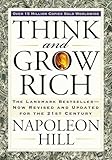
Napoleon Hill (1883–1970) was an American self-help author whose most famous book grew from a commission by Andrew Carnegie to interview the wealthiest and most successful Americans of the early twentieth century and identify the common principles of their success. The research took twenty years. Think and Grow Rich was published in 1937, during the Great Depression, and sold 20,000 copies in its first year. It has since sold more than 100 million copies worldwide and is widely regarded as the text that created the modern self-help genre — the book that every subsequent motivational and success writer is, in some sense, responding to.
Where to Start: Think and Grow Rich (1937)
The essential Napoleon Hill — and the foundational text of modern success literature. Think and Grow Rich opens with a premise that its critics find preposterous and its admirers find liberating: that riches begin in the mind, that achievement is preceded by a particular quality of thought, and that the difference between the people who achieve significant goals and those who do not is primarily a difference in the character and intensity of their desire.
This is not a mystical claim in the way Hill sometimes makes it sound. Stripped of the book’s dated metaphysical framing, it makes a psychological argument that decades of subsequent research have partially validated: that the intensity and specificity of a goal affects the likelihood of achieving it; that belief in the possibility of an outcome changes the behaviours one undertakes toward it; and that persistence — continuing to act toward a goal after repeated failure — is a more reliable predictor of outcome than talent, intelligence, or opportunity.
The chapter on Desire is the book at its most compelling. Hill opens with the story of Edwin Barnes, who wanted to become a business partner of Thomas Edison — not an employee, a partner — and who arrived at Edison’s laboratory with no money, no credentials, and no qualifications except his conviction. He worked for Edison for five years, doing whatever he was given, until an opportunity appeared that others had overlooked: Edison’s Ediphone dictating machine, which every Edison salesman believed was unsellable. Barnes recognised the opportunity and sold it successfully, beginning the partnership he had always intended. Hill’s point is that the desire was not vague aspiration — it was a consuming commitment that organised Barnes’s attention and action until the opening appeared.
The chapter on Specialised Knowledge is the book’s most practically durable. Hill distinguishes between general knowledge — broad education, accumulated facts — and specialised knowledge in a specific domain, applied to a defined purpose. His argument that specialised knowledge is more valuable than general knowledge in building wealth has been validated by virtually every study of high performance in professional domains since. The adjacent point — that self-education in a specific field is both possible and sufficient, and that formal credentials are less important than mastery — was heterodox in 1937 and has become considerably more widely accepted since.
The chapter on Persistence is the most emotionally resonant. Hill uses the metaphor of digging for gold three feet from the deposit and giving up — an image that has become the book’s most frequently quoted passage — to make the argument that most failures occur just before the breakthrough point. He is careful not to make this into simple optimism; he acknowledges that persistence without adjustment is stubbornness, not persistence. But the central observation — that the people who succeed are often not more talented or better situated than those who don’t, but are simply still present and still working when the opportunity finally appears — is one that almost anyone who has achieved something difficult will recognise.
The book’s weaknesses are real and should be engaged with directly rather than dismissed or minimised. The Master Mind concept — that a group of minds focused on a single goal creates a third, superior mind — is interesting as a description of collaboration but is dressed in pseudo-scientific language about mental vibrations that is simply wrong. Many of Hill’s historical claims about his conversations with Carnegie, Edison, Ford, and others cannot be verified. And the world the book was written in — predominantly male, implicitly white, with a specific economic context that does not map onto the early twenty-first century — is present throughout and should not be read past.
Read critically, with awareness of both its durable insights and its significant limitations, Think and Grow Rich remains a genuinely useful study in the psychology of achievement and the beliefs that separate people who reach ambitious goals from those who do not.
Why Think and Grow Rich Is the Ideal First Book
For a reader new to Napoleon Hill, Think and Grow Rich is the ideal first book because it is his landmark work, one of the most famous and influential books in the self-help and success tradition, and the fullest expression of his central ideas about desire, belief, and achievement. Think and Grow Rich presents Hill’s principles of success, drawn from his study of successful people, emphasizing the power of desire, faith, persistence, and a definite purpose in achieving one’s goals. As an entry point it is essential, for it is his defining book and the comprehensive statement of his philosophy. It welcomes the newcomer with its central principles, its motivational message, and its accessible style, drawing the reader into his success philosophy. Readers are wise to engage critically, recognizing that the book makes strong claims, reflects its era, and is motivational rather than rigorously evidence-based. It is his most famous work, so the new reader encounters Hill directly. For the newcomer drawn to the success tradition, then, Think and Grow Rich is the natural starting point, best approached thoughtfully.
What to Expect as a New Reader
As a new reader, you can expect Think and Grow Rich to be a motivational, principle-driven classic of the success tradition. You can expect a set of principles, for Hill organizes his philosophy around principles such as desire, faith, persistence, and a definite purpose. You can expect a focus on mindset, for Hill emphasizes the power of thought, belief, and desire in achieving success. You can expect a motivational message, for the book is designed to inspire and energize the reader toward their goals. You can expect anecdotes and examples drawn from successful people Hill studied. You can expect an accessible, earnest, and motivational style that reflects its era. You should engage critically, recognizing that the book makes strong claims, is motivational rather than rigorously evidence-based, and reflects the assumptions of its time. Expect, in short, a motivational, principle-driven classic of the success tradition, best approached thoughtfully and critically.
Going Deeper After Your First Book
Once Think and Grow Rich has introduced you to Hill’s ideas, the reader who wishes to go deeper can carry its themes into the wider tradition of self-help and success literature to which it is foundational, continuing to read critically. Hill’s other writings extend his success philosophy, while the broad tradition of motivational and success writing, which his work helped shape, includes many later authors who explore similar themes of mindset, achievement, and personal development. The thoughtful reader engages such motivational claims as inspiration rather than established fact, balancing them with practical and evidence-based guidance. Reading more widely deepens your understanding of this influential strand of self-help. His characteristic emphasis on desire, belief, and persistence runs through the tradition. Building your reading journey from Think and Grow Rich is a matter of following its themes into the wider success literature, held critically. The reader who begins here will have encountered a foundational and enormously influential, if dated and contested, classic of the success tradition.
Reading Napoleon Hill
Think and Grow Rich is Hill’s essential and most enduring book. It stands alone and is best approached as historical context for modern self-help literature and as a study in the psychology of achievement.
For the full Napoleon Hill bibliography, reviews, and biography, visit the Napoleon Hill author page on Editors Reads.
Affiliate disclosure: Links to Amazon on this page are affiliate links. We earn a small commission at no extra cost to you.
Frequently Asked Questions
Where should I start with Napoleon Hill?
Think and Grow Rich (1937) is Hill's essential book — a distillation of the success principles he observed in over 500 wealthy and successful Americans, including Andrew Carnegie, Henry Ford, and Thomas Edison, over twenty years of research. The book that effectively invented modern self-help literature, its core ideas about desire, belief, persistence, and specialised knowledge have proven their durability across nine decades and remain foundational for anyone studying the psychology of achievement.
What is Think and Grow Rich about?
Think and Grow Rich presents thirteen principles that Hill identified as common to financially successful people, beginning with Desire and moving through Faith, Autosuggestion, Specialised Knowledge, Imagination, Organised Planning, Decision, Persistence, and the Master Mind. The central argument is that wealth begins as a thought — that burning desire, combined with a clear plan and relentless persistence, is the common thread in every significant achievement. Hill illustrates each principle with case studies of successful figures drawn from his claimed interviews.
Is Think and Grow Rich still worth reading given its age?
Yes, with critical reading. The book's core psychological insights about desire, persistence, and the importance of specialised knowledge remain genuinely useful and have been validated by subsequent research on achievement and motivation. However, it requires reading with historical awareness: the metaphysical framework (the 'vibration' of thoughts, the Master Mind mysticism) has aged poorly and some historical claims are unverifiable. Read it as a study in the psychology of achievement — take what is durable, engage critically with what is not, and be aware of the book's 1930s racial and gender assumptions.
What should I read after Think and Grow Rich?
After Think and Grow Rich, Dale Carnegie's How to Win Friends and Influence People covers complementary ground on the interpersonal and social dimensions of success that Hill underemphasises. Stephen Covey's The 7 Habits of Highly Effective People provides a more structured and behaviourally grounded framework for achievement without the metaphysical elements. Carol Dweck's Mindset provides the modern psychological research that partially validates Hill's intuitions about the role of belief in performance.