Where to Start with Michael Pollan: A Reading Guide
Where to start with Michael Pollan — whether to begin with The Omnivore's Dilemma, In Defense of Food, or How to Change Your Mind. A complete reading guide.
By Priya Anand
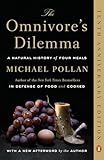
Michael Pollan (born 1955) is the American author and journalist whose work on food, plants, and mind has made him one of the most influential non-fiction writers of the past two decades. The Omnivore’s Dilemma (2006) transformed the American conversation about food; In Defense of Food (2008) distilled its argument into a public health manifesto; How to Change Your Mind (2018) brought psychedelic research to mainstream attention and contributed to a significant shift in public and scientific attitudes toward psychedelic-assisted therapy. Pollan is a professor of journalism at UC Berkeley and a contributing writer to The New Yorker.
Where to Start: The Omnivore’s Dilemma (2006)
The essential Pollan — and one of the most important American non-fiction books of the 2000s. The omnivore’s dilemma is the predicament unique to omnivores: unlike a koala (eucalyptus) or a cow (grass), an omnivore can eat almost anything and therefore must figure out what to eat. Pollan argues that modern Americans have an especially acute version of this problem: we have access to the most abundant food supply in history but have lost the cultural knowledge and traditional relationships with food that once guided what people ate.
He investigates this through four meals. The first — a McDonald’s meal eaten in a car — traces the corn-based industrial food chain from Iowa fields to the fast food counter, revealing how entirely modern industrial food is corn: corn-fed beef, corn-derived sweeteners, corn-derived fillers in almost everything. The second traces the ‘industrial organic’ chain to show that Whole Foods’ organic produce often comes from industrial-scale farms that follow the letter of organic certification while violating its spirit. The third follows a meal from Joel Salatin’s Polyface Farm in Virginia — a genuinely sustainable, grass-based operation. The fourth is a meal Pollan himself hunted (wild boar) and gathered (mushrooms, abalone).
The structure is brilliant: by tracing food back to its actual origins four times, Pollan makes visible what the supermarket conceals. The Polyface Farm section is the most influential — Salatin’s approach became the model for a generation of sustainable agriculture advocates.
In Defense of Food (2008)
The companion and manifesto — distilled from The Omnivore’s Dilemma into a compact argument about how to eat. Pollan’s case: the Western approach to food (nutritionism — analysing food as a delivery system for nutrients) has made us sicker, not healthier. The evidence: populations that abandon traditional food cultures and adopt Western diets develop Western diseases (obesity, diabetes, heart disease) that were rare before. His prescription: seven words — ‘Eat food. Not too much. Mostly plants.’ The short book that most efficiently conveys Pollan’s argument about food; essential reading alongside The Omnivore’s Dilemma.
The Botany of Desire (2001)
Pollan’s earlier and more philosophical book — a meditation on co-evolution through four plants. The argument: we think we domesticate plants for our purposes, but the apple’s sweetness, the tulip’s beauty, cannabis’s psychoactive properties, and the potato’s reliability have each co-evolved with human desires, making us agents in the plant’s evolutionary strategy. Less focused on the food system than his later work; more interested in human consciousness and our relationship with the natural world.
How to Change Your Mind (2018)
Pollan’s account of the psychedelic research renaissance — and the most unusual of his books. Combining science journalism, philosophy of mind, and memoir (Pollan documents his own experiences with psilocybin, LSD, and other substances), the book argues that psychedelic research was scientifically promising before being shut down by the War on Drugs, that the research resuming in the 2010s is producing genuine clinical results, and that the ‘mystical experience’ consistently produced by psychedelics may point toward something real about the nature of consciousness. His most widely read book and probably his most personally revealing.
Why The Omnivore’s Dilemma Is the Ideal First Book
For a reader new to Michael Pollan, The Omnivore’s Dilemma is the ideal first book because it is his landmark, influential work and the fullest expression of his distinctive gifts, the engaging reporting, the clear thinking, and the illumination of where our food comes from and what it means to eat. The Omnivore’s Dilemma follows several food chains, from industrial agriculture to the organic and the foraged, to ask the deceptively simple question of what we should eat, in a fascinating, engaging, and influential work of food writing. As an entry point it is ideal, for it is his best-known book and a perfect example of his engaging, thoughtful food and nature writing. It welcomes the newcomer with its fascinating subject, its engaging reporting, and its clear thinking, drawing the reader into the question of food. It is among his major works and a fine representation of his gifts, so the new reader encounters Pollan at his most characteristic. For the newcomer interested in food, then, The Omnivore’s Dilemma is the natural and ideal starting point.
What to Expect as a New Reader
As a new reader, you can expect The Omnivore’s Dilemma to be a fascinating, engaging, and thought-provoking work of food writing. You can expect a central question, the omnivore’s dilemma, the deceptively simple question of what we should eat. You can expect engaging reporting, for Pollan follows several food chains, from industrial agriculture to the organic and the foraged, with vivid, on-the-ground reporting. You can expect clear thinking, for Pollan illuminates where our food comes from and the choices and consequences behind it. You can expect a blend of journalism, science, and reflection. You can expect insight into agriculture, the food industry, and our relationship with food and nature. You can expect an accessible, engaging, and influential read. Expect, in short, a fascinating, engaging, and thought-provoking work of food writing, a fine introduction to Pollan’s gifts.
Going Deeper After Your First Book
Once The Omnivore’s Dilemma has introduced you to Pollan’s gifts, the reader who wishes to go deeper can explore his other books, which continue his engaging reporting, his clear thinking, and his illumination of food, nature, and the human relationship with both. His concise, practical book on how to eat distills his thinking into simple advice, while his other works explore cooking, the plants and substances that shape human life and consciousness, the world of psychedelics, and the natural world, each marked by his engaging, thoughtful approach. Reading these after The Omnivore’s Dilemma deepens your appreciation of Pollan’s distinctive gifts, the engaging reporting, the clear thinking, and the illumination of food and nature. His characteristic strengths run through his work, and the reader who has enjoyed The Omnivore’s Dilemma will find them across his books. Building your reading journey through Pollan is a matter of following his writing from The Omnivore’s Dilemma into his other books. The reader who begins here and continues will find one of the most engaging and influential writers on food and nature to follow.
Reading Michael Pollan
Begin with The Omnivore’s Dilemma — it is both the most comprehensive and the most journalistically grounded of his books. Read In Defense of Food as its prescriptive companion. The Botany of Desire is the best follow-up for readers interested in his philosophical approach to plants and co-evolution; How to Change Your Mind is the essential second read for anyone interested in consciousness, psychedelics, or the history of American drug policy.
Frequently Asked Questions
Where should I start with Michael Pollan?
The Omnivore's Dilemma: A Natural History of Four Meals (2006) is the essential starting point — Pollan's investigation of where our food actually comes from, structured as four meals: a McDonald's meal (industrial corn-based food chain), an organic supermarket meal (the industrial organic system), a 'pastoral' meal from a small sustainable farm, and a meal Pollan hunted and gathered himself. The book transformed how millions of Americans think about food and the food system, and established Pollan as the most important food writer of his generation. In Defense of Food is the shorter, more prescriptive companion.
What is In Defense of Food about?
In Defense of Food: An Eater's Manifesto (2008) is the shorter companion to The Omnivore's Dilemma — Pollan's argument that the Western nutritionist obsession with nutrients (vitamins, antioxidants, omega-3s) has made us eat worse rather than better, and his case for returning to a simpler relationship with food: 'Eat food. Not too much. Mostly plants.' The book is a critique of nutritional science as currently practised, an argument that traditional food cultures were healthier than contemporary nutritionism, and the most condensed version of Pollan's core argument about food.
What is The Botany of Desire about?
The Botany of Desire: A Plant's-Eye View of the World (2001) is Pollan's account of the relationship between humans and four plants — the apple (sweetness), the tulip (beauty), cannabis (intoxication), and the potato (control) — from the perspective of what the plants 'want'. His central thesis: we think we are using plants, but plants are equally using us, co-evolving with human desires to ensure their propagation. The book is more philosophical than The Omnivore's Dilemma and less focused on the food system; it is a meditation on domestication, desire, and co-evolution.
What is How to Change Your Mind about?
How to Change Your Mind: What the New Science of Psychedelics Teaches Us About Consciousness, Dying, Addiction, Depression, and Transcendence (2018) is Pollan's account of the scientific renaissance in psychedelic research — studies showing that psilocybin, MDMA, and LSD may be effective treatments for depression, addiction, and end-of-life anxiety. Pollan combines science journalism with memoir (he documents his own psychedelic experiences) and philosophy of mind. His most unusual book and probably his most read; it significantly shifted mainstream attitudes toward psychedelic research.