Where to Start with Mark Manson: A Reading Guide
Where to start with Mark Manson — how to approach The Subtle Art of Not Giving a F*ck, his essential counterintuitive self-help book. A complete reading guide.
By Lena Fischer
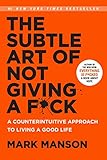
Mark Manson (born 1984) is an American blogger and author who built a substantial online following through his personal development writing before publishing The Subtle Art of Not Giving a Fck* (2016), which became one of the best-selling self-help books of the decade — spending years on bestseller lists, selling over twelve million copies, and being credited with single-handedly creating a backlash genre within the self-help category.
Where to Start: The Subtle Art of Not Giving a F*ck (2016)
The essential Manson — and a book that is more philosophically serious than its cover and its profanity suggest. The title is intentionally misleading: the book is not arguing that you shouldn’t care about anything. It is arguing that you should care about a small number of carefully chosen things, and that the conventional self-help apparatus of positive thinking, aspirational goals, and constant striving is producing exactly the dissatisfaction it claims to address.
The core observation is simple: the more you pursue positivity, the more you highlight how often you’re not feeling it. The more you pursue success, the more you emphasise how far you still are from it. The problem is not that people don’t want good things, but that they’re measuring themselves against the wrong metrics — external outcomes they can’t fully control rather than values they can embody regardless of what happens.
Manson’s alternative is to choose better values. Bad values are those external to your direct control: other people’s approval, romantic success, material achievement, social recognition. These are bad values not because they’re wrong to want but because tying your sense of worth to them means your sense of worth is contingent on factors you can’t determine. Good values are things you can commit to regardless of outcome: honesty in your relationships, genuine effort in your work, treating people with respect, being curious rather than defensive. These are things you can embody regardless of whether you succeed or are recognised.
The book’s central philosophical move is to rehabilitate responsibility: “We don’t always control what happens to us. But we always control how we interpret what happens to us, as well as how we respond.” This is not the toxic positivity of “everything happens for a reason” but the existentialist claim that we are defined by our responses to our circumstances, not by our circumstances themselves.
The profanity and irreverence are Manson’s tonal signature, not philosophical content. Beneath them is a reasonably coherent argument about values and meaning that draws, often implicitly, on Stoicism and existentialism.
Why The Subtle Art of Not Giving a F*ck Is the Ideal First Book
For a reader new to Mark Manson, The Subtle Art of Not Giving a Fck* is the ideal first book because it is his breakout work and the fullest expression of his distinctive approach, the counterintuitive, irreverent, and bracingly honest take on self-help. The Subtle Art challenges the conventional wisdom of relentless positivity and limitless aspiration, arguing instead that a good life comes from choosing carefully what to care about, accepting limitation and difficulty, and focusing on what truly matters. As an entry point, it offers the fullest expression of Manson’s appeal, the irreverent and profane voice, the counterintuitive argument, and the bracing honesty that set his self-help apart from the conventional. It welcomes the newcomer with its provocative argument, its irreverent humor, and its honest perspective, challenging the reader to rethink what they care about and how they pursue a good life. It is his best-known book and the one that best represents his approach, so that the new reader encounters Manson’s distinctive perspective from the first. For the newcomer, then, The Subtle Art of Not Giving a Fck* is the natural and ideal starting point.
What to Expect as a New Reader
As a new reader, you can expect The Subtle Art of Not Giving a Fck* to be a counterintuitive, irreverent, and bracingly honest take on self-help and how to live well. You can expect a counterintuitive argument, for Manson challenges the conventional wisdom of relentless positivity and limitless aspiration, arguing instead that a good life comes from caring about less, but better, and from accepting limitation, difficulty, and our own ordinariness. You can expect an irreverent, profane voice, for Manson writes with a blunt, funny, profane style that sets his work apart from earnest conventional self-help. You can expect bracing honesty, for Manson confronts hard truths about struggle, failure, and limitation, arguing that accepting them is the path to a better life. You can expect, beneath the irreverence, genuine and thoughtful ideas about values, meaning, and what is worth caring about. Expect, in short, a counterintuitive, irreverent, and bracingly honest take on how to live well, a provocative and refreshing introduction to Manson’s approach.
Going Deeper After Your First Book
Once The Subtle Art of Not Giving a Fck* has introduced you to Manson’s approach, the reader who wishes to go deeper can explore his other work, which extends his counterintuitive, irreverent, and honest perspective to broader questions of hope, meaning, and the modern condition. His subsequent work turns to larger questions of hope, meaning, and the challenges of the modern world, applying his characteristic counterintuitive thinking, irreverent voice, and bracing honesty to these broader subjects. Reading this after The Subtle Art deepens your engagement with Manson’s distinctive approach, the counterintuitive argument, the irreverent voice, and the bracing honesty that mark his work. His characteristic perspective runs through his writing, and the reader who has been provoked by The Subtle Art will find the same approach in his other work. Building your reading journey through Manson’s work is a matter of following his counterintuitive, irreverent thinking from his breakout book into his broader explorations. The reader who begins with The Subtle Art of Not Giving a Fck* and continues through his work will find a consistently counterintuitive, irreverent, and honest guide to thinking about how to live.
Reading Mark Manson
Begin with The Subtle Art of Not Giving a Fck* — it is his essential and most celebrated work. Everything Is Fcked: A Book About Hope* (2019) continues the philosophical thread. Both standalone.
For the full Mark Manson bibliography, reviews, and biography, visit the Mark Manson author page on Editors Reads.
Affiliate disclosure: Links to Amazon on this page are affiliate links. We earn a small commission at no extra cost to you.
Frequently Asked Questions
Where should I start with Mark Manson?
The Subtle Art of Not Giving a F*ck (2016) is Manson's essential and most widely read book — a counterintuitive antidote to the positive-thinking industry's promise that happiness comes from caring about everything. Manson argues the opposite: that a good life requires choosing what to care about, accepting that suffering is unavoidable, and taking responsibility for your own values. More philosophically serious than the brash cover suggests.
What is The Subtle Art of Not Giving a F*ck about?
The Subtle Art of Not Giving a F*ck argues that the conventional self-help advice to 'be more positive' and 'achieve your dreams' is itself a cause of dissatisfaction — the constant pursuit of positivity emphasises how often you fall short of it. Manson's alternative is to stop trying to avoid pain and instead choose what you're willing to suffer for. Good values are things you have direct control over (your effort, your honesty, your process); bad values are things you can't control (other people's approval, achievement metrics). The book is an argument for choosing better values.
Is The Subtle Art of Not Giving a F*ck just about attitude?
The Subtle Art of Not Giving a F*ck is more philosophically substantive than its title and tone suggest. Its core argument draws on Stoic philosophy and existentialist ideas about responsibility and meaning — that meaning comes from taking responsibility for your choices and their consequences, not from external validation or achievement. The profanity and irreverence are tonal choices; the underlying argument about values, responsibility, and the nature of a good life is serious and reasonably well-developed.
What should I read after The Subtle Art of Not Giving a F*ck?
After The Subtle Art of Not Giving a F*ck, Manson's Everything Is F*cked: A Book About Hope (2019) continues the philosophical thread with a focus on hope and meaning. For the philosophical traditions Manson draws on, Ryan Holiday's The Obstacle Is the Way covers Stoic philosophy with greater historical depth. Viktor Frankl's Man's Search for Meaning is the foundational text on the relationship between responsibility, meaning, and suffering that Manson's arguments echo.