Where to Start with Julia Cameron: A Reading Guide
Where to start with Julia Cameron — how to approach The Artist's Way, her twelve-week creativity recovery program built on morning pages and the artist's date. A complete reading guide.
By Lena Fischer
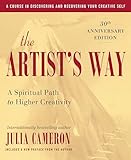
Julia Cameron (born 1948) is an American writer, playwright, and filmmaker who developed The Artist’s Way out of her own experience of creative recovery following a period of severe alcoholism. She had worked as a journalist, screenwriter, and director before her creative life collapsed; the twelve-week program she created to restore it became the book she published in 1992. It has sold more than five million copies, has been translated into more than forty languages, and is widely regarded as having launched more creative careers than perhaps any other single book. Cameron has continued to write and teach, producing more than forty books on creativity and spirituality, but The Artist’s Way remains the essential one.
Where to Start: The Artist’s Way (1992)
The essential Julia Cameron — and the most practically effective creativity recovery program available in book form. The Artist’s Way rests on two core practices, both introduced in the first week and maintained throughout the twelve-week program. They are simple to describe and genuinely demanding to sustain.
Morning Pages are three pages of longhand stream-of-consciousness writing done first thing each morning — before media, before conversation, before any engagement with the day’s demands. They are not meant to be good writing. They are not meant to be kept. The function is drainage: clearing the mental clutter — the anxiety, the self-criticism, the unresolved to-do items, the overheard voices of doubt — that otherwise occupies creative bandwidth throughout the day. The commitment is total. Every morning. Without exception. The benefits are typically not perceptible until the practice has been maintained for several weeks, at which point most practitioners report a quality of mental quiet during the rest of the day that was not previously available.
The Artist’s Date is a weekly solo expedition: once a week, the practitioner goes somewhere interesting, unusual, or pleasurable — a museum, a hardware store, a new neighbourhood, a film in the afternoon — without a companion, without a phone, without an agenda. Cameron describes the creative imagination as a well that needs replenishment; the artist’s date is what fills it. The solo requirement is important: other people’s responses filter the experience through their expectations. The artist’s date is a private act of self-nourishment.
The twelve-week structure provides a framework around these practices. Each week’s chapter addresses a specific aspect of creative recovery: identifying the inner critic and its specific vocabulary; understanding the role of perfectionism in blocking creative risk; recovering a sense of play; addressing the specific fears that prevent creative work from being begun, continued, or shared. Cameron writes from deep personal familiarity with creative blockage and recovery — she has been through it — and the insights are specific rather than generic.
The spiritual framework is worth acknowledging directly. Cameron writes about creativity as a gift from God — or from a higher power — and frames creative recovery as a spiritual practice. This resonates strongly with some readers and is irrelevant or actively off-putting to others. The practices (morning pages, artist’s dates) function independently of the theological framework, and many practitioners adopt them while setting aside the spirituality entirely. Cameron is consistent enough about this that readers who find the language unhelpful can simply work with the practices and ignore the interpretation.
Why The Artist’s Way Is the Ideal First Book
For a reader new to Julia Cameron, The Artist’s Way is the ideal and essential first book because it is her landmark work, a classic of creativity, and the fullest expression of her distinctive approach to recovering and nurturing creative life. The Artist’s Way presents a structured, twelve-week program for unblocking creativity and reconnecting with one’s artistic self, built around her famous practices of morning pages and the artist date. As an entry point it is essential, for it is her defining book and the comprehensive statement of her creative philosophy and method. It welcomes the newcomer with its practical program, its encouraging spirit, and its accessible style, drawing the reader into the recovery of creativity. It is her most important work and the one that best represents her thinking, so the new reader encounters Cameron’s approach directly. For the newcomer seeking to unblock and nurture their creativity, then, The Artist’s Way is the natural and ideal starting point.
What to Expect as a New Reader
As a new reader, you can expect The Artist’s Way to be a practical, encouraging, and structured program for creative recovery. You can expect a twelve-week program, for the book is designed to be worked through over time, with weekly themes and exercises. You can expect signature practices, above all the morning pages, three pages of longhand writing each morning, and the artist date, a weekly solo outing to nurture creativity. You can expect a focus on unblocking creativity, for the book aims to help readers overcome the fears and blocks that stifle creative life. You can expect an encouraging, sometimes spiritual tone, for Cameron treats creativity as a natural, even sacred, capacity to be recovered. You can expect exercises, reflections, and tasks throughout. Expect, in short, a practical, encouraging, and structured program for creative recovery, the essential introduction to Cameron’s approach.
Going Deeper After Your First Book
Once The Artist’s Way has introduced you to Cameron’s approach, the reader who wishes to go deeper can explore her many other books, which extend and apply her creative philosophy and her signature practices to further areas of creative and personal life. Her other works offer further programs, guidance, and reflections on creativity, writing, and living a creative life, building on the foundations of The Artist’s Way and continuing practices such as the morning pages. Reading these after The Artist’s Way deepens your engagement with Cameron’s distinctive approach to nurturing creativity. Her characteristic practices and encouraging spirit run through her work, and the reader who has found The Artist’s Way valuable will find them across her books. Building your reading journey through Cameron is a matter of following her approach from The Artist’s Way into her other books on creativity. The reader who begins here will have encountered a foundational and beloved guide to recovering and nurturing creative life.
Reading Julia Cameron
The Artist’s Way is Cameron’s essential book. It stands alone and is the natural starting point. Readers who want to continue with the program can move to Walking in This World (her second creativity course) or The Right to Write (focused specifically on writing).
For the full Julia Cameron bibliography, reviews, and biography, visit the Julia Cameron author page on Editors Reads.
Affiliate disclosure: Links to Amazon on this page are affiliate links. We earn a small commission at no extra cost to you.
Frequently Asked Questions
Where should I start with Julia Cameron?
The Artist's Way (1992) is Cameron's essential book — a twelve-week program for recovering and developing creativity through two core practices: Morning Pages (three pages of longhand stream-of-consciousness writing every morning before engaging with the day) and the Artist's Date (a weekly solo creative excursion). The program has guided creative recovery for three decades across multiple art forms and industries, and the morning pages practice alone has been independently validated by research on expressive writing.
What is The Artist's Way about?
The Artist's Way is structured as a twelve-week course in which each week combines a chapter of theory and reflection on a specific aspect of creative recovery (fear, perfectionism, the inner critic, lost identity) with a set of exercises and the continuing practices of morning pages and artist's dates. Cameron's central argument is that most adults arrive at midlife with their creative capacity damaged by specific experiences of suppression or mockery, and that the program's practices rebuild the internal permission structure those experiences damaged.
What are Morning Pages, exactly?
Morning Pages are three pages of longhand stream-of-consciousness writing done first thing each morning, before any media, conversation, or engagement with the day. They are not a journal, not intended to be literary, and not meant to be reread. Their function is drainage: clearing the anxiety, self-criticism, and mental noise that otherwise blocks creative access throughout the day. Cameron describes them as a form of moving meditation. The commitment is total — every morning, no exceptions — and the benefits are typically not felt until the practice has been maintained for several weeks.
What should I read after The Artist's Way?
After The Artist's Way, Elizabeth Gilbert's Big Magic covers similar territory (fear and creativity, the relationship between art and permission) in a more conversational, less structured form. Anne Lamott's Bird by Bird is the most practical companion for writers specifically — structured around the actual craft challenges of writing rather than the psychological ones. Steven Pressfield's The War of Art provides a complementary and more confrontational account of Resistance and how to overcome it.


