Where to Start with Joseph Murphy: A Reading Guide
Where to start with Joseph Murphy — how to approach The Power of Your Subconscious Mind, his 1963 New Thought classic presenting techniques for using visualization and affirmation to align conscious intent with unconscious belief and reshape outcomes. A complete reading guide.
By Lena Fischer
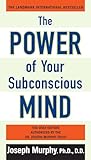
Joseph Murphy (1898–1981) was an Irish-American New Thought minister, writer, and lecturer who served for many years as the minister of the Church of Divine Science in Los Angeles. He was one of the most prolific writers in the New Thought tradition, publishing over thirty books on the power of the subconscious mind, prayer, and the psychological dimensions of religious practice. The Power of Your Subconscious Mind (1963) is his best-known work — a synthesis of New Thought principles with practical psychological techniques that has sold over fifteen million copies and been translated into dozens of languages. It remains one of the most widely read books in the self-help genre.
Where to Start: The Power of Your Subconscious Mind (1963)
Murphy published The Power of Your Subconscious Mind in 1963, when the psychology of belief and mental programming was still marginal territory, and created a framework that has influenced generations of coaches, therapists, and peak-performance researchers in the six decades since. The Power of Your Subconscious Mind is built around a single, consistently applied idea: the subconscious mind does not judge, evaluate, or discriminate between true and false — it accepts as its operating premise whatever the conscious mind repeatedly presents to it, and then organises experience accordingly.
The mechanism Murphy proposes is psychological rather than supernatural, even if his language is theological. When a person repeatedly tells themselves — explicitly through affirmation or implicitly through habitual thought — that they are unworthy, unlucky, or incapable, the subconscious takes this as an operating assumption and filters experience through it: confirming evidence is noticed, contradictory evidence is discounted, and behaviour unconsciously adjusts to make the belief self-fulfilling. The reverse is equally true, which is why Murphy advocates deliberate, consistent programming of the subconscious with the beliefs one wishes to actualise.
The visualization technique is the book’s most concrete practical contribution. Murphy presents specific methods for using the relaxed, receptive state before sleep to present the subconscious with clear, emotionally vivid images of desired outcomes — not as requests to an external power, but as instructions to the integrative processes that connect belief to behaviour. The technique is essentially what later therapeutic approaches would call guided imagery, and its effectiveness in reducing anxiety and improving performance in specific domains has been documented in subsequent research.
The practical coverage extends across health, relationships, wealth, career, and general wellbeing. Murphy draws heavily on case studies from his ministry and counselling practice — individuals who healed chronic conditions, found financial relief, or resolved relationship problems through changes in mental habit. These are presented as illustrations of the principle rather than proof of it, and readers with different epistemological standards may find the standard of evidence thin; the practical exercises are worth engaging with regardless.
Why The Power of Your Subconscious Mind Is the Ideal First Book
For a reader new to Joseph Murphy, The Power of Your Subconscious Mind is the ideal first book because it is his landmark work, a classic of the self-help and New Thought tradition, and the fullest expression of his central ideas about the subconscious. The Power of Your Subconscious Mind presents Murphy’s belief that the subconscious mind shapes our experience and that, by changing our beliefs and mental habits, we can transform our lives, health, and circumstances. As an entry point it is essential, for it is his defining book and the comprehensive statement of his philosophy. It welcomes the newcomer with its central idea, its many illustrative anecdotes, and its encouraging, accessible style, drawing the reader into his distinctive approach to the mind. Readers should engage critically, for the book belongs to a tradition that makes claims, especially about healing, that are not scientifically established. It is his most important work and the one that best represents his ideas, so the new reader encounters Murphy directly. For the newcomer, then, The Power of Your Subconscious Mind is the natural starting point, best approached thoughtfully.
What to Expect as a New Reader
As a new reader, you can expect The Power of Your Subconscious Mind to be an accessible, anecdote-filled classic of the self-help and New Thought tradition. You can expect a central idea, that the subconscious mind shapes our experience and that, by changing our beliefs and mental habits, we can influence our lives. You can expect many illustrative anecdotes, for Murphy fills the book with stories meant to demonstrate the power of belief and the subconscious. You can expect practical techniques, including affirmations, visualization, and methods for impressing desired ideas on the subconscious. You can expect an encouraging, optimistic, and accessible style. You should engage critically, for the book belongs to a tradition that makes sweeping claims, particularly about healing and material results, that are not scientifically established and should not replace medical or professional advice. Expect, in short, an accessible, anecdote-filled classic of the self-help tradition, best approached thoughtfully and critically.
Going Deeper After Your First Book
Once The Power of Your Subconscious Mind has introduced you to Murphy’s ideas, the reader who wishes to go deeper can explore his other writings and the wider New Thought and self-help tradition to which his work belongs, continuing to read critically. Murphy wrote many further books extending his ideas about the mind, belief, and self-improvement, while the broader tradition includes other classic authors who shaped the positive-thinking and mind-power movement. Reading more widely deepens your understanding of this influential strand of self-help, even as the thoughtful reader weighs its claims with appropriate skepticism, especially where they touch on health. The reader who finds value in Murphy’s emphasis on belief and mental habit can pursue it across his work and the wider tradition while keeping a critical perspective. Building your reading journey from The Power of Your Subconscious Mind is a matter of following its ideas into Murphy’s other books and the wider New Thought tradition. The reader who begins here will have encountered a foundational and influential, if contested, classic of self-help.
Reading Joseph Murphy
The Power of Your Subconscious Mind is Murphy’s essential and most widely read book. Readers who want to continue in the New Thought tradition can explore his other works on prayer, prosperity, and relationships, or move to Napoleon Hill and Maxwell Maltz for the secular and psychological descendants of the same tradition.
For the full Joseph Murphy bibliography, reviews, and biography, visit the Joseph Murphy author page on Editors Reads.
Affiliate disclosure: Links to Amazon on this page are affiliate links. We earn a small commission at no extra cost to you.
Frequently Asked Questions
Where should I start with Joseph Murphy?
The Power of Your Subconscious Mind (1963) is Murphy's essential book — a practical guide to subconscious reprogramming that has remained continuously in print for over sixty years and sold tens of millions of copies worldwide. Murphy was an Irish-American New Thought minister and writer who synthesised the ideas of the New Thought movement — the power of belief, the role of the unconscious in shaping outcomes, the techniques of visualization and affirmation — into accessible, practical form. The book covers health, relationships, wealth, career, and general well-being through the consistent application of a single framework: the subconscious mind accepts and acts on what the conscious mind repeatedly feeds it.
What is The Power of Your Subconscious Mind about?
Murphy's central argument is that the subconscious mind does not evaluate or discriminate — it accepts as true whatever the conscious mind consistently and repeatedly presents to it, and then works to make that consistent with the external world. Negative beliefs fed repeatedly to the subconscious — about health, worthiness, money, relationships — produce outcomes consistent with those beliefs, not because of magic but because they shape perception, interpretation, and behaviour in ways that are not consciously noticed. Visualization and affirmation work, on this model, not by asking the universe for things but by replacing limiting beliefs with expansive ones — the mechanism is psychological, not metaphysical. Murphy presents this with specific techniques and case studies from his ministry and counselling practice.
How should I approach the religious framing in the book?
Murphy writes from a broadly Christian New Thought perspective, and many of his illustrations and examples draw on Biblical language and religious imagery. Secular readers can translate this framing without losing the practical content: wherever Murphy refers to God or divine intelligence, the secular equivalent is the unconscious mind or the integrative processes of the nervous system. The core psychological argument — that unconscious beliefs shape behaviour and outcomes, and that those beliefs can be deliberately modified — is supported by subsequent research in cognitive psychology and behavioural therapy, even if Murphy's specific claims about healing and prosperity are not. Read the techniques as psychological exercises regardless of the theological framing.
What should I read after The Power of Your Subconscious Mind?
After The Power of Your Subconscious Mind, Napoleon Hill's Think and Grow Rich covers adjacent territory with more emphasis on goal-setting and mastermind groups. Maxwell Maltz's Psycho-Cybernetics provides a more explicitly psychological framework for the same self-image and subconscious belief mechanisms Murphy identifies. For the contemporary neuroscience that gives Murphy's techniques a modern evidential basis, Joe Dispenza's Breaking the Habit of Being Yourself covers the same territory from a neuroscience perspective. For readers interested in the broader New Thought tradition that Murphy represents, William James's The Varieties of Religious Experience covers the philosophical underpinnings with considerably more depth.