Where to Start with Gillian Flynn: A Reading Guide
Where to start with Gillian Flynn — whether to begin with Gone Girl, Sharp Objects, or Dark Places. A complete reading guide to Flynn's psychological thrillers.
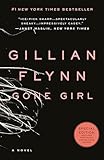
Gillian Flynn (born 1971) is the most commercially successful American psychological thriller writer of her generation — an author whose three novels have sold tens of millions of copies worldwide and spawned major film and television adaptations. Her particular achievement is the dark female protagonist: complicated, self-destructive, morally ambiguous, and utterly compelling. Flynn’s fiction refuses the convention that female characters in crime fiction are victims or bystanders; her women are participants, perpetrators, and agents whose psychology is as dark and as interesting as any male character in the genre.
Where to Start: Gone Girl (2012)
The essential Flynn — and the novel that made her a global phenomenon. Amy Dunne disappears on the morning of her fifth wedding anniversary. Her husband Nick is the immediate suspect. The novel alternates between Nick’s present-tense account of the investigation and police scrutiny, and Amy’s diary entries leading up to her disappearance — which reveal a marriage under tremendous strain. At the midpoint, a revelation fundamentally changes the reader’s understanding of both narratives, and the novel becomes something quite different from what it appeared to be.
Gone Girl is Flynn’s most structurally ambitious novel — a thriller that uses the conventions of the psychological mystery to explore marriage as performance, identity as construction, and the stories people tell about themselves. David Fincher’s 2014 film adaptation with Rosamund Pike is excellent and closely based on the novel.
The Debut: Sharp Objects (2006)
Flynn’s first novel — and for many readers her finest in terms of pure prose quality. Camille Preaker, a Chicago journalist with a history of self-harm, is sent back to her Missouri hometown to cover the murders of two young girls. What she finds there — her controlling mother Adora, her disturbed half-sister Amma, and the dark history of the town — is as psychologically devastating as the crimes themselves.
Sharp Objects is the most literary of Flynn’s three novels, written with real attention to style and image, and its portrait of mother-daughter toxicity is one of the most disturbing in American fiction. Jean-Marc Vallée’s HBO limited series adaptation (2018) with Amy Adams is outstanding — one of the finest literary thriller adaptations in recent television.
Dark Places (2009)
Flynn’s second novel — set in the aftermath of a massacre: Libby Day was seven years old when her mother and two sisters were killed, and her testimony sent her brother Ben to prison for the murders. Twenty years later, Libby needs money and agrees to work with a true-crime club that believes Ben is innocent. The investigation alternates between Libby’s present-day search for the truth and flashback chapters from the night of the murders.
Dark Places is Flynn’s darkest novel in terms of its material — Satanic Panic, cult manipulation, and the fallibility of childhood testimony — and the one most concerned with the long-term psychological consequences of violence on survivors. Less structurally dazzling than Gone Girl but psychologically richer.
Why Gone Girl Is the Ideal First Book
For a reader new to Gillian Flynn, Gone Girl is the ideal first book because it is her breakout phenomenon and the fullest expression of her distinctive gifts, the dark psychological suspense, the unreliable narration, and the unflinching exploration of toxic relationships and the darkness beneath ordinary life. Gone Girl follows the disappearance of a woman on her wedding anniversary and the suspicion that falls on her husband, building through alternating, untrustworthy perspectives to a notorious twist. As an entry point it is ideal, for it is the novel that made her a household name and a defining example of her twisty, dark psychological thrillers. It welcomes the newcomer with its gripping mystery, its unreliable narrators, and its shocking turns, drawing the reader into the world of the modern psychological thriller. It is her most famous work and the one that best represents her gifts, so the new reader encounters Flynn at her most characteristic. For the newcomer, then, Gone Girl is the natural and ideal starting point.
What to Expect as a New Reader
As a new reader, you can expect Gone Girl to be a dark, twisty, and compulsively readable psychological thriller. You can expect a gripping mystery, for the novel centers on a woman’s disappearance and the suspicion that falls on her husband. You can expect unreliable narration, for the story unfolds through alternating perspectives that cannot be trusted, a technique central to its power. You can expect a famous twist, for the novel is celebrated for a mid-book turn that upends everything. You can expect a dark exploration of marriage, for Flynn dissects a toxic relationship and the darkness beneath an ordinary-seeming life. You can expect sharp, biting prose and unflinching psychological insight. You can expect propulsive momentum and a cynical, unsettling vision. You should be prepared for dark and disturbing material. Expect, in short, a dark, twisty, and compulsively readable psychological thriller, a gripping introduction to Flynn’s gifts.
Going Deeper After Your First Book
Once Gone Girl has introduced you to Flynn’s gifts, the reader who wishes to go deeper can explore her other novels, which continue her dark psychological suspense, her flawed and dangerous characters, and her unflinching exploration of the darkness beneath ordinary life. Her earlier novels each build twisty, atmospheric, and disturbing stories around troubled women, family secrets, and violence, marked by the same sharp prose and psychological darkness. Reading these after Gone Girl deepens your appreciation of Flynn’s distinctive gifts, the dark psychological suspense, the unreliable narration, and the unflinching vision. Her characteristic strengths run through her work, and the reader gripped by Gone Girl will find them across her novels. Building your reading journey through Flynn is a matter of following her dark thrillers from Gone Girl into her other novels. The reader who begins here and continues will find one of the most distinctive and influential voices in the modern psychological thriller.
Reading Gillian Flynn
Flynn’s three novels are connected not by plot but by sensibility — a sustained interest in the damage that people do to each other in private, the gap between the person someone appears to be and who they actually are, and the particular psychology of women who have been shaped by violence and trauma into something complicated and dangerous. Begin with Gone Girl for the most structurally satisfying experience; begin with Sharp Objects for the most literary; begin with Dark Places for the most psychologically intense. All three reward reading in close succession.
Frequently Asked Questions
Where should I start with Gillian Flynn?
Gone Girl (2012) is both the essential starting point and Flynn's most accomplished novel — a psychological thriller about the disappearance of Amy Dunne on the morning of her fifth wedding anniversary, narrated in alternating chapters by her husband Nick and by Amy's diary. The novel's mid-point revelation is one of the most discussed in recent popular fiction; it fundamentally changes the reader's understanding of everything that came before. Sharp Objects (2006) is the better starting point for readers who prefer something shorter and more literary; Dark Places (2009) for those who want Flynn's darkest psychological territory.
What is Gone Girl about?
Gone Girl (2012) follows Nick Dunne, whose wife Amy disappears on the morning of their fifth wedding anniversary. Nick is the immediate suspect, and the novel alternates between his present-tense account of the investigation and Amy's diary entries, which reveal a marriage in serious trouble. The novel's central achievement — which cannot be described without spoiling it — comes at the midpoint and forces the reader to reread everything that came before in an entirely different light. Flynn's portrait of marriage, performance, and the stories we tell about ourselves is the novel's most enduring quality. David Fincher's film adaptation (2014) with Rosamund Pike is excellent.
What is Sharp Objects about?
Sharp Objects (2006), Flynn's debut novel, follows Camille Preaker, a Chicago journalist sent back to her Missouri hometown to cover the murders of two young girls. Camille, who has a history of self-harm (she has carved words into her skin) and a difficult relationship with her controlling mother, investigates in a town where everyone knows her history. The novel is Flynn's most purely literary — written with real attention to prose style and to the psychology of trauma, self-destruction, and the toxic dynamics of mother-daughter relationships. Amy Adams's HBO adaptation (2018) is outstanding.
How are Gillian Flynn's three novels related?
Flynn's three novels — Sharp Objects (2006), Dark Places (2009), and Gone Girl (2012) — are entirely independent of each other. They share a thematic preoccupation (female psychology in extremis, the gap between a person's public presentation and their inner life, violence and its long-term consequences) and a setting in the American midwest, but there are no shared characters or plots. They can be read in any order, though publication order (Sharp Objects → Dark Places → Gone Girl) shows Flynn's development as a writer toward the greater structural confidence of Gone Girl.