Where to Start with Gary Chapman: A Reading Guide
Where to start with Gary Chapman — how to approach The 5 Love Languages, his essential book on relationship communication. A complete reading guide.
By Lena Fischer
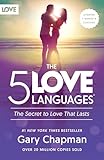
Gary Chapman (born 1938) is an American marriage counsellor, pastor, and author who developed the five love languages framework over decades of working with couples experiencing communication failures. The 5 Love Languages (1992) has sold over fifteen million copies in the United States alone and has been translated into fifty languages; it is consistently among the top-selling relationship books three decades after publication and has generated a franchise of books applying the framework to different relationships (children, teenagers, workplace, military families) and a widely used online quiz.
Where to Start: The 5 Love Languages (1992)
The essential Chapman — and one of the most commercially enduring relationship books in recent decades. The core observation is simple and, for many couples, immediately recognisable: people who love each other can both feel unloved if they are expressing love in different ways. If you bring your partner home a carefully chosen gift and they wanted you to put the phone down and spend an uninterrupted hour talking, you have expressed love in a language they don’t speak well.
Chapman’s five categories are:
Words of affirmation — verbal compliments, expressions of appreciation, encouragement, words that communicate love directly. For people whose primary language is words, a kind note left on the kitchen table means more than almost any gesture.
Quality time — undivided, present attention. Not physically being in the same room while watching television, but full presence: eye contact, conversation, shared activity without distraction. For people whose primary language is quality time, a distracted conversation is worse than no conversation.
Receiving gifts — not materialism, but the symbolic significance of a gift as visible evidence that someone thought of you. For people whose primary language is gifts, the thought behind a small, well-chosen gift matters more than the expense of an expensive obligatory one.
Acts of service — things you do to help: cooking dinner, fixing the car, running errands, taking on a burden. For people whose primary language is acts of service, these gestures express love more clearly than any verbal declaration.
Physical touch — not necessarily sexual, but the everyday physical presence of a relationship: a hand on the shoulder, sitting close, holding hands. For people whose primary language is physical touch, the absence of physical contact reads as emotional distance.
Chapman’s argument is that most people have a primary language that means the most to them — and that learning to express love in your partner’s primary language, even if it doesn’t come naturally, is both learnable and transformative.
The framework is not scientifically rigorous in the formal sense, but it has proved practically useful to an extraordinary number of couples, primarily by providing a vocabulary for conversations about unmet needs that neither partner previously had the language to have.
Why The 5 Love Languages Is the Ideal First Book
For a reader new to Gary Chapman, The 5 Love Languages is the ideal and essential first book because it is his landmark work, one of the most influential books on relationships ever written, and the fullest expression of his central idea. The 5 Love Languages presents Chapman’s influential concept that people give and receive love in different ways, or love languages, and that understanding your own and your partner’s love language is the key to a stronger, more fulfilling relationship. As an entry point, it is the essential and natural place to begin, for it is Chapman’s landmark and defining work, the comprehensive account of the concept he made famous. It welcomes the newcomer with its simple but powerful concept, its practical guidance, and its wide relevance, offering a transformative framework for understanding love and relationships. It is his most important book and the one that best represents his work, so that the new reader encounters Chapman’s central idea directly. For the newcomer, then, The 5 Love Languages is the natural and ideal starting point.
What to Expect as a New Reader
As a new reader, you can expect The 5 Love Languages to be a simple, practical, and influential guide to understanding love and improving relationships. You can expect Chapman’s central concept, the idea that people give and receive love in different ways, the five love languages, and that much relationship difficulty arises when partners express love in different languages without understanding one another. You can expect the five languages themselves, the distinct ways that people primarily feel and express love, and guidance for identifying your own and your partner’s. You can expect practical relevance, for understanding love languages offers a practical key to expressing love in ways your partner will truly feel, and to feeling more loved yourself. You can expect an accessible and encouraging style, grounded in Chapman’s experience counseling couples. You can expect a simple but powerful framework with wide application to relationships. Expect, in short, a simple, practical, and influential guide to understanding love and improving relationships, the essential introduction to Chapman’s concept of love languages.
Going Deeper After Your First Book
Once The 5 Love Languages has introduced you to Chapman’s concept, the reader who wishes to go deeper can explore his other work, which applies the love-languages framework to a range of relationships and contexts. His other books apply the concept to particular relationships and situations, including children, teenagers, and the workplace, extending his central idea into these further contexts. Reading these after The 5 Love Languages deepens your engagement with Chapman’s distinctive concept, the understanding that people give and receive love in different ways, applied across the range of human relationships. His characteristic framework runs through his work, and the reader who has found The 5 Love Languages illuminating will find it applied to further relationships in his other books. Building your reading journey through Chapman’s work is a matter of following the love-languages framework from his landmark book into its applications to children, teenagers, and other relationships. The reader who begins with The 5 Love Languages and continues through his work will find an influential and practical guide to understanding love across the range of human relationships.
Reading Gary Chapman
Begin with The 5 Love Languages — it is his essential and most widely applicable work. The framework is applied to children, teenagers, and workplace relationships in follow-on books. Both standalone.
For the full Gary Chapman bibliography, reviews, and biography, visit the Gary Chapman author page on Editors Reads.
Affiliate disclosure: Links to Amazon on this page are affiliate links. We earn a small commission at no extra cost to you.
Frequently Asked Questions
Where should I start with Gary Chapman?
The 5 Love Languages (1992) is Chapman's essential and most widely read book — a marriage counsellor's framework for understanding how people express and receive love in five distinct ways: words of affirmation, quality time, receiving gifts, acts of service, and physical touch. One of the best-selling relationship books ever published; the framework has genuinely helped millions of couples understand communication mismatches.
What is The 5 Love Languages about?
The 5 Love Languages argues that most relationship conflict comes not from lack of love but from a mismatch in how love is expressed and received. If your primary love language is quality time and your partner expresses love through acts of service, you may both be loving each other sincerely without either feeling loved — because neither is using the language the other understands. Chapman identifies five love languages, provides tools to discover your own and your partner's, and argues that learning to express love in your partner's language is the essential skill of intimate relationships.
Is the love languages framework scientifically validated?
The love languages framework has not been formally validated through the kind of peer-reviewed psychological research that might confirm or disconfirm its claims. Chapman developed it through clinical observation as a marriage counsellor rather than through experimental research. Some psychologists have noted that the five categories are not cleanly distinct and that the framework's self-report methodology is vulnerable to biases. The framework's usefulness — and it has been reported as useful by a very large number of couples — appears to come from its providing a vocabulary for conversations about relationship needs that many couples lack rather than from any precise scientific accuracy.
What should I read after The 5 Love Languages?
After The 5 Love Languages, Chapman has applied the framework to children, teens, and workplace relationships in a series of follow-on books. For the relationship science behind the framework, John Gottman's research (summarised in The Seven Principles for Making Marriage Work) provides the most empirically rigorous account of what makes partnerships work. Sue Johnson's Hold Me Tight, based on Emotionally Focused Therapy, covers similar territory with stronger research grounding.