Where to Start with David R. Hawkins: A Reading Guide
Where to start with David R. Hawkins — how to approach Letting Go, his practical guide to surrendering negative emotions, drawn from decades of clinical psychiatric work. A complete reading guide.
By Lena Fischer
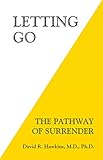
David R. Hawkins (1927–2012) was an American psychiatrist and author who spent several decades as a practising clinician before turning to writing about consciousness, spirituality, and the nature of mind. He is best known for Power vs. Force (1995), which introduced his Map of Consciousness framework, and Letting Go (2012), which focused on the practical surrender technique he had used with patients and considered his most directly applicable work. His writing combines clinical psychiatric experience with a spiritual framework influenced by mystical traditions; the resulting books have found a large audience among readers seeking emotional healing tools that go beyond conventional therapy without abandoning practical grounding.
Where to Start: Letting Go (2012)
The essential David R. Hawkins — and one of the most practically effective books in the emotional healing genre. Letting Go is built around a central technique that Hawkins spent decades developing and applying: when a negative emotion arises, allow it to be fully present without the three typical responses — suppression, escape, or external expression. Stay with the feeling itself, not the thoughts about the feeling. Allow it completely. When it is fully allowed, it dissolves.
This is the surrender technique, and it runs against most conventional emotional wisdom. We are generally taught either to suppress negative feelings (control yourself, don’t show that) or to express them (talk it out, get it out of your system). Hawkins argues from clinical observation that both approaches maintain the emotional energy in the system: suppression drives it underground where it continues to shape behaviour; expression reinforces it by making it real and rehearsed. Surrender is different from both — it is neither controlling nor amplifying the emotion, but allowing it to complete its natural arc without interference.
The technique is consistent with contemporary acceptance-based therapies, particularly Acceptance and Commitment Therapy (ACT), which was developed independently from a cognitive-behavioural framework and arrives at similar practical conclusions. Hawkins developed his approach within a clinical psychiatric and spiritual framework rather than a CBT framework, but the overlap is substantial enough that readers familiar with either tradition will recognise the logic.
The Map of Consciousness is the book’s conceptual architecture. Hawkins presents a hierarchy of emotional and spiritual states — from shame and guilt at the bottom (the most contracted and energy-consuming states) through fear, anger, and pride, up through courage, neutrality, acceptance, reason, love, and peace. Each state has characteristic thought patterns, relationships to the world, and physiological signatures. The map provides a framework for understanding where the surrender technique is pointing: not simply the absence of negative emotion but a progressive movement toward states with more energy, clarity, and freedom available.
Hawkins applies the technique systematically to every major life domain — relationships, health, finances, career, grief, anxiety, depression. This is one of the book’s most practically valuable features: the same basic approach is demonstrated across all forms of suffering, which means the reader develops confidence that the technique has general applicability rather than being domain-specific.
The caveats are worth noting directly. Hawkins’s specific claims about consciousness calibration — that different emotional and spiritual states have precise numerical calibrations he can measure — are not scientifically validated and should be treated as a working model rather than empirical fact. The later chapters, which move toward mystical states, are less practically grounded than the earlier ones. The core surrender technique, however, is independent of the more speculative claims, and its practical effectiveness does not depend on accepting the broader theoretical framework.
Why Letting Go Is the Ideal First Book
For a reader new to David R. Hawkins, Letting Go is the ideal first book because it is among his most popular and accessible works and a clear expression of his distinctive teaching, a method of releasing negative emotions to achieve greater peace and freedom. Letting Go presents Hawkins’s mechanism of surrender, a process of acknowledging and releasing suppressed feelings, which he presents as a path to emotional and spiritual freedom. As an entry point it is ideal, for it is one of his most practical and approachable books and a clear statement of his core method. It welcomes the newcomer with its central technique, its accessible presentation, and its reflective approach, drawing the reader into his teaching on letting go. Readers approach such spiritual and self-help material according to their own beliefs, engaging thoughtfully with ideas that are matters of personal conviction and practice rather than established fact. It is among his most accessible works, so the new reader encounters Hawkins’s method directly. For the newcomer drawn to his approach, then, Letting Go is a natural starting point.
What to Expect as a New Reader
As a new reader, you can expect Letting Go to be an accessible, reflective, and practice-oriented book about releasing negative emotions. You can expect a central method, the mechanism of surrender, a process of acknowledging and releasing suppressed feelings. You can expect a focus on letting go, for Hawkins teaches that releasing negative emotions leads to greater peace, freedom, and well-being. You can expect a reflective, spiritual framing, drawn from his broader teaching. You can expect an accessible presentation aimed at the general reader. You can expect a practical, experiential approach rather than abstract theory. You can expect material that readers engage according to their own beliefs and as a personal practice. Expect, in short, an accessible, reflective, and practice-oriented book about releasing negative emotions, an introduction to Hawkins’s method of surrender.
Going Deeper After Your First Book
Once Letting Go has introduced you to Hawkins’s method, the reader who wishes to go deeper can explore his other books, which present his broader spiritual teaching, engaging according to their own beliefs. His best-known earlier book introduces his framework of levels of consciousness and his spiritual philosophy, while his other writings develop his teaching on consciousness, surrender, and spiritual growth. The reader can also place his work within the wider world of self-help and contemplative spirituality that it joins. Reading more widely deepens your engagement with Hawkins’s distinctive teaching, the method of letting go and his broader spiritual framework. His characteristic ideas run through his work, and the reader who has connected with Letting Go will find them across his books, to engage with thoughtfully and according to their own convictions. Building your reading journey from Letting Go is a matter of following his teaching into his other books. The reader who begins here will have encountered a distinctive method and teaching, to approach according to their own beliefs.
Reading David R. Hawkins
Letting Go is Hawkins’s most practically oriented book and the best starting point. Readers who want to understand the broader framework should then read Power vs. Force (1995), which introduces the Map of Consciousness in more depth. Both stand alone.
For the full David R. Hawkins bibliography, reviews, and biography, visit the David R. Hawkins author page on Editors Reads.
Affiliate disclosure: Links to Amazon on this page are affiliate links. We earn a small commission at no extra cost to you.
Frequently Asked Questions
Where should I start with David R. Hawkins?
Letting Go: The Pathway of Surrender (2012) is Hawkins's essential book — a practical guide to releasing the suppressed negative emotions that underlie much chronic suffering, built around a central surrender technique that Hawkins developed over decades as a psychiatrist. The technique is immediately applicable and is consistent with contemporary acceptance-based therapies. It is one of the most practically effective books in the emotional healing genre.
What is the surrender technique in Letting Go?
The surrender technique is simple to describe: when a negative emotion arises, allow it to be fully present without suppressing it, escaping from it through distraction, or expressing it externally. Focus on the feeling itself rather than the thoughts about the feeling. Allow it fully and stay with it. Hawkins argues that both suppression (driving the emotion underground) and expression (reinforcing it through venting) maintain negative emotional energy in the system, while surrender allows it to complete and dissolve. The technique runs counter to most conventional emotional wisdom but is consistent with Acceptance and Commitment Therapy.
What is Hawkins's Map of Consciousness?
Hawkins's Map of Consciousness is a hierarchy of emotional and spiritual states running from shame and guilt at the bottom, through fear, anger, and pride, into courage, neutrality, willingness, acceptance, reason, love, joy, and peace at the top. He uses it to show that each emotional state has characteristic thought patterns, behaviours, and worldviews, and that the surrender technique progressively moves the practitioner up the scale as negative emotional layers release. The map is a useful conceptual framework for understanding emotional development, though Hawkins's specific claims about consciousness calibration lack scientific validation and should be treated as a working model.
What should I read after Letting Go?
After Letting Go, Steven C. Hayes's A Liberated Mind provides the academic foundation for Acceptance and Commitment Therapy, the evidence-based therapeutic approach most consistent with Hawkins's surrender technique. Eckhart Tolle's The Power of Now covers the presence-based approach to suffering with a complementary emphasis on thought-watching. Mark Williams and Danny Penman's Mindfulness: An Eight-Week Plan provides the MBSR (mindfulness-based stress reduction) framework — another evidence-based approach with considerable overlap with Hawkins's method.