Where to Start with David Grann: A Reading Guide
Where to start with David Grann — whether to begin with Killers of the Flower Moon, The Lost City of Z, or The Wager. A complete reading guide to the narrative non-fiction writer.
David Grann (born 1967) is the American journalist and author, staff writer at The New Yorker, whose narrative non-fiction books — combining meticulous historical research with detective-story structure — have made him one of the most acclaimed longform journalists working today. Killers of the Flower Moon (2017) was a finalist for the National Book Award and was adapted by Martin Scorsese into a 2023 film; The Lost City of Z (2009) was also adapted into a film. His books follow a consistent method: an apparently resolved historical event is reopened, additional evidence and witnesses are found, and the accepted narrative is shown to be incomplete or false. Grann is a master of the investigative non-fiction form.
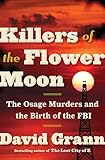
Where to Start: Killers of the Flower Moon (2017)
The essential Grann — and one of the finest works of American narrative non-fiction published in the past decade. In the early 1920s, the Osage Nation of Oklahoma was among the wealthiest groups of people in the world: oil had been found beneath the land they had been assigned as their final relocation, and every member of the Nation received royalties. Then they began dying. Between 1921 and 1926, dozens of Osage were murdered; others died of mysterious ‘wasting illnesses’; some died in suspicious accidents or fires.
Grann reconstructs the conspiracy with extraordinary care — the web of white settlers, including some of the most prominent citizens in the county, who were engineering murders to inherit the Osage headrights. The investigation that finally exposed part of the conspiracy became one of the FBI’s first major cases, conducted by a young J. Edgar Hoover seeking to establish his bureau’s authority. Grann then reveals, in the book’s final section, that what the FBI uncovered was only the visible surface of something far larger and more systematic.
Killers of the Flower Moon is a true crime story, a history of settler violence and dispossession, and a meditation on institutional failure and accountability. The Scorsese film (with Leonardo DiCaprio and Lily Gladstone) is exceptional; the book contains a great deal that the film could not include.
The Lost City of Z (2009)
The book that established Grann’s reputation — an account of Percy Fawcett, the obsessive British explorer who disappeared in the Amazon in 1925 while searching for a sophisticated pre-Columbian civilisation he called ‘Z’. Grann traces Fawcett’s increasingly unhinged expeditions, the subsequent waves of searchers who went looking for him, and his own journey into the Amazon to find what Fawcett was after. Recent archaeological discoveries suggest that Fawcett may have been searching in approximately the right area for something that actually existed.
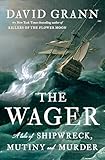
The Wager (2023)
Grann’s most purely narrative book — the wreck of HMS Wager in 1741, the survivors’ fracture into competing factions on a Patagonian island, and the mutiny that followed. Two groups of survivors made it back to England with entirely contradictory accounts of what happened; a court martial had to adjudicate between them. The Wager explores how institutions handle inconvenient truths and how the veneer of civilisation strips away under survival pressure. His most novelistic book; also among his most enjoyable.
The White Darkness (2019)
A shorter work — originally a New Yorker piece — following Henry Worsley, a descendant of one of Shackleton’s crew, who attempted to cross Antarctica solo and unaided, and who died in the attempt. A character portrait as much as an adventure story; the most intimate of Grann’s books.
Why Killers of the Flower Moon Is the Ideal First Book
For a reader new to David Grann, Killers of the Flower Moon is the ideal first book because it is among his most acclaimed works and a fine expression of his distinctive gifts, the masterful narrative nonfiction, the deep research, and the gift for illuminating dark and overlooked history through gripping storytelling. Killers of the Flower Moon tells the story of a series of murders of members of the Osage Nation in 1920s America, who had grown wealthy from oil, and the investigation that followed, in a gripping, deeply researched, and disturbing true story. As an entry point it is ideal, for it is one of his best-known books and a perfect example of his absorbing, well-researched narrative nonfiction. It welcomes the newcomer with its gripping story, its deep research, and its illumination of a dark history, drawing the reader into his distinctive storytelling. It is among his major works and a fine representation of his gifts, so the new reader encounters Grann at his most characteristic. For the newcomer, then, Killers of the Flower Moon is an excellent starting point.
What to Expect as a New Reader
As a new reader, you can expect Killers of the Flower Moon to be a gripping, deeply researched, and disturbing work of narrative nonfiction. You can expect a dark true story, for the book tells of a series of murders of members of the Osage Nation in 1920s America, who had grown wealthy from oil. You can expect deep research, for Grann grounds his account in extensive investigation. You can expect gripping storytelling, for he renders the story with the tension and momentum of a thriller. You can expect illumination of overlooked history, for the book brings a shameful, hidden chapter of American history to light. You can expect a focus on the investigation and the broader injustice and conspiracy. You can expect a sobering, powerful read. You should be prepared for disturbing material. Expect, in short, a gripping, deeply researched, and disturbing work of narrative nonfiction, a fine introduction to Grann’s gifts.
Going Deeper After Your First Book
Once Killers of the Flower Moon has introduced you to Grann’s gifts, the reader who wishes to go deeper can explore his other books, which apply the same masterful narrative nonfiction, deep research, and gripping storytelling to a range of compelling true stories. His acclaimed book on a survival saga at sea recounts a shipwreck, mutiny, and its aftermath, while his earlier work on an explorer lost in the Amazon and his collection of true stories of obsession and crime display his gift for finding and telling gripping, well-researched stories. Reading these after Killers of the Flower Moon deepens your appreciation of Grann’s distinctive gifts, the masterful narrative nonfiction, the deep research, and the gripping storytelling. His characteristic strengths run through his work, and the reader gripped by Killers of the Flower Moon will find them across his books. Building your reading journey through Grann is a matter of following his nonfiction from Killers of the Flower Moon into his other books. The reader who begins here and continues will find one of the finest writers of narrative nonfiction working today.
Reading David Grann
Begin with Killers of the Flower Moon — it is Grann’s most important and most fully realised book. The Lost City of Z is the natural second step; The Wager follows as his most purely entertaining work. All Grann’s books share a structural method: investigation, accumulated evidence, and a final revelation that reframes what came before. Once you understand the pattern, each book is both satisfying on its own terms and a variation on a form he has made his own.
Frequently Asked Questions
Where should I start with David Grann?
Killers of the Flower Moon: The Osage Murders and the Birth of the FBI (2017) is the most widely recommended starting point — Grann's account of the Reign of Terror in the 1920s, when members of the Osage Nation in Oklahoma — who had become the richest people per capita in the world after oil was discovered on their land — began dying in suspicious circumstances. Grann's investigation reveals a conspiracy of extraordinary scale and audacity, and uses it to examine the origins of the FBI and the systematic nature of settler violence. It is his most fully realised book and became a Scorsese film in 2023.
What is The Lost City of Z about?
The Lost City of Z (2009) is Grann's account of Percy Harrison Fawcett — the British explorer who disappeared in the Amazon in 1925 while searching for the legendary El Dorado, a sophisticated pre-Columbian civilisation he called 'Z'. Grann traces Fawcett's obsession, the dozens of subsequent expeditions that went looking for him and mostly died or disappeared, and Grann's own journey into the Amazon to find what Fawcett was actually looking for. The book combines adventure, biography, and archaeology; recent discoveries suggest Fawcett may have been closer to something real than his contemporaries believed.
What is The Wager about?
The Wager: A Tale of Shipwreck, Mutiny and Murder (2023) follows the wreck of HMS Wager off the coast of Patagonia in 1741, and the extraordinary events that followed: the crew, stranded on an island, fractured into competing factions — one following the captain's orders, one staging a mutiny — and the survivors who made it back to Britain told completely contradictory stories about what happened. The Wager is Grann's most purely narrative book, structured almost as a novel; it explores how institutions handle inconvenient truths and how survival strips away civilised behaviour.
What style of writing does Grann use?
Grann is a staff writer at The New Yorker, and his books are extended versions of the longform journalism he practises there: meticulous research, narrative drive, and a novelist's sense of scene and character. His books are structured as investigations — each begins with an event or mystery and proceeds through the accumulation of evidence, witnesses, and historical research toward a revelation. Grann is known for turning up at the end of his investigations with new information — a source no previous researcher found, or an archive discovery — that reframes the story. He writes clean, precise prose without the literary showiness that some narrative non-fiction writers favour.