Where to Start with A.J. Finn: A Reading Guide
Where to start with A.J. Finn — how to approach The Woman in the Window, the Hitchcockian psychological thriller featuring an agoraphobic narrator. A complete reading guide.
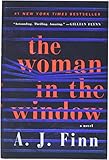
A.J. Finn is the pen name of Dan Mallory, an American editor and author whose debut novel The Woman in the Window (2018) became one of the bestselling thrillers of the year, selling over two million copies and becoming a Netflix film in 2021. The novel’s remarkable commercial success occurred alongside a New Yorker profile that raised questions about the author’s personal history — context that has become part of the book’s reception, though it does not affect the novel’s literary qualities.
Where to Start: The Woman in the Window (2018)
The essential Finn — and an unabashedly Hitchcockian thriller that wears its influences proudly and delivers its genre’s pleasures with genuine craft. The Woman in the Window opens in Anna Fox’s Manhattan brownstone, where she has been confined for ten months. She is a child psychologist with a specialty in agoraphobia who has, through a trauma she cannot yet face directly, developed agoraphobia herself. The specific irony is noted. She drinks wine and watches old films — Rear Window, Laura, Shadow of a Doubt — and watches her neighbours through the windows that look out onto the park.
Finn is explicit about his debt to Alfred Hitchcock, and to Rear Window in particular: Anna’s basic situation — housebound observer, witnessed crime, disbelieving authorities — is drawn directly from Hitchcock’s vocabulary. The novel does not attempt to disguise this; it celebrates it. Anna discusses Rear Window directly, compares her situation to Jimmy Stewart’s, and the self-aware homage is part of the book’s tone rather than a limitation.
What separates The Woman in the Window from lesser Hitchcock pastiche is the precision of Finn’s unreliable narrator. The technical challenge of the novel is calibrating Anna’s unreliability exactly enough that the reader doubts her without dismissing her. The substance issues — wine, the medications she takes in excess — provide plausible explanations for perceptual errors; the trauma provides psychological motivation for misinterpretation; the agoraphobia creates cognitive and social isolation that could explain why the authorities don’t take her seriously. All of these elements are in place, and yet none of them definitively invalidates what Anna believes she saw. The uncertainty is maintained with craft through the novel’s middle section, which builds on this sustained ambiguity.
The resolution resolves the uncertainty with structural integrity — the answer is embedded in the text from early in the novel, the clues are there, and the ending does not require retroactive rule changes. For readers who value genre work executed with care, this matters considerably.
Why The Woman in the Window Is the Ideal First Book
For a reader new to A.J. Finn, The Woman in the Window is the ideal first book because it is the breakout novel that made the author’s name and the fullest expression of the distinctive style for which Finn is known, the atmospheric, twisty psychological thriller in the classic Hitchcockian tradition. The Woman in the Window tells the story of an agoraphobic woman who, confined to her home and watching her neighbors, believes she has witnessed a crime, and it builds a tense, claustrophobic, and twist-filled mystery around her unreliable perceptions. As an entry point, it offers the fullest expression of Finn’s gifts, the atmospheric tension, the unreliable narrator, and the homage to the classic psychological thrillers of suspense and surveillance. It welcomes the newcomer with its gripping premise, its mounting tension, and its twists, drawing the reader into a tense and atmospheric thriller. It is the breakout novel that made the author’s name and a fine representation of the style, so that the new reader encounters Finn at the most characteristic. For the newcomer, then, The Woman in the Window is the natural and ideal starting point.
What to Expect as a New Reader
As a new reader, you can expect The Woman in the Window to be an atmospheric, claustrophobic, and twist-filled psychological thriller in the classic Hitchcockian tradition. You can expect a gripping premise, for the novel follows an agoraphobic woman, confined to her home and watching her neighbors, who believes she has witnessed a crime. You can expect an unreliable narrator, for the protagonist’s isolation, medication, and psychological state cast doubt on her perceptions, building uncertainty and tension. You can expect atmospheric, claustrophobic tension, for the novel builds a tense, confined atmosphere that mounts steadily toward its revelations. You can expect twists, for the novel is constructed around the surprises and reversals that define the psychological thriller. You can expect an homage to the classic thrillers of suspense, surveillance, and doubt. Expect, in short, an atmospheric, claustrophobic, and twist-filled psychological thriller in the Hitchcockian tradition, a gripping introduction to Finn’s style.
Going Deeper After Your First Book
Once The Woman in the Window has introduced you to Finn’s atmospheric psychological thrillers, the reader who wishes to go deeper can explore the author’s other fiction, which continues the distinctive style, the atmospheric tension, the psychological complexity, and the twist-filled construction that mark the breakout novel. The author’s subsequent work continues to deliver the suspense, the psychological intrigue, and the atmospheric tension that readers of the first novel will recognize. Reading further deepens your appreciation of Finn’s distinctive gifts, the atmospheric tension, the unreliable perceptions, and the carefully constructed twists. The characteristic strengths run through the work, and the reader who has been gripped by The Woman in the Window will find the same atmospheric, twisty psychological suspense in the other fiction. Building your reading journey is a matter of following Finn’s atmospheric psychological thrillers from the breakout novel into the further work. The reader who begins with The Woman in the Window and continues will find a reliable source of atmospheric, twist-filled psychological suspense in the classic tradition.
Reading A.J. Finn
The Woman in the Window is Finn’s only novel. It stands alone and requires no prior reading.
For the full A.J. Finn bibliography, reviews, and biography, visit the A.J. Finn author page on Editors Reads.
Affiliate disclosure: Links to Amazon on this page are affiliate links. We earn a small commission at no extra cost to you.
Frequently Asked Questions
Where should I start with A.J. Finn?
The Woman in the Window (2018) is Finn's essential and only novel — a Hitchcockian psychological thriller about an agoraphobic child psychologist who believes she has witnessed a murder through her window, and no one believes her. An unabashed homage to Hitchcock's Rear Window that delivers its genre's pleasures with genuine craft, anchored by an unreliable narrator whose uncertainty is exactly the right kind of troubling.
What is The Woman in the Window about?
Anna Fox is a child psychologist who has not left her Manhattan brownstone in ten months following a trauma she cannot fully process. She drinks too much wine and takes too many medications. She watches old films and watches her neighbours. One evening she witnesses something happening to a woman across the park — something violent — and can't prove it and can't make anyone believe her. The novel asks whether Anna's perception is reliable, and withholds the answer long enough to produce genuine tension.
Is The Woman in the Window just a Rear Window remake?
The Woman in the Window is explicitly in dialogue with Hitchcock's Rear Window — Finn has been transparent about this, and the novel's protagonist watches and discusses the film within the narrative. But Finn's execution earns the homage: the agoraphobia-as-locked-room device is well developed, the unreliable narrator's uncertainty is plausibly calibrated, and the mystery resolves with genuine structural integrity — the answer is embedded in the text from the beginning. Readers who appreciate the Hitchcockian tradition will find it effective.
What should I read after The Woman in the Window?
After The Woman in the Window, Alex Michaelides's The Silent Patient is the genre companion of the moment — another psychological thriller with an unreliable narrator and a withheld secret that reframes everything. Tana French's In the Woods is a more literary psychological thriller with comparable craft and more complex characters. For the Hitchcock source material, Daphne du Maurier's Rebecca is the great literary precursor to the Hitchcock-influenced domestic thriller.


