John Grisham Books in Order: The Complete Reading Guide (2026)
John Grisham has published over 40 novels since 1989. This guide covers where to start, the Jake Brigance series, the Camino series, and his best standalone thrillers.
John Grisham has been publishing legal thrillers since 1989, and his output — over 40 novels — spans everything from taut one-sitting reads to morally serious examinations of justice and race. His reputation for prolificacy sometimes obscures how good his best books are: at their peak, Grisham’s novels are precisely engineered machines built around a single procedural or moral question, running on the tension between institutional power and individual conscience.
Most of his novels are standalones, which means you can start anywhere. But there are a few connected series, and within his full bibliography there is significant variation in seriousness, pace, and purpose. This guide covers where to begin and how to navigate the rest.
John Grisham Novels in Publication Order
| # | Title | Year | Series/Type |
|---|---|---|---|
| 1 | A Time to Kill | 1989 | Jake Brigance #1 |
| 2 | The Firm | 1991 | Standalone |
| 3 | The Pelican Brief | 1992 | Standalone |
| 4 | The Client | 1993 | Standalone |
| 5 | The Chamber | 1994 | Standalone |
| 6 | The Rainmaker | 1995 | Standalone |
| 7 | The Runaway Jury | 1996 | Standalone |
| 8 | The Partner | 1997 | Standalone |
| 9 | The Street Lawyer | 1998 | Standalone |
| 10 | The Testament | 1999 | Standalone |
| 11 | The Brethren | 2000 | Standalone |
| 12 | The Summons | 2002 | Standalone |
| 13 | The King of Torts | 2003 | Standalone |
| 14 | The Appeal | 2008 | Standalone |
| 15 | The Racketeer | 2012 | Standalone |
| 16 | Sycamore Row | 2013 | Jake Brigance #2 |
| 17 | Camino Island | 2017 | Camino Island #1 |
| 18 | The Reckoning | 2018 | Standalone |
| 19 | The Guardians | 2019 | Standalone |
| 20 | Camino Winds | 2020 | Camino Island #2 |
| 21 | A Time for Mercy | 2020 | Jake Brigance #3 |
| 22 | The Judge’s List | 2021 | Standalone |
| 23 | The Boys from Biloxi | 2022 | Standalone |
| 24 | The Exchange: After The Firm | 2023 | The Firm sequel |
Best starting point: The Firm — his most broadly loved entry point and the novel that defined the modern legal thriller.
Where to Start
The Firm: The Ideal Entry Point
The Firm (1991) made John Grisham one of the bestselling novelists in the world and remains the best introduction to his work. Mitchell McDeere graduates near the top of his class at Harvard Law and, instead of joining the established firms competing for his services, accepts an unusually generous offer from a small, secretive Memphis firm. The salary is exceptional, the benefits extravagant, and the atmosphere subtly wrong. What he gradually discovers is that no one who has ever joined the firm has left it — not voluntarily, not alive.
The novel’s power comes from the relentless logic of its trap: McDeere is too smart to miss the warning signs and too compromised to act openly. The plotting is precise, the escalation is controlled, and the book barely pauses from its opening pages to its conclusion. It defined the legal thriller as a genre and it remains among the best examples of one.
A Time to Kill: The Best Starting Point for Serious Readers
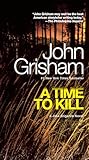
A Time to Kill (1989, though published before The Firm found Grisham’s mass audience) is his most ambitious novel. Jake Brigance, a small-town Mississippi lawyer, defends Carl Lee Hailey — a Black man who shot and killed the two white men who raped his ten-year-old daughter before they could reach trial. The question the novel asks is not whether Carl Lee is guilty — he clearly is — but whether he was right, and what it means that a jury might acquit him for a crime the law cannot forgive.
The novel is set in the racially charged culture of small-town Mississippi in the 1980s, and it does not flinch from what that means. Heavier and more structurally serious than most Grisham, it is also the book that most clearly demonstrates what the genre can do when it is interested in justice rather than just suspense.
The Jake Brigance Series
Set in Clanton, Mississippi, these novels follow Jake Brigance — small-town lawyer, moral conscience of his community — across three decades of his life and career. The series is best read in publication order; each book builds on Jake’s established reputation, relationships, and the town’s history.
- A Time to Kill (1989) — The rape of Tonya Hailey and her father Carl Lee’s violent justice. Jake’s most famous case and the one that defines everything that follows — his reputation, his enemies, and the expectations his community places on him.
- Sycamore Row (2013) — Set three years after the original trial, Jake takes on the contested will of a wealthy white man who hanged himself and left his fortune to his Black housekeeper. A worthy successor that deepens the racial and moral themes of A Time to Kill.
- A Time for Mercy (2020) — Set roughly twenty years after the first novel. Jake defends Drew Gamble, a teenager who killed his mother’s abusive boyfriend. A return to Clanton, to the legal culture and social dynamics Grisham understands best, and to questions about when killing someone can be an act of protection rather than crime.
- Sparring Partners (2022) — Three novellas, one of which returns to Jake and Clanton. Readers who have followed Jake through the earlier novels will find this a satisfying coda.
Major Standalones in Publication Order
The bulk of Grisham’s output is standalone legal thrillers, each built around a distinct legal scenario or moral question. These are the ones most worth reading:
-
The Pelican Brief (1992) — A Tulane law student writes a speculative legal brief theorising about the murders of two Supreme Court justices. When her theory turns out to be correct, she becomes a target. The most purely cinematic of Grisham’s early novels — it reads like a chase sequence from beginning to end.
-
The Client (1993) — An eleven-year-old boy witnesses the suicide of a mob lawyer and learns a secret about a murder in the process. He needs legal protection; he finds Reggie Love, the cheapest lawyer he can afford. Grisham’s most affecting use of a child protagonist, and one of the books in which his interest in the powerless navigating powerful systems is most clearly expressed.
-
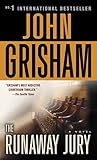
The Runaway Jury (1996) — A tobacco liability case in which a juror named Nicholas Easter appears to be deliberately manipulating the jury from within, while a jury consultant on the outside is attempting to buy the verdict for the defence. The novel’s pleasure is almost entirely structural: two people playing chess with a trial, in opposite directions, and neither the reader nor the lawyers can see the full board. Grisham’s most mechanically inventive legal thriller.
-
The Appeal (2008) — A chemical company facing a massive liability verdict funds the election of a candidate to the Mississippi Supreme Court in order to influence the appeal of that very verdict. Grisham’s most explicitly political novel and one of his most prescient — the book’s central concern, the purchasing of judicial outcomes through campaign finance, has only become more relevant since publication.
-
The Guardians (2019) — A small-town lawyer and an innocence project investigate a murder conviction from twenty years earlier, when a local man was sent to prison for a crime the evidence increasingly suggests he did not commit. One of Grisham’s most morally engaged later novels, and the book in which his interest in wrongful conviction — present throughout his career — is most fully realised.
The Camino Series
Two connected novels set on Camino Island, a Florida barrier island with a rare bookshop at its centre:
- Camino Island — A daring theft of original Fitzgerald manuscripts from Princeton’s library. A struggling novelist is hired by the insurance company to investigate Bruce Cable, the charming bookseller who may be at the centre of the rare books black market. A departure from Grisham’s courtroom settings — looser, sunnier, and more interested in the world of literary culture than legal procedure.
- Camino Winds — A hurricane hits Camino Island; a novelist is found dead in its aftermath; a thriller ensues. Shares characters and setting with the first book; best read in sequence.
The two books can be read independently but share enough character history that the sequence rewards readers who go in order.
Frequently Asked Questions
What is the best John Grisham book to start with?
The Firm is the most broadly recommended entry point — a propulsive legal thriller about a young associate who discovers his prestigious firm has a fatal secret. The plot moves relentlessly and the stakes escalate in a way that established the template for an entire genre. A Time to Kill is the most morally serious of his books and introduces Jake Brigance, but it is heavier going than The Firm. The Pelican Brief is the most cinematic and fastest-moving of his early novels, and a reasonable starting point for readers who want pace above everything else.
Do John Grisham books need to be read in order?
Most Grisham novels are complete standalones and can be read in any order without confusion. The exception is the Jake Brigance series — A Time to Kill, A Time for Mercy, and the Sparring Partners novellas — which are best read in publication order, as they follow the same lawyer across decades and build directly on prior events. The Camino Island books also benefit from being read in sequence, as they share characters and setting. Everything else in Grisham’s bibliography can be approached in any order.
Are John Grisham books based on real cases?
Many of Grisham’s plots are inspired by real legal cases, judicial controversies, and systemic failures in the American legal system, though his novels are fiction. The Innocent Man (2006) is his only work based directly on a real wrongful conviction — the story of Ron Williamson, a former minor league baseball player from Ada, Oklahoma, who was sentenced to death for a murder he did not commit and came within five days of execution before DNA evidence exonerated him. It is Grisham’s only nonfiction book and among his most important.
What is John Grisham’s most critically acclaimed novel?
A Time to Kill is consistently cited as his most serious work of literary fiction — the novel most interested in the moral weight of its questions rather than the mechanics of its plot. It is the book Grisham himself has said he is most proud of. Among his thrillers, The Firm and The Runaway Jury are the most critically appreciated for their construction, pacing, and the elegance of their central conceits. The Innocent Man (nonfiction) is also widely regarded as one of his most significant contributions to the literature of the American justice system.
For the Best Thriller Books
For the definitive guide to thriller fiction — psychological thrillers, legal thrillers, and spy novels — see our Best Thriller Books of All Time list.
More Legal Thriller and Crime Reading Guides
- John Grisham Books Ranked: Best Legal Thrillers to Read First
- James Patterson Books in Order: Alex Cross and More
For the full John Grisham bibliography, reviews, and biography, visit the John Grisham author page on Editors Reads.
Affiliate disclosure: Links on this site are affiliate links. We earn a small commission at no extra cost to you. This does not influence our editorial recommendations.
Frequently Asked Questions
What is the best John Grisham book to start with?
The Firm (1991) is the most broadly loved entry point — a propulsive legal thriller about a young associate who discovers his prestigious firm has a fatal secret. The plot moves relentlessly and the stakes escalate in a way that established the template for an entire genre. A Time to Kill (1989) is the most morally serious of his books and introduces Jake Brigance, but it is heavier going than The Firm. The Pelican Brief is the most cinematic and fastest-moving of his early novels.
Do John Grisham books need to be read in order?
Most Grisham novels are complete standalones and can be read in any order. The exception is the Jake Brigance series — A Time to Kill, A Time for Mercy, and the Sparring Partners novellas — which are best read in publication order as they follow the same lawyer across decades of his life and career. The Camino Island books (Camino Island and Camino Winds) also benefit from being read in sequence, as they share characters and setting.
Are John Grisham books based on real cases?
Many of Grisham's plots are inspired by real legal cases, judicial controversies, and systemic failures in the American legal system, though his novels are fiction. His non-fiction book The Innocent Man (2006) is his only work based directly on a real wrongful conviction case — the story of Ron Williamson, a former minor league baseball player sentenced to death for a murder he did not commit.
What is John Grisham's most critically acclaimed novel?
A Time to Kill is consistently cited as Grisham's most serious work of literary fiction — the novel most interested in moral complexity and the gap between legal verdicts and human justice. Among his thrillers, The Firm and The Runaway Jury are the most critically appreciated for their construction and pacing. The Innocent Man (nonfiction) is also widely regarded as one of his most important books.