Jack Reacher Books in Order: Complete Lee Child Reading Guide (2026)
The complete Jack Reacher series reading order — all novels by Lee Child and Andrew Child in publication and chronological order, with the best books to start with.

Jack Reacher has sold over 100 million copies worldwide, across 29 novels and counting. That number is worth pausing on, because the books make no concessions whatsoever to the idea of broad commercial appeal in the conventional sense. There is no romantic arc. There is no ensemble cast. There is no home base, no recurring supporting characters, no career progression. Reacher has no phone, no fixed address, and no plan beyond the next bus out of wherever he currently is. He carries a folding toothbrush and buys new clothes when the old ones wear out. He is, in the most literal sense, a man who travels light.
The premise of every novel is the same. Reacher — former U.S. Army Military Police, 6 foot 5, 250 pounds, with a working knowledge of everything from lock-picking to ballistics — drifts into a new place, sees something wrong, and fixes it. The fixing is rarely diplomatic. People who make the mistake of obstructing him usually regret it, briefly. The books are consistently excellent because they never try to be anything other than what they are: beautifully constructed action thrillers built around a character whose appeal lies precisely in his uncomplicated clarity of purpose.
The reading order question, for once, has an easy answer. But it is still worth knowing the right starting point.
All Jack Reacher Books at a Glance
| # | Title | Year | Series/Type |
|---|---|---|---|
| 1 | Killing Floor | 1997 | Start here |
| 2 | Die Trying | 1998 | Standalone |
| 5 | Echo Burning | 2001 | Standalone |
| 9 | One Shot | 2005 | Standalone — film basis |
| 11 | Bad Luck and Trouble | 2007 | Ensemble entry |
| 13 | Gone Tomorrow | 2009 | Standalone |
| 14 | 61 Hours | 2010 | Part 1 of 2 |
| 15 | Worth Dying For | 2010 | Part 2 of 2 |
| 17 | A Wanted Man | 2012 | Standalone |
| 19 | Personal | 2014 | Standalone |
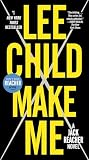
| 20 | Make Me | 2015 | Darkest entry |
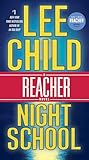
| 21 | Night School | 2016 | Prequel (1996) |
| 23 | Past Tense | 2018 | Most emotional |
Best starting point: Killing Floor — the debut and the right introduction to Reacher.
The Best Jack Reacher Book to Start With
Start with Killing Floor.
It is the first novel in the series and one of the best. Reacher gets off a bus in Margrave, Georgia, a small, quiet town he chose at random — and within hours is arrested for a murder he didn’t commit. What he discovers beneath the surface of Margrave is one of the most accomplished debut thriller plots of the 1990s: Lee Child builds it slowly, pays everything off, and uses the first book to establish all the rhythms that define every subsequent Reacher novel.
Killing Floor works for a first-time reader because it is also, structurally, an introduction. Child wrote it knowing he needed to show readers who Reacher is and what he does. The result is a novel that functions both as an origin point and as a self-contained thriller of the first order.
The one alternative entry point worth knowing: One Shot (Book 9) is the basis for the 2012 Tom Cruise film, and it is designed as a standalone — a sniper apparently kills five people at random, an open-and-shut case becomes something else, and Reacher arrives uninvited to complicate things. If someone has come to the series via the film and wants to read the source material first, One Shot is the correct starting point for them. But for most readers, begin at the beginning.
Jack Reacher Books in Publication Order
The Reacher series is mostly standalone — almost every novel can be read independently without losing anything significant. The exceptions are a handful of two-part narratives (notably 61 Hours and Worth Dying For, which share a continuous plot) and a few books where the emotional weight depends on having read an earlier novel. These are noted below.
Books with reviews available on this site are linked.
- Killing Floor (1997) ✓ — Margrave, Georgia; the debut; start here
- Die Trying (1998) ✓ — Reacher is kidnapped alongside a woman he’s just met; a survivalist militia in Montana
- Tripwire (1999) ✓ — Reacher is tracked down by a private investigator; a buried secret from Vietnam-era Army finance
- Running Blind / The Visitor (2000) ✓ — Female Army veterans are being killed in a method no one can explain; Reacher works under FBI supervision
- Echo Burning (2001) ✓ — Texas heat, a woman whose husband is coming home from prison, and a contract killing; one of the most atmospheric entries in the series
- Without Fail (2002) ✓ — The Secret Service asks Reacher to attempt to assassinate the Vice President-elect in order to find the security gaps; he obliges
- Persuader (2003) ✓ — Reacher blows his cover to save a teenager, then has to go deeper into a drug operation to find out why; the series’ most personal revenge plot
- The Enemy (2004) ✓ — A prequel, set in 1990, before Reacher leaves the Army; his last weeks as an MP investigating a general’s death
- One Shot (2005) ✓ — Five apparently random shootings; a sniper who wants a lawyer, not a trial; Reacher takes it apart from the outside
- The Hard Way (2006) ✓ — A man hires Reacher to find his kidnapped wife and daughter; New York and rural England; nothing is what it seems
- Bad Luck and Trouble (2007) ✓ — Members of Reacher’s old MP unit are being murdered; the team reassembles; one of the best ensemble entries in the series
- Nothing to Lose (2008) ✓ — Two towns on a Colorado border; one refuses to let anyone in; Reacher walks in anyway
- Gone Tomorrow (2009) ✓ — A New York subway car; a woman who shows eleven of the twelve signs of a suicide bomber; the aftermath of a senator’s death
- 61 Hours (2010) ✓ — A bus crash in South Dakota in winter; a witness who needs protection; a countdown structure that makes this one of the tensest Reacher novels; ends on a cliffhanger
- Worth Dying For (2010) ✓ — The direct continuation of 61 Hours; a Nebraska family terrorising a rural community; read immediately after Book 14
- The Affair (2011) ✓ — Another prequel, set in 1997, the month before Reacher leaves the Army; the investigation that preceded Killing Floor
- A Wanted Man (2012) ✓ — Reacher hitchhikes and ends up in a car with two men and a woman, one of whom may be a murderer
- Never Go Back (2013) ✓ — Reacher finally reaches the headquarters of his old MP unit in Virginia and gets arrested; the basis for the 2016 Tom Cruise film
- Personal (2014) ✓ — Someone takes a shot at the French president; the shooter has a connection to Reacher’s past; Paris and London
- Make Me (2015) ✓ — Reacher gets off a train at a town called Mother’s Rest because the name intrigues him; one of the darkest and most disturbing entries in the series
- Night School (2016) ✓ — A prequel set in 1996; Reacher is sent to Hamburg to find an American selling something unknown to a buyer with unlimited money
- The Midnight Line (2017) ✓ — Reacher finds a West Point ring in a pawnshop and traces it back to a female soldier; the opioid crisis in the American midwest
- Past Tense (2018) ✓ — Reacher goes looking for his father’s hometown in New Hampshire; a parallel story in a remote motel; one of the more emotionally resonant entries
- Blue Moon (2019) ✓ — Reacher intervenes when a man is robbed on a bus; a city where two rival gangs have a fragile truce; the truce does not survive Reacher’s arrival
- The Sentinel (2020) ✓ — First novel co-authored with Andrew Child; a small town whose IT system has been ransacked by ransomware; the transition is seamless
- Better Off Dead (2021) ✓ — Reacher ends up on the Arizona-Mexico border during a cartel operation; co-authored with Andrew Child
- No Plan B (2022) ✓ — Reacher witnesses what looks like a suicide but isn’t; a private prison corporation with a very aggressive approach to witnesses; co-authored with Andrew Child
- The Secret (2023) ✓ — Set in 1992, a prequel; Reacher investigates a series of sudden deaths connected to a government project; co-authored with Andrew Child
- In Too Deep (2024) ✓ — Reacher, back in the present day; a woman in danger on a remote New England island; co-authored with Andrew Child
Jack Reacher in Chronological Order
The Reacher novels span a fictional timeline from the early 1990s through the present day. Several novels are explicitly set in Reacher’s past — during his Army career or in the months immediately before and after he leaves. For readers who want to follow Reacher’s life in sequence rather than publication order, the prequels slot in as follows:
- The Enemy (Book 8) is set in January 1990 — the Gulf War era, Reacher still in uniform
- Night School (Book 21) is set in 1996 — Reacher at the height of his Army career
- The Affair (Book 16) is set in March 1997 — the month before Reacher leaves the Army
- Killing Floor (Book 1) is set in 1997 — Reacher’s first weeks as a civilian
All remaining novels follow in roughly the publication order in which they were written, covering the next two-plus decades of Reacher’s post-Army wandering.
The practical recommendation: read in publication order for your first time through the series. Chronological order has a certain logical appeal, but it front-loads two of the more procedural entries (The Enemy, The Affair) before you’ve had a chance to understand why Reacher’s Army career matters. Publication order means starting with Killing Floor, which is the correct starting point in every other respect.
The Amazon Prime Video Series
The Reacher television series launched on Amazon Prime Video in 2022 and has become one of the more successful adaptations of a thriller franchise in recent memory. Alan Ritchson plays Reacher — at 6 foot 2 and visibly enormous, he is a closer physical match to the novels than Tom Cruise’s version, a casting choice that was contentious when the films were made and has aged poorly by comparison.
Season 1 (2022) adapts Killing Floor — Margrave, Georgia, the counterfeit operation, the death that brings Reacher to town. It is faithful in broad outline and captures the tone of the source material well.
Season 2 (2023) adapts Bad Luck and Trouble — Reacher’s old MP unit, the members being picked off, the team reassembly. It is, if anything, better than the first season: the ensemble dynamic translates naturally to television.
Season 3 (2025) adapts Persuader — Reacher’s undercover operation, the revenge plot, the most personal story in the early series.
Each season is a self-contained adaptation of a single novel. You do not need to read the books before watching, and you do not need to have watched the show before reading.
Where to Start If You Loved the TV Show
If the Reacher show brought you to the books, the path is straightforward.
Loved Season 1? Read Killing Floor. The novel is longer and more detailed than the adaptation, and Child’s prose has a particular quality — short, declarative sentences, an almost hypnotic attention to sequence and procedure — that the show reproduces in spirit but cannot fully replicate. The novel also contains more of Reacher’s internal calculation: the way he assesses people, estimates distances, works out numerical problems in his head. This is the texture of the books that makes them distinctive.
Loved Season 2? Read Bad Luck and Trouble. The source novel predates the show’s dynamic by nearly two decades, and reading it makes clear how carefully Child constructed Reacher’s relationship with his former unit — the loyalty, the competence, the shared language of people who have operated together under pressure.
From either starting point, the natural next step is to read the series in publication order from the beginning.
The Best Jack Reacher Books
The Reacher series is unusually consistent — there are no genuinely bad novels and only a handful of weaker entries. But several books stand apart even within a strong catalogue.
Killing Floor (1997) is still the best first novel in the series and a case study in how to build a thriller from the ground up. Child constructs the conspiracy at the heart of Margrave with care, plants clues without telegraphing them, and paces the reveals across the novel’s second half with precision. Reacher is fully formed from the first page, which is rare for a debut; Child had clearly thought very carefully about who this person was before he started writing.
61 Hours (2010) is the tensest Reacher novel by a significant margin. The countdown structure — each chapter is headed with a decreasing time until dawn — creates a pressure that accumulates chapter by chapter, and Child is ruthless about denying resolution until the last possible moment. The cliffhanger ending was controversial when the book was published; reading it back-to-back with Worth Dying For is the correct approach.
Make Me (2015) is the darkest entry in the series, and the one that most seriously tests what the Reacher formula is capable of. The mystery at the centre of Mother’s Rest is genuinely disturbing — the resolution more so — and Child uses it to ask questions about what kind of evil Reacher’s particular gifts are and are not equipped to address. It is not the place to start, but it is the novel that most rewards a reader who has already invested in the series.
Echo Burning (2001) is the best of the early novels that doesn’t get cited as often as it deserves. The Texas setting — the landscape, the heat, the social dynamics of a ranch community — gives it a physical specificity that makes it stand out from the more generic thriller settings of some other entries. The plot is a slow burn that pays off well, and the final revelation is one of Child’s most carefully constructed.
Past Tense (2018) is the entry where Child allows the most emotional weight into the structure. Reacher going looking for his father’s origins — the father he never knew well, the town that doesn’t seem to exist in any record — gives the novel a quality of elegy that sits alongside the standard thriller mechanics rather than displacing them. It is among the most human books in a series whose appeal has always been partly about a protagonist who seems to have moved beyond the ordinary claims of human attachment.
Andrew Child and the Future of the Series
Lee Child announced in 2020 that his younger brother Andrew Child — who had published his own thrillers under the name Andrew Grant — would take over primary writing duties on the Reacher series. The transition was gradual: The Sentinel was presented as a co-authored novel; subsequent books have maintained the co-author credit while Andrew Child does the primary writing, with Lee Child involved in oversight.
The transition has been handled well. Andrew Child’s prose is close enough to his brother’s that readers who don’t know about the change often don’t notice it within the text. The formula — the setting, the encounter, the escalation, the resolution — is intact, and Reacher himself is unchanged in any essential way. There are readers who find the later books slightly less distinctive, slightly more procedural. There are also readers who consider No Plan B and In Too Deep among the better recent entries in the series.
The honest position is that the series remains worth reading. The brand is in safe hands.
What to Read After Reacher
If the Reacher novels have converted you to action thrillers and you want to explore further, the natural progressions depend on what appealed most.
For the lone-wolf protagonist and the relentless pace: Mitch Rapp by Vince Flynn and Scot Harvath by Brad Thor both follow a similar template — a highly capable man operating outside institutional constraints, dispensing justice that the official system cannot or will not provide. Both series are longer and more embedded in contemporary geopolitics than Reacher.
For the investigative architecture and the slow-burn reveals: Gone Girl by Gillian Flynn operates in a completely different genre but shares Reacher’s interest in misdirection through structure — the reader’s assumptions about who is telling the truth are the primary mechanism of concealment.
For literary crime fiction that takes the action genre seriously as a vehicle for character: The Drop by Michael Connelly and The Night Manager by John le Carré both feature protagonists defined by competence and moral clarity in a world designed to complicate both. They are slower and more psychologically complex than Reacher, but they reward the investment.
For the Best Thriller Books
For the definitive guide to thriller fiction — psychological thrillers, legal thrillers, and spy novels — see our Best Thriller Books of All Time list.
For the full Lee Child bibliography, biography, and awards, visit the Lee Child author page on Editors Reads.
More Thriller and Crime Reading Guides
- James Patterson Books in Order: Alex Cross and More
- David Baldacci Books in Order: Complete Series Guide
- Harlan Coben Books in Order: Complete Reading Guide
Also Recommended
Affiliate disclosure: Links on this site are affiliate links. We earn a small commission at no extra cost to you. This does not influence our editorial recommendations.
Frequently Asked Questions
What is the best Jack Reacher book to start with?
Start with Killing Floor (Book 1) — it introduces Reacher perfectly, establishes the formula, and is one of the strongest entries in the series. If you want a standalone that works without context, One Shot (Book 9, the basis for the Tom Cruise film) is an excellent alternative entry point.
Should I read Jack Reacher books in order?
Reacher books are mostly standalone — each novel works independently and you can read them in any order. However, reading in publication order (starting with Killing Floor) gives you the full picture of Reacher's character and backstory as Lee Child developed it.
Who is writing Jack Reacher books now?
Lee Child's younger brother Andrew Child (formerly Andrew Grant) has co-written and now primarily writes the Reacher series, with Lee Child credited as co-author. The transition began with The Sentinel (Book 25, 2020). Quality and style remain consistent.
How many Jack Reacher books are there?
As of 2024 there are 29 novels in the main Reacher series plus short fiction and novellas. Lee Child wrote Books 1-24 solo, and Books 25 onwards are co-authored or written by Andrew Child.