Emily Henry Books in Order: Complete Reading Guide (2026)
The complete Emily Henry reading guide — all 5 adult romance novels reviewed, the best book to start with, and what makes her the defining voice of contemporary romance.

Emily Henry published five adult romance novels between 2020 and 2024. In that time she became the dominant voice of contemporary romance for the BookTok generation — a distinction she earned not through algorithm or marketing but because her books are better than the competition. They are funnier, more precisely written, and more emotionally honest about what it means to fall in love with someone you already know deeply. Each of the five is a standalone. None requires prior knowledge of the others. The reading order question is really a starting point question: which book do you pick up first.
The answer is either Beach Read or People We Meet on Vacation. Beach Read is lighter, faster, and funnier — the better choice if you want to be won over immediately. People We Meet on Vacation is more emotionally complex and structurally ambitious — the better choice if you want to understand what Henry is capable of at her best. After either one, read the rest in whatever order you like.
All 5 Emily Henry Books at a Glance
| # | Title | Year | Series/Type |
|---|---|---|---|
| 1 | Beach Read | 2020 | Standalone |
| 2 | People We Meet on Vacation | 2021 | Standalone |
| 3 | Book Lovers | 2022 | Standalone |
| 4 | Happy Place | 2023 | Standalone |
| 5 | Funny Story | 2024 | Standalone |
Best starting point: Beach Read for the fastest hook, or People We Meet on Vacation for the most emotionally resonant entry.
The Best Emily Henry Book to Start With
The case for Beach Read as a first Henry book is straightforward. It is the most purely enjoyable of the five — a writers-swapping-genres premise that gives Henry room to be funny about literary fiction and romance simultaneously, an enemies-to-lovers dynamic that develops at exactly the right pace, and a setting (two neighbouring beach cottages, one summer) that keeps the story contained and propulsive. It is also the book that announces what Henry does differently: her protagonists talk about books the way real readers talk about books, with opinions and preferences and genuine arguments about what stories are for. First-time Henry readers finish Beach Read understanding why she has the audience she does.
The case for People We Meet on Vacation is more complex and, for certain readers, more compelling. Alex and Poppy are best friends who take one trip together every year for a decade. The novel alternates between past summers — building the friendship, documenting its texture and particularity — and the present, two years after something went wrong between them. That structural decision is the book’s real engine: by the time Henry reveals what happened, the reader has accumulated enough understanding of both characters to feel the weight of it fully. The emotional payoff is harder-earned and more resonant than anything in Beach Read. For readers who want to start with the best Henry has written, this is the book.
Both novels share the same general world, and characters from Beach Read make brief appearances in Book Lovers. These are Easter eggs rather than plot connections — knowing one book has no bearing on understanding another.
Complete Reading List
All five Emily Henry novels, in publication order:
- Beach Read (2020) — Enemies to lovers; rival writers; Lake Michigan summer
- People We Meet on Vacation (2021) — Friends to lovers; dual timeline; ten years of annual trips
- Book Lovers (2022) — Rivals to lovers; literary agent and book editor; small-town trope subversion
- Happy Place (2023) — Second chance; fake relationship; friends’ lakehouse farewell
- Funny Story (2024) — Opposites attract; summer lake house; exes-leave-them-for-each-other
Beach Read
January Andrews is a romance novelist who has just inherited her late father’s beach cottage — the cottage where he kept the secret family he had been hiding from her. Augustus Everett is a literary fiction writer, critically acclaimed and emotionally closed off, who turns out to be her neighbour. Both are blocked. Both are facing crises of faith in their own work. They make a bet: each will write in the other’s genre for the summer, and whoever produces the better book wins.
The premise does a lot of work. It gives Henry a vehicle for genuine, non-condescending argument about what different kinds of fiction are for — why romance matters, why literary seriousness matters, why neither has to exclude the other. January’s grief over her father is real and complicates the romance without overwhelming it. Gus’s emotional unavailability has a history that makes sense. The humour is Henry’s own: dry, character-specific, never the generic banter that passes for wit in most commercial romance. It earns its moments rather than performing them.
Beach Read is the book that made Henry a dominant presence in the romance market. It also happens to be genuinely good — a distinction that is rarer in that market than it should be.
People We Meet on Vacation
Alex and Poppy meet in college. They have nothing obvious in common — he’s careful and introverted, she’s impulsive and effusive — and they become best friends anyway. Every summer, they take one trip together: a budget flight somewhere, a cheap hotel, a week of becoming more themselves in each other’s company. The novel moves between these past trips, accumulating warmth and specificity, and the present day, two years after the last trip, when Poppy finally asks Alex to try one more time.
The dual timeline structure is the book’s formal achievement. Henry uses the past sections not as backstory but as evidence — building the case for why these two people matter to each other, why the relationship is worth fighting for, and why what happened two summers ago was so damaging. By the time the present-day narrative arrives at its crisis, the reader understands both characters well enough to feel the full weight of the decision each of them is making.
The emotional core of People We Meet on Vacation is the experience of loving someone you cannot have — not because of external obstacles but because timing, fear, and the specific shape of a friendship make the step across that line feel impossible. Henry is unusually precise about this. The book is not about miscommunication or misunderstanding. It is about two people who understand each other very well and are frightened by what that understanding requires of them.
This is Henry’s best book, and among the best contemporary romance novels published in the 2020s.
Book Lovers, Happy Place, and Funny Story
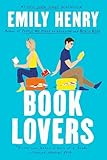
Book Lovers (2022) puts literary agent Nora Stephens and book editor Charlie Sutton in Sunshine Falls, North Carolina — the kind of small town that appears constantly in the romance novels Nora sells for a living, where a city woman discovers herself and leaves her old life behind. Henry is aware of this trope, and Nora is aware of it too. The novel is built around the question of whether Nora will become the woman who stays or the woman who goes back to New York, and it refuses to give the expected answer. Charlie is Henry’s most immediately appealing male lead: sardonic, principled, and genuinely interested in Nora as a person rather than a project. Book Lovers is the most self-aware of the five novels and the one most interested in what women are told to want versus what they actually want.
Happy Place (2023) begins after the relationship has ended. Harriet and Wyn broke up six months ago. They have not told their friends. When their closest group gathers at the Maine lakehouse they have shared for years — for a final week before the house is sold — Harriet and Wyn agree to pretend they are still together, to protect their friends from the news until the week is over. The fake-relationship-between-exes premise is one of the more demanding in romance, because the emotional stakes have to be maintained across two simultaneous registers: the performance of the relationship for the friends, and the private reckoning between two people who are still unfinished with each other. Henry manages both. The lakehouse setting is richly drawn, the supporting characters are among her most fully realised, and the question at the book’s centre — why the relationship ended, and whether that reason is sufficient — is answered with more honesty than the genre usually requires.
Funny Story (2024) is the most recent entry and the most structurally straightforward. Daphne and Miles are strangers whose exes have just left them for each other. They end up as roommates in a small Michigan lake town, moving from mutual bewilderment toward something neither of them expected. The summer setting and the premise’s inherent dark comedy give Henry room to be funny in the particular way she does best — finding the absurdity in sincerity without undercutting it. Funny Story is the lightest of the five books in tone, and the most immediately enjoyable after Beach Read.
Henry vs. Colleen Hoover
Any honest account of the contemporary romance landscape has to address the comparison. Both Emily Henry and Colleen Hoover built enormous audiences during the same BookTok era. Both write emotionally resonant love stories with female protagonists in their late twenties and thirties. Both are, by any reasonable measure, the two most commercially significant romance writers of the 2020s.
The differences are real and worth understanding before you choose where to start. Henry’s books are funnier, lighter in emotional register, and more interested in literary self-awareness — her characters are often writers or readers, her books discuss what fiction is for, and her romantic conflicts tend to involve self-knowledge rather than external trauma. Hoover’s books are heavier, more willing to engage with grief, addiction, and abusive relationships as part of the romantic narrative, and more emotionally destabilising in the way they handle their subject matter. Henry’s books leave you feeling good. Hoover’s books leave you feeling something more complicated.
Neither is better. They serve different reader moods and different reader needs. Many readers love both. If you want to start somewhere in the genre and are uncertain about emotional intensity, Henry is the gentler entry point. If you have already read Henry and want something that goes further emotionally, Hoover is the natural next step.
Emily Henry’s five novels form a coherent body of work that holds together not because they share characters or plots but because they share a sensibility: that love stories are worth taking seriously, that the people in them deserve to be fully drawn, and that the books readers dismiss as escapist can be as formally accomplished as the books they don’t. That argument is made every time one of her protagonists picks up a book and has real opinions about it. It is also made by the books themselves.
Books Like Beach Read
For contemporary romance novels that share Emily Henry’s wit, warmth, and enemies-to-lovers tension, see our Books Like Beach Read guide.
For the Best Romance Novels
For the definitive guide to romance fiction — from Jane Austen to contemporary romance, from literary to beach reads — see our Best Romance Novels of All Time list.
For the full Emily Henry bibliography, reviews, and biography, visit the Emily Henry author page on Editors Reads.
Affiliate disclosure: Links on this site are affiliate links. We earn a small commission at no extra cost to you. This does not influence our editorial recommendations.
Frequently Asked Questions
What is the best Emily Henry book to start with?
Beach Read or People We Meet on Vacation — both are excellent entry points. Beach Read (a romance novelist and a literary fiction writer swap genres for the summer) is slightly lighter and faster. People We Meet on Vacation (best friends who travel together fall in love told in alternating timelines) has the most emotional depth. Either works perfectly as a first Henry book.
Are Emily Henry books connected?
All five books are standalones. Minor character cameos appear across the books — characters from Beach Read briefly appear in Book Lovers — but these are Easter eggs, not plot connections. Every book works independently.
Are Emily Henry books appropriate for all ages?
Emily Henry's adult romance novels contain explicit sexual content and are intended for adult readers. They are not Young Adult — she also wrote YA earlier in her career, but the five books in this catalog are all adult contemporary romance.
What makes Emily Henry different from other romance authors?
Henry writes romance with literary ambition — her protagonists are writers, her books discuss what kind of stories matter and why, and her love stories are rooted in characters knowing each other fully rather than misunderstanding each other. Her books are funnier and more self-aware than most commercial romance while still delivering emotional satisfaction.
Is Beach Read being adapted for film?
A Beach Read film adaptation has been reported as in development. As of 2026, no release date has been confirmed.