Colleen Hoover Books in Order: Complete Reading Guide and Where to Start (2026)
The complete Colleen Hoover reading guide — all 14 novels reviewed, the best books to start with, connected books explained, and how to navigate the CoHo catalog.

Colleen Hoover self-published her first novel, Slammed, in January 2012 from her home in Texas. Within weeks it had climbed the Amazon charts without any traditional publishing infrastructure behind it. She followed it with a second book two months later. By the end of that year she had a publishing deal. By 2022 she was the best-selling author in the world — not the best-selling romance author, not the best-selling American author, but the single best-selling author globally, across all categories and languages. Seven of her books occupied the New York Times bestseller list simultaneously. Booksellers reported that customers were buying entire backslists in single transactions.
The mechanism was BookTok — the reading community on TikTok — and the book that ignited it was It Ends With Us. Once that novel entered the TikTok recommendation cycle, the rest of her catalog followed. The “reading order” question for Hoover is therefore different from most author guides. With a few exceptions, her books do not share plot continuity, and there is no correct sequence. The question is really: where should you start, and what should you know before you do?
The short answer: start with It Ends With Us if you want to understand what the phenomenon is about and can handle emotionally heavy material. Start with Ugly Love if you want to test-drive her style in a shorter, lighter book. Start with Verity if you do not typically read romance but are curious what the fuss is about.
All 14 Colleen Hoover Books at a Glance
| # | Title | Year | Series/Type |
|---|---|---|---|
| 1 | Slammed | 2012 | Standalone (duology #1) |
| 2 | Hopeless | 2012 | Standalone |
| 3 | Maybe Someday | 2014 | Standalone (connected) |
| 4 | Ugly Love | 2014 | Standalone |
| 5 | November 9 | 2015 | Standalone |
| 6 | Confess | 2015 | Standalone |
| 7 | It Ends With Us | 2016 | Standalone |
| 8 | Without Merit | 2017 | Standalone |
| 9 | Verity | 2018 | Standalone / Thriller |
| 10 | All Your Perfects | 2018 | Standalone |
| 11 | Regretting You | 2019 | Standalone |
| 12 | Heart Bones | 2020 | Standalone |
| 13 | Layla | 2020 | Standalone |
| 14 | Reminders of Him | 2022 | Standalone |
Best starting point: It Ends With Us for the full CoHo experience, or Ugly Love for a lighter introduction.
The Best Colleen Hoover Book to Start With
It Ends With Us — the cultural starting point
It Ends With Us (2016) is the book that made Hoover a household name, and it is the right starting point for most readers because it shows exactly what she is capable of. Lily Bloom moves to Boston, falls for a neurosurgeon named Ryle Kincaid, and the novel builds — carefully and uncomfortably — toward a reckoning with what love looks like when it coexists with harm.
The book is harder to read than its romance packaging suggests. Hoover draws on her own family history of domestic violence, and the emotional mechanics of the relationship — the way control masquerades as devotion, the way apology cycles work — are rendered with enough precision to make readers genuinely uncomfortable. That discomfort is the point. It is also why the book spread so rapidly on BookTok: it gave readers something real to discuss, not just a romance to enjoy.
Start here if you want the full CoHo experience from the beginning.
Ugly Love — the faster, lighter entry point
Ugly Love (2014) is a better starting point for readers who want to sample Hoover’s style before committing to heavier material. Tate Collins and Miles Archer enter a no-strings arrangement; Miles has rules; the rules eventually become impossible to maintain. The dual timeline — present-day Tate and past Miles — gives the book structural interest beyond the central romance, and the emotional payoff, while not small, is gentler than most of her catalog.
At roughly 320 pages and considerably lighter in subject matter, it is the book to read if you want to understand why Hoover’s pacing and emotional register work before deciding whether to read further.
Verity — for readers who don’t read romance
Verity (2018) is Hoover’s psychological thriller, and it stands completely apart from her other work in tone, structure, and subject matter. Struggling writer Lowen Ashby accepts a job finishing the remaining books in a bestselling thriller series after the author, Verity Crawford, is incapacitated. While staying at the Crawford home, Lowen finds a manuscript — what appears to be Verity’s autobiography — containing confessions that change everything she thinks she understands about the family around her.
Verity is the entry point for readers who find the romance genre unappealing but are curious about the CoHo phenomenon. It has more in common with Gillian Flynn than with standard contemporary romance, and it ends on a genuinely unresolved note that readers have been arguing about since publication.
The Complete Colleen Hoover Reading List
All 14 books in publication order. Books sharing similar tones are grouped within the list where useful.
Lighter romances and earlier work:
- Slammed (2012) — Her debut: a college student falls for her new neighbor, who turns out to be her professor, with spoken-word poetry woven throughout.
- Hopeless (2012) — Sky Davis discovers that the boy she’s falling for holds secrets connected to her own buried past.
- Maybe Someday (2014) — Sydney falls for her neighbor Ridge while both are in relationships; unique for its original musical soundtrack created alongside the novel.
- Ugly Love (2014) — A no-strings arrangement between two people who are bad at keeping their own rules.
- November 9 (2015) — Fallon and Ben meet on November 9th and agree to meet again on the same date each year for the next five years.
- Confess (2015) — Auburn Reed falls for an artist who incorporates anonymous confessions into his paintings; a lighter entry in the catalog.
- Maybe Not (2015) — A novella companion to Maybe Someday, told from a different perspective; read after Maybe Someday.
Heavier emotional reads:
- It Ends With Us (2016) — Her most important novel; a romance that becomes something more difficult and more honest.
- Without Merit (2017) — A portrait of a dysfunctional family through the eyes of Merit Voss, who uncovers the secrets everyone around her is keeping.
- All Your Perfects (2018) — A marriage in crisis, told in alternating timelines of beginning and near-end; her most structurally controlled novel.
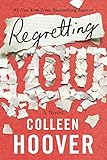
- Regretting You (2019) — A mother and teenage daughter navigate grief and the discovery of family secrets after a sudden loss.
- Heart Bones (2020) — Beyah Grim spends a summer on the Texas coast and finds more than she expected; one of her more straightforwardly hopeful books.
Thriller and darker territory:
- Layla (2020) — A couple returns to the bed-and-breakfast where they fell in love and finds something wrong with the house; Hoover’s experiment in supernatural romance-thriller.
- Verity (2018) — Her psychological thriller; the outlier in the catalog and the book most likely to convert non-romance readers.
- Reminders of Him (2022) — Kenna Rowan, released from prison after a fatal accident, tries to rebuild a relationship with the daughter she’s never known; emotionally rigorous and among her best recent work.
It Ends With Us and Lily Bloom
It Ends With Us is Hoover’s flagship novel and the book that defines her reputation outside the romance genre. It needs its own section because it is frequently misread — both by readers who approach it expecting a conventional romance and by critics who dismiss it as genre fiction with a social message grafted on.
The book works because Hoover does not write Ryle Kincaid as a villain. He is charming, devoted, and capable of real tenderness. The escalation toward harm is gradual and psychologically credible — which is precisely what makes it uncomfortable. Readers who have experienced similar relationships have described the book as the first time they saw their own experience in fiction. That is not a small thing, and it explains why the book’s word-of-mouth was so sustained.
The controversy that emerged around the 2024 film adaptation — directed by Justin Baldoni and starring Blake Lively — revealed something interesting about the book’s reputation. Debates about how to adapt the material, what tone was appropriate, and whose story it ultimately was showed that the novel had become a genuine cultural object, the kind of book people feel ownership over. That degree of reader investment is rare.
A sequel, It Starts With Us, was published in 2022. It is not currently in this catalog but follows Lily’s life after the events of the first novel. Most readers recommend finishing It Ends With Us before deciding whether to continue — the first book is complete on its own terms.
Verity — the Outlier
Verity is the book Hoover readers recommend to people who claim they don’t like Hoover, and it is easy to see why. It reads like a collaboration between Hoover’s instinct for emotional intensity and the kind of domestic-noir psychological thriller that Gillian Flynn popularized. The premise — a writer discovers a hidden manuscript that may be a confession to multiple crimes — is executed with genuine craft, and the ending is structured as an explicit choice the reader must make rather than a resolved conclusion.
The novel’s central question is about the reliability of written confession: whether a document that claims to be honest can be trusted, and whether the reader’s desire for a particular truth shapes how they read evidence. Hoover handles this more sophisticatedly than the thriller-romance packaging suggests.
Content notes apply: the book contains graphic depictions of harm to children, explicit sexual content, and psychological manipulation. It is darker in subject matter than anything else in the catalog.
The debate about Verity’s ending remains active among readers several years after publication. This is a mark in its favor — books that generate genuine interpretive disagreement are doing something right.
Her Connected Books
Most Hoover novels are standalones, but two pairs in this catalog share characters or storylines.
Maybe Someday and Maybe Not: Maybe Someday (2014) follows Sydney and Ridge. Maybe Not (2015) is a companion novella that revisits the same world from a different perspective — specifically the story of Warren and Bridgette, secondary characters from the first book. Read Maybe Someday first; Maybe Not adds to it rather than replacing it, and the novella-length companion is best appreciated once you know the characters.
Slammed: Slammed (2012) is Hoover’s debut and the first book in what became a duology with Point of Retreat. Point of Retreat is not in this catalog, but readers who enjoy Slammed should know the story continues. Slammed ends at a reasonable stopping point; you do not need the sequel to feel the first book is complete.
All other books in the catalog — It Ends With Us, Verity, Ugly Love, Reminders of Him, November 9, Confess, All Your Perfects, Without Merit, Hopeless, Layla, Regretting You, and Heart Bones — are fully standalone. Reading order does not matter for any of them.
Content Warnings and Reader Expectations
This section exists because Hoover’s books are frequently gifted, recommended, or picked up without a clear understanding of what they contain. The pastel covers and romance-shelf placement do not accurately represent the subject matter of several titles.
It Ends With Us deals with domestic violence and emotional abuse within a romantic relationship. The depiction is intentional and central to the book’s meaning — but readers who are not prepared for it may find the experience distressing.
Reminders of Him involves grief, incarceration, and the aftermath of accidental death. The emotional weight is sustained throughout.
Without Merit and Regretting You both deal with family dysfunction, secrets, and depression. Regretting You includes sudden loss of a parent.
Verity contains graphic content including harm to children and explicit sexual content.
Layla deals with trauma and psychological disintegration alongside its supernatural elements.
Hopeless involves past sexual abuse as a significant plot element.
The lighter end of the catalog — Ugly Love, November 9, Confess, Maybe Someday, Heart Bones — deals with painful emotions and contains explicit content, but does not involve the heavier trauma themes listed above.
Hoover’s books are New Adult, not Young Adult. They are written for adult readers. The explicit content and mature themes are not incidental to the reading experience — they are part of how she builds emotional stakes. Readers who prefer romance without graphic content or heavy subject matter will find several of her books a poor fit, and knowing that in advance is more useful than discovering it mid-read.
What Hoover does well, consistently, is make difficult emotional experiences feel like they have been witnessed rather than sentimentalized. That is a specific skill, and it is the reason her books generate the kind of reader investment that turns casual recommendations into cultural phenomena. Whether that skill translates into something you want to read is a question only the first fifty pages of Ugly Love or It Ends With Us can answer.
Books Like Colleen Hoover
For emotionally intense romance novels that share Colleen Hoover’s style — contemporary romance with difficult themes and compulsive readability — see our Books Like Colleen Hoover guide.
For the Best Romance Novels
For the definitive guide to romance fiction — from Jane Austen to contemporary romance, from literary to beach reads — see our Best Romance Novels of All Time list.
For the full Colleen Hoover bibliography, reviews, and biography, visit the Colleen Hoover author page on Editors Reads.
Affiliate disclosure: Links on this site are affiliate links. We earn a small commission at no extra cost to you. This does not influence our editorial recommendations.
Frequently Asked Questions
What is the best Colleen Hoover book to start with?
It Ends With Us is the most widely recommended starting point — it's her most read book and demonstrates both her emotional range and why she became a BookTok phenomenon. Alternatively, start with Ugly Love if you prefer a lighter, faster read, or Verity if you want psychological thriller instead of romance.
Are Colleen Hoover books connected?
Most CoHo books are standalones. However, a few share characters: Slammed and Point of Retreat (not in this catalog) are a duology. Maybe Someday and Maybe Not are connected. Confess, November 9, and All Your Perfects are standalones with similar emotional themes. You can read most in any order.
Are Colleen Hoover books appropriate for young adults?
Most CoHo books are New Adult rather than Young Adult — they contain explicit content, mature themes including domestic violence (It Ends With Us), grief, and trauma. They are not appropriate for younger teenagers. The author herself has noted some content warnings apply to most of her titles.
What is the reading order for Colleen Hoover's connected books?
The two connected pairs in this catalog: (1) Maybe Someday first, then Maybe Not; (2) Slammed first then Point of Retreat if you want to read those (not covered here). All other books are completely standalone.
Why is Colleen Hoover so popular on BookTok?
CoHo became a BookTok phenomenon largely through It Ends With Us, whose themes of emotional manipulation and domestic abuse resonated with readers who shared the book widely on TikTok. Her emotional, fast-paced writing style and willingness to tackle difficult subjects while delivering romance made her books uniquely shareable.