Editor's Pick
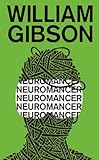
Neuromancer
by William Gibson
4.3
William Gibson's groundbreaking cyberpunk novel coined the term 'cyberspace' and defined the aesthetic and concerns of an entire science fiction movement.
Check Price on Amazon (paid link)American · b. 1948
Hugo Award; Nebula Award; Philip K. Dick Award (all for Neuromancer)
William Gibson is an American-Canadian science fiction author whose Neuromancer coined the word 'cyberspace' and defined the aesthetic and concerns of the cyberpunk genre.
William Gibson was born in South Carolina but has lived in Canada for most of his adult life. When Neuromancer appeared in 1984, it won the Hugo Award, the Nebula Award, and the Philip K. Dick Award — a sweep unprecedented in science fiction — and introduced a vision of networked consciousness, corporate dystopia, and augmented humanity that would prove extraordinarily prescient. The novel coined the term “cyberspace” and invented or anticipated so much of the visual and conceptual vocabulary of digital culture that it is difficult to retrospectively appreciate how original it must have seemed: at a time when the public internet did not yet exist, Gibson described the experience of navigating networked data as a physical space with remarkable intuitive accuracy.
Neuromancer’s plot follows Henry Case, a washed-up hacker hired for one last job in a near-future world where multinational corporations have superseded nation-states and the boundary between human and machine is permeable. The novel’s prose is dense and allusive — Gibson assumed reader engagement rather than reader comfort — and the world is conveyed more through texture and detail than through exposition. It requires, and rewards, active reading. The subsequent Sprawl trilogy novels (Count Zero and Mona Lisa Overdrive) extend the world with slightly diminished urgency but considerable inventive pleasure.
Gibson’s subsequent career moved gradually from science fiction toward something closer to near-future realism — the Pattern Recognition trilogy and the Jackpot trilogy are set in recognisable contemporary worlds whose speculative elements are subtle rather than overt. These are excellent novels, consistently underrated by readers expecting Neuromancer’s register. Gibson’s overall contribution to speculative fiction is immense: he created a vocabulary and a set of questions that have defined how two generations of writers, filmmakers, and technologists imagine the future.
Mona Lisa Overdrive and Spook Country make rewarding next steps for anyone who has enjoyed the major works.
by William Gibson
William Gibson's groundbreaking cyberpunk novel coined the term 'cyberspace' and defined the aesthetic and concerns of an entire science fiction movement.
Check Price on Amazon (paid link)
by William Gibson
Cayce Pollard, a coolhunter with a pathological sensitivity to corporate branding, is hired to trace the source of mysterious film footage appearing anonymously online — footage that obsesses millions of people worldwide.
Check Price on Amazon (paid link)
by William Gibson
The second novel in Gibson's Sprawl trilogy follows three intersecting storylines — a young hacker, a mercenary, and an art dealer — across a near-future world where the AIs of Neuromancer have fragmented into something resembling the voodoo loa.
Check Price on Amazon (paid link)
by William Gibson
The concluding volume of the Sprawl trilogy follows four separate storylines — including a young girl called Mona, a simstim star's bodyguard, and Kumiko, the daughter of a Japanese crime lord — as they converge on the mystery of what Angie Mitchell's direct neural interface connects her to.
Check Price on Amazon (paid link)
by William Gibson
Three storylines converge around a mysterious shipping container in post-9/11 America: a journalist investigating locative art, a drug-addicted translator working for a shadowy operative, and a Cuban-Chinese crime family tracking the same cargo.
Check Price on Amazon (paid link)Disclosure: Amazon links on this page are affiliate links. If you purchase through them we earn a small commission at no extra cost to you.