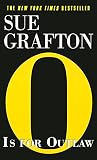
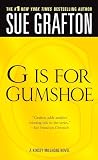
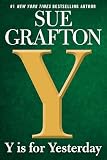
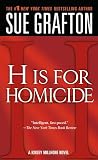
American mystery writer best known for her Kinsey Millhone Alphabet series, which ran from A Is for Alibi to Y Is for Yesterday and helped define the modern female private-eye novel.
Sue Grafton was one of the most important figures in modern crime fiction, the creator of Kinsey Millhone and a writer who, alongside Sara Paretsky and Marcia Muller, helped establish the female private investigator as a central figure in the genre. Her Kinsey Millhone Alphabet series — beginning with A Is for Alibi in 1982 and running, one letter at a time, to Y Is for Yesterday in 2017 — is among the most beloved and commercially successful mystery series ever written, and it transformed the hardboiled detective tradition by handing its conventions to a wry, self-sufficient, fiercely independent woman.
Kinsey Millhone is a former cop turned private investigator working out of the fictional Southern California town of Santa Teresa (a lightly disguised Santa Barbara). Twice divorced, living in a converted garage owned by her octogenarian landlord Henry Pitts, eating too much fast food and running to stay in shape, Kinsey narrates her own cases in a dry, observant first-person voice that became the series’ signature. She is competent, stubborn, and allergic to pretension, and across twenty-five novels Grafton used her to anatomize crime, family, money, and the long shadows of the past.
Grafton made a deliberate choice to keep her series anchored in the 1980s, freezing Kinsey in a pre-internet, pre-cell-phone world where investigation meant legwork, library microfiche, and index cards. That choice gave the books a consistent texture and a growing nostalgic charm as the real world moved on. It also kept the focus where Grafton wanted it: on character, on the patient accumulation of detail, and on the moral weight of the crimes Kinsey investigates.
Famously, Grafton refused to sell the film or television rights to the series, determined to protect Kinsey from adaptation she could not control — a stand almost unheard of for a writer of her commercial stature. When she died in December 2017, shortly after publishing Y Is for Yesterday, she left the alphabet one letter short. Her daughter announced that there would be no Z, and that no other writer would continue the series: as her family put it, “the alphabet now ends at Y.” It is a fitting, if poignant, end for a series defined throughout by its author’s integrity.
The Kinsey Millhone Alphabet
The series’ organizing conceit — a title for each letter of the alphabet — gave Grafton a structure and a finish line, and she filled it with remarkable consistency. The early novels (A through roughly G) establish the hardboiled template; the middle entries deepen Kinsey’s world and grow more ambitious in structure and theme; and the later books, while still self-contained, increasingly explore Kinsey’s buried family history. Each novel is a complete mystery, but the cumulative effect is a portrait of a life.
A Voice That Defined a Genre
What made Grafton’s work endure is Kinsey’s voice. Dry, skeptical, self-deprecating, and morally serious beneath the wit, it gave the private-eye novel a fresh and durable point of view. Grafton wrote clean, unshowy prose built for momentum and character, and she trusted her readers to care as much about Kinsey’s life — her landlord, her meals, her tangled relationships — as about the cases. That balance of plot and personality is the series’ great achievement, and it is why readers returned, letter after letter, for thirty-five years.
The Sue Grafton Legacy
Sue Grafton’s influence on crime fiction is enormous. She helped make the female PI a permanent fixture of the genre, demonstrated that a series could sustain quality and freshness across decades, and proved that character-driven mystery could command both critical respect and a vast popular readership. For new readers, A Is for Alibi is the natural starting point, the beginning of one of the most satisfying reading projects in modern crime fiction — twenty-five novels that follow a singular detective from her first case to her last.
Reading Guides