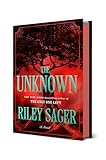
Riley Sager is the pen name of American author Todd Ritter, a New York Times bestselling thriller writer known for twisty, atmospheric suspense novels that play with the conventions of horror and mystery.
Riley Sager is the pen name of American author Todd Ritter, and over a single decade the name has become shorthand for a particular kind of thriller: atmospheric, twist-laden, and built on a clever, instantly graspable premise. A New York Times bestseller many times over, Sager has carved out a reputation as one of the most reliable suspense writers working today, with a new book arriving almost every summer and a devoted readership that treats each release as a seasonal event.
A Pen Name and a New Direction
Todd Ritter published mystery novels under his own name before reinventing himself as Riley Sager, a deliberate rebrand that came with a sharper, more commercial sensibility. The Sager persona debuted in 2017 with Final Girls, and the shift proved transformative. Where his earlier work had found a modest audience, the Sager books connected immediately and broadly, launching a run of bestsellers that has continued without interruption.
The choice of a gender-ambiguous pen name was itself a kind of statement, and Sager has often centered female protagonists in stories that engage thoughtfully with the genre’s treatment of women — survivors, final girls, and women whose accounts are doubted by those around them.
What defines a Riley Sager novel is the high-concept hook. Final Girls follows the lone survivor of a massacre, drawing on the “final girl” trope of slasher films. The Last Time I Lied unfolds at a summer camp haunted by a decades-old disappearance. Lock Every Door traps its heroine in an eerie, exclusive Manhattan apartment building with sinister rules. Home Before Dark is a haunted-house story told in two timelines, braiding a bestselling paranormal memoir with the daughter who returns to test its truth. Survive the Night, The House Across the Lake, The Only One Left, and Middle of the Night each take a recognizable suspense or horror premise and twist it into something new.
The pleasure of a Sager novel lies in that promise of misdirection. He builds his stories on tropes the reader thinks they understand, then pulls the rug out — often more than once — with reveals that recontextualize everything that came before. His books frequently flirt with the supernatural while keeping one foot in the rational, leaving readers genuinely uncertain, until the final pages, whether they’re reading a ghost story or a crime story. That tension is central to his appeal.
Atmosphere as Engine
Beyond the twists, Sager is a master of atmosphere. His settings — a decaying lakeside mansion, a cursed summer camp, a too-perfect apartment building, an isolated estate — function almost as characters, generating dread through place as much as plot. He writes in a propulsive, cinematic style well suited to the page-turner, with short chapters and cliffhangers that make his books notoriously hard to put down. The result is a body of work engineered for immersive, single-sitting reading, the kind of thriller that swallows a beach day or a long flight whole.
This consistency has made him a fixture of summer reading lists. A new Sager novel in the warmer months has become a dependable ritual for suspense fans, and his name on a cover is, for many readers, all the recommendation they need.
The Unknown
Sager’s 2026 release, The Unknown, continues his streak. It follows Marin Keane, a struggling actress who lands a role in a major motion picture about the unsolved mystery of New Avalon, an island on the sprawling Lake Faraday in Vermont. As with the best of his work, the premise blends Hollywood, an isolated and atmospheric setting, and a cold case whose buried truth refuses to stay buried — fertile ground for the kind of layered misdirection that has become his signature. Anticipation has marked it as one of the most awaited thrillers of its summer.
A Standalone Storyteller
One notable feature of Sager’s career is that he writes standalones rather than series. Each novel is a self-contained experience with its own premise, cast, and resolution, which means readers can begin anywhere and dip in and out as the hooks appeal to them. That structure also keeps his work fresh — rather than extending a single world, he reinvents his approach with each book, finding new tropes to subvert and new settings to haunt.
For a genre that often runs on recurring detectives and long-running series, Sager’s commitment to the fresh-start standalone is part of what keeps his output reliably surprising. It also makes him an easy author to recommend: there’s no required reading order, no need to start at the beginning, just a shelf of self-contained thrillers to choose from based on whichever premise grabs you. That variety has helped his readership grow steadily from book to book, since a reader who loves one premise can pick up the next without commitment, and a newcomer can enter the catalog at whatever hook appeals to them most. It’s a model perfectly suited to the seasonal, word-of-mouth way thrillers tend to spread.
Where to Start
New readers can begin almost anywhere, but Final Girls — the debut that launched the Sager name — is a natural entry point, as is the widely loved Home Before Dark for readers who enjoy a haunted-house puzzle. Those drawn to his most recent work can jump straight to The Only One Left or the forthcoming The Unknown. Whichever you choose, expect a strong hook, a richly atmospheric setting, and a story that will keep you guessing — and almost certainly trick you at least once before the end.