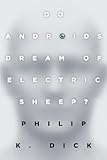
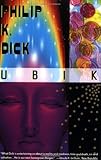
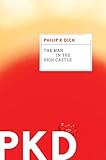
Philip K. Dick was an American science fiction writer whose novels — including Do Androids Dream of Electric Sheep? — explored identity, reality, and consciousness with visionary intensity.
Philip K. Dick published over forty novels and more than a hundred short stories in a career defined by extraordinary productivity, visionary imagination, and persistent personal instability. He lived most of his adult life in modest financial circumstances, writing at great speed out of necessity, yet produced a body of work that has proved more durably influential than almost any other science fiction writer of his generation. The films adapted from his work — Blade Runner, Total Recall, Minority Report, A Scanner Darkly, The Adjustment Bureau — have collectively shaped popular ideas of what speculative fiction can be, though the novels are almost always richer than their adaptations.
Do Androids Dream of Electric Sheep? (1968), the source novel for Blade Runner, follows a bounty hunter tasked with “retiring” escaped androids in a devastated post-nuclear San Francisco. The novel’s central question — what constitutes authentic humanity, and whether empathy can be reliably distinguished from its simulation — is handled with more philosophical seriousness and less visual glamour than Ridley Scott’s film. The Man in the High Castle, A Scanner Darkly, and VALIS are his other most widely read works, each exploring some version of his central obsessions: the nature of reality, the reliability of perception, and the question of what it means to be a person rather than a mechanism.
Dick’s biography is inseparable from his work in uncomfortable ways: he experienced a period of intense paranormal or psychotic experiences in 1974 that he spent the rest of his life trying to interpret, and his later fiction reflects this. Whether his visions were symptoms of mental illness, genuine spiritual experience, or some combination is a question his writing poses rather than answers. Readers approaching Dick for the first time should start with The Man in the High Castle or Do Androids Dream of Electric Sheep? and remain aware that they are in the presence of a genuinely strange and original mind.
The Prophet of Unstable Realities
Philip K. Dick was one of the most original and influential science fiction writers of the twentieth century, a visionary whose obsessive questioning of reality and identity has only grown more relevant with time. Where many of his contemporaries focused on the hardware of the future, Dick was preoccupied with deeper and stranger questions: What is real? What makes us human? How do we know our memories, our perceptions, even our own selves can be trusted? His paranoid, philosophically restless fiction transformed science fiction into a vehicle for profound metaphysical inquiry, and his influence now extends far beyond the genre into the broader culture.
Reality and Illusion
The central obsession of Dick’s work is the instability of reality itself. Again and again his novels feature worlds that turn out to be false, perceptions that cannot be trusted, and characters who discover that everything they believed was an illusion or a manipulation. This theme, explored in books such as Ubik and The Three Stigmata of Palmer Eldritch, reflected his genuine philosophical and spiritual preoccupations, and it gave his fiction a vertiginous, dreamlike quality. Few writers have so persistently and powerfully dramatised the suspicion that the world we take for granted may be a fabrication.
What Makes Us Human
Equally central to Dick’s vision is the question of what constitutes authentic humanity. His most famous novel, Do Androids Dream of Electric Sheep? — the basis for the film Blade Runner — probes the boundary between human and machine, asking whether empathy, rather than biology, is what defines a person. Throughout his work, androids, simulations, and artificial beings force his characters and readers to confront the meaning of consciousness, emotion, and moral worth. This humane concern with empathy and identity gives his often-disorienting fiction a deep emotional and ethical core.
A Troubled Visionary
Dick’s life was as turbulent as his fiction, marked by financial hardship, personal struggles, drug experiences, and, in his later years, a series of mystical visions that he spent the rest of his life trying to understand. Much of his work was produced quickly and under pressure for the pulp markets, and his prose can be rough, but the sheer force of his ideas and the intensity of his vision more than compensate. His biography and his fiction are deeply intertwined, both animated by the same desperate search for truth behind the veil of appearances.
From Pulp to Prestige
Long underappreciated and pigeonholed as a pulp writer during his lifetime, Dick has since been recognised as a major American author, the first science fiction writer included in the prestigious Library of America. His critical reputation has soared, and his concerns with simulated realities, surveillance, corporate power, and artificial intelligence feel startlingly prescient in the digital age. The reassessment of his work has confirmed him as a genuine literary and philosophical figure rather than merely a genre entertainer.
A Cinematic Legacy
Dick’s stories and novels have proven an extraordinarily rich source for film and television, inspiring acclaimed and influential works including Blade Runner, Total Recall, Minority Report, A Scanner Darkly, and the series The Man in the High Castle. These adaptations have carried his ideas to enormous audiences and cemented his place in popular culture, making him perhaps the most cinematically influential science fiction writer of all. The recurring fascination with his work on screen reflects the enduring power and adaptability of his central questions.
Why Philip K. Dick Endures
Philip K. Dick’s influence on science fiction, philosophy, and popular culture is immense, and his obsessions with reality, identity, and authenticity speak ever more directly to our technologically mediated age. For newcomers, Do Androids Dream of Electric Sheep? is the natural starting point, with The Man in the High Castle, Ubik, and A Scanner Darkly close behind. For readers seeking science fiction that unsettles, provokes, and probes the deepest questions of existence, Dick remains an essential and singular voice whose strange visions continue to define how we imagine the future.
Further Reading
Time Out of Joint, The Three Stigmata of Palmer Eldritch, and Martian Time-Slip round out a fuller picture of Philip K. Dick’s range.
Reading Guides