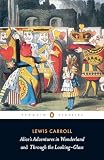
British mathematician and author whose Alice's Adventures in Wonderland transformed children's literature and created one of the most enduring works of the literary imagination.
Lewis Carroll was the pen name of Charles Lutwidge Dodgson, a British mathematician, logician, and photographer at Christ Church, Oxford, whose two Alice books — Alice’s Adventures in Wonderland (1865) and Through the Looking-Glass (1871) — are among the most widely read, quoted, and analyzed works in the history of literature. Dodgson first told the story of Alice to Alice Liddell, the daughter of the Dean of Christ Church, during a rowing trip on the Thames in 1862, and she persuaded him to write it down.
Alice’s Adventures in Wonderland follows a girl who falls through a rabbit hole into a nonsensical underground world where logic is inverted, language plays tricks, and authority figures are arbitrary and absurd. The book’s combination of wordplay, mathematical and logical puzzles, satirical social observation, and genuine psychological strangeness make it operate simultaneously as a children’s story and as a sophisticated literary text. The characters — the White Rabbit, the Cheshire Cat, the Mad Hatter, the Queen of Hearts — have become part of the cultural furniture of the English-speaking world.
Scholars have analyzed Alice as a text about Victorian anxiety, the arbitrariness of social rules, the nature of identity, and the experience of childhood powerlessness among adult authority. Carroll’s background in formal logic gives the nonsense a specific structure: the rules of Wonderland are consistent, just not the rules of the world Alice came from. As a mathematician, Dodgson published serious academic work under his own name; as Lewis Carroll, he created something that has outlasted all of it.
Reading Guides